Partner City
Southwold
Quaint Hamlets & Bustling Villages
The Township of Southwold is part of Elgin County and lies just to the west of the city of St. Thomas. Indigenous peoples have lived on this land for thousands of years, and one can visit the Southwold Earthworks, a major pre-contact fortified village site of the Neutral people from about 1450 to 1550 CE. Today it is a National Historic Site. Southwold was surveyed and in 1792 named after a town in Suffolk, England. The region's rich soils supported the growth of hamlets and villages in the 19th Century, like Fingal, Talbotville, Iona, Shedden, and Paynes Mills. Today Southwold has a population of around 4,500 and retains its agricultural roots. Many beautiful heritage buildings have been carefully preserved in all of its villages and hamlets. These buildings, combined with the bucolic landscape, illustrate the strong bonds of rural community that shaped the region's history, and make Southwold an absolute pleasure to explore by car or bike.


This project is a partnership with the Township of Southwold and the Elgin County Museum & Archives.
We respectfully acknowledge that the Township of Southwold is within the traditional territory of the Oneida, Munsee Delaware, Anishnabek, Haudenosaunee (Iroquois), and Ojibway/Chippewa peoples. This territory is covered by the Upper Canada Treaties.


Explore
Southwold
Then and Now Photos
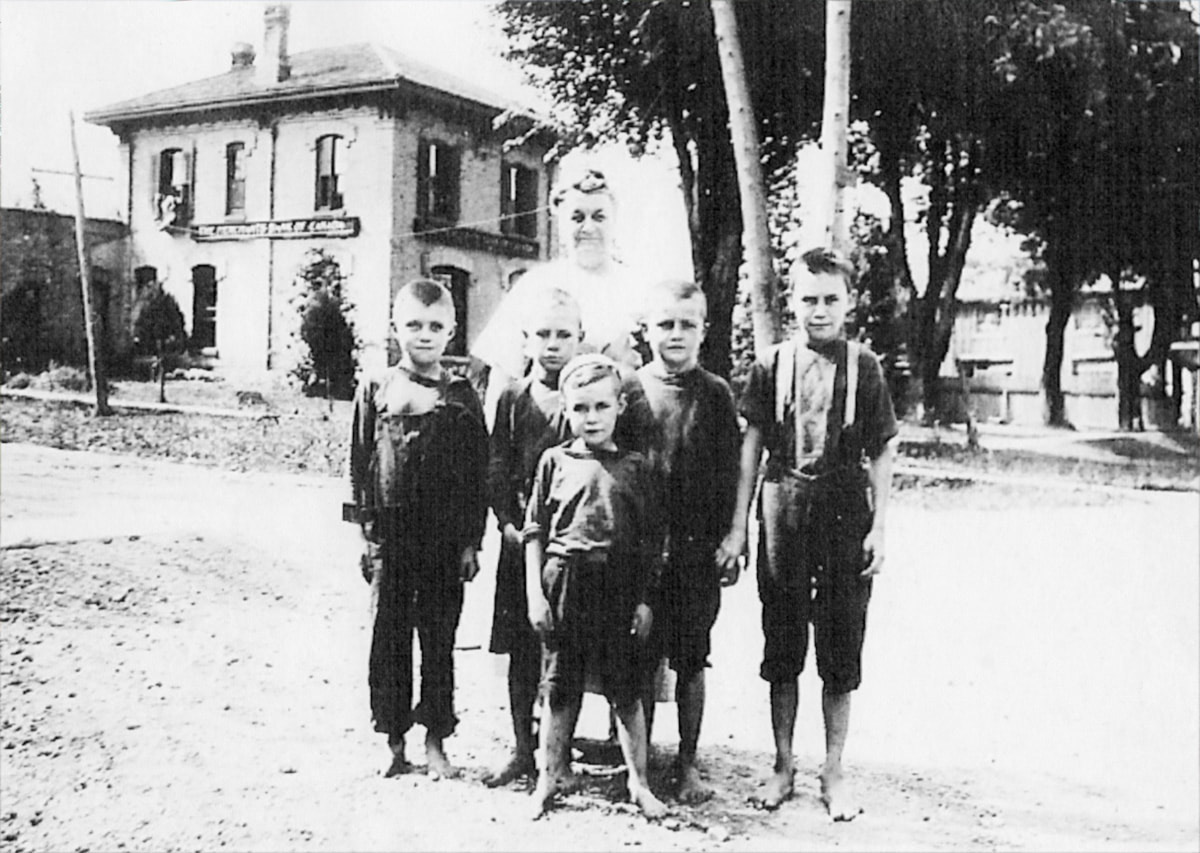
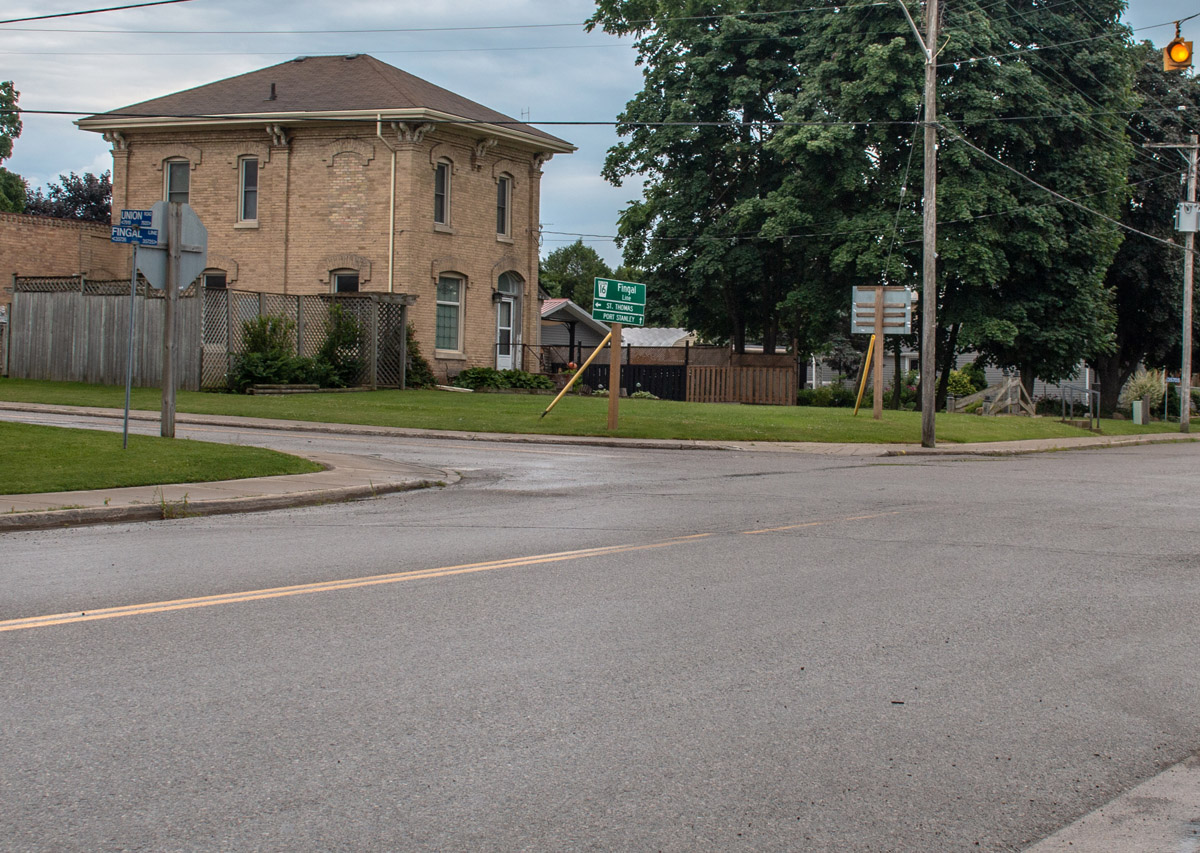
Merchants Bank
Elgin County Archives 022.028.001
ca. 1920
The Merchant’s Bank, southwest corner of Union Road and Fingal Line, Fingal, c. 1920.
Built c. 1870, this house features brick pilaster strips at the corners on which sit paired wooden brackets, a feature of the Italianate style. The addition to the rear (now altered) was likely added about 1900 to house a grocery, the post office and a bank. The store owner’s dog was said to have been so mean that children on their way to school would throw parts of their lunch to it so they could get by.
During World War Two, the building provided apartments for workers at the nearby RCAF #4 Bombing and Gunnery School. After the war, for over four decades it was the residence of the Fordham family, who operated a grocery and hardware store. It is now a private residence.
The Reverend's House


Elgin County Archives R6 S1 Sh3 B2 F1 93
ca. 1902
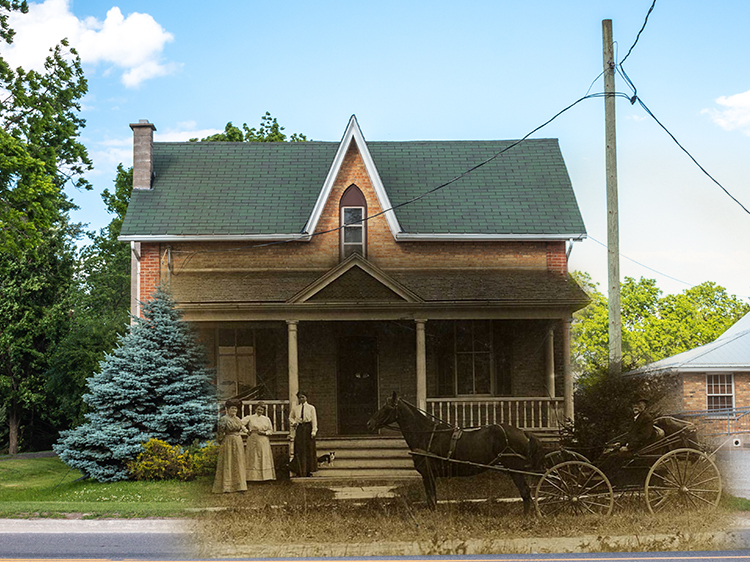
Here we see the Talbotville home of Reverend John Holmes, his wife, and Ms. Luella Holmes. Three women and a man in a horse drawn buggy pose for a photo out front.
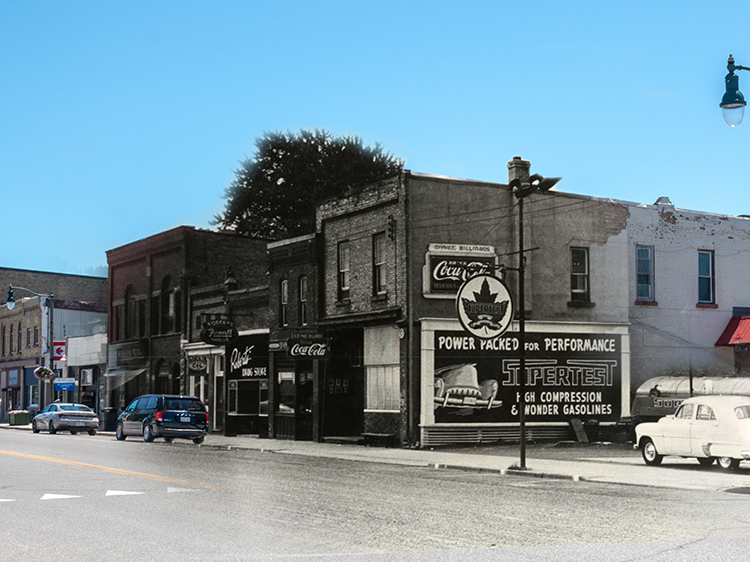
Former Cott General Store
Elgin County Archives R6 S1 Sh3 B2 F2 92
ca. 1940
Built to house a hotel in the 1890s, this building was eventually occupied by a store and the Talbotville Royal Post Office, possibly as early as 1894. Following a number of owners, Fred Cott, from London, bought the store in 1934. A British-American (BA) service station opened next door, in the 1920s, later taken over by Reliance Petroleum. Reliance bought the store and demolished it in 1953 to provide room for expansion. Run by the Bendell Brothers, the 24-hour station had four gas pumps and offered complete service. They also built a restaurant called Bendell’s Dairy Bar that was popular with both travellers and locals. After selling the building Mr. Cott moved his store, including the Post Office, across the street into a space he had added to the front of his home.
Shedden Blacksmith Shop
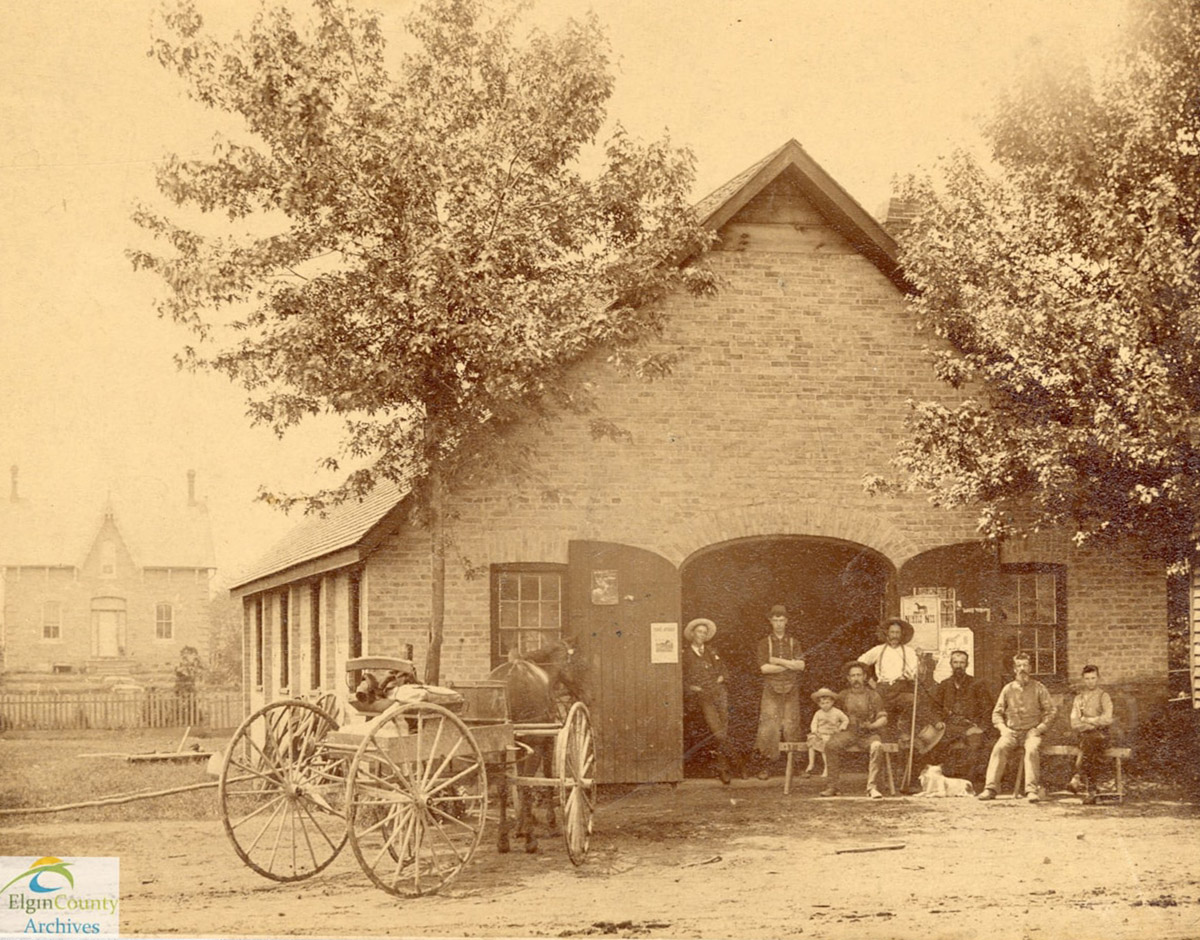
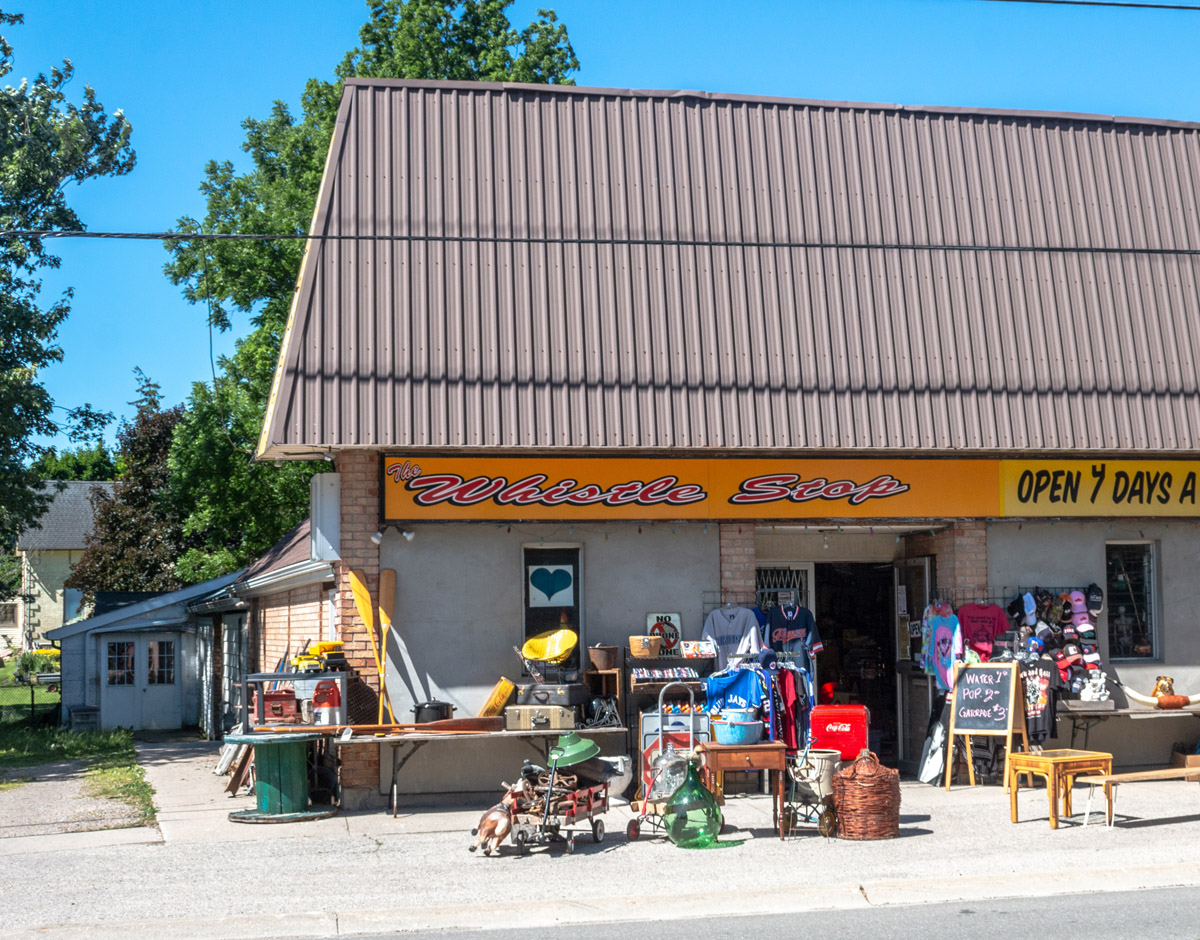
ca. 1885
Pictured in use as a blacksmith shop, this building was renovated in the 1940s to house a funeral home. An antique store opened in the 1970s and then it became a variety store in the 1980s. Later it housed a martial arts establishment and in 2013 was opened once again as an antique store. The house in the background was owned by John Doan Francis, seen here sitting third from right, for whom Francis Street is named.
Sunday School Anniversary


Elgin County Archives R6 S1 Sh3 B2 F2 108a
1915
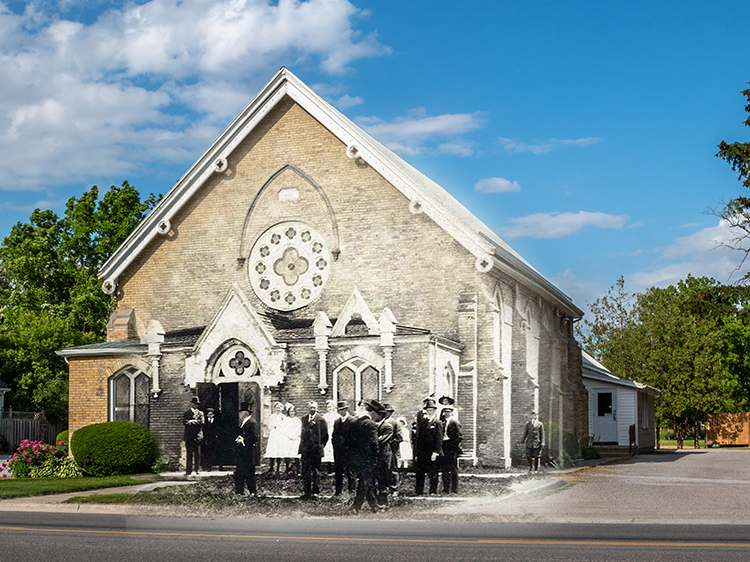
Reverend John Mahan (in the high hat) and others outside the Talbotville Methodist Church. It is on the 23 May 1915 anniversary of Sunday School.
Farmers Inn
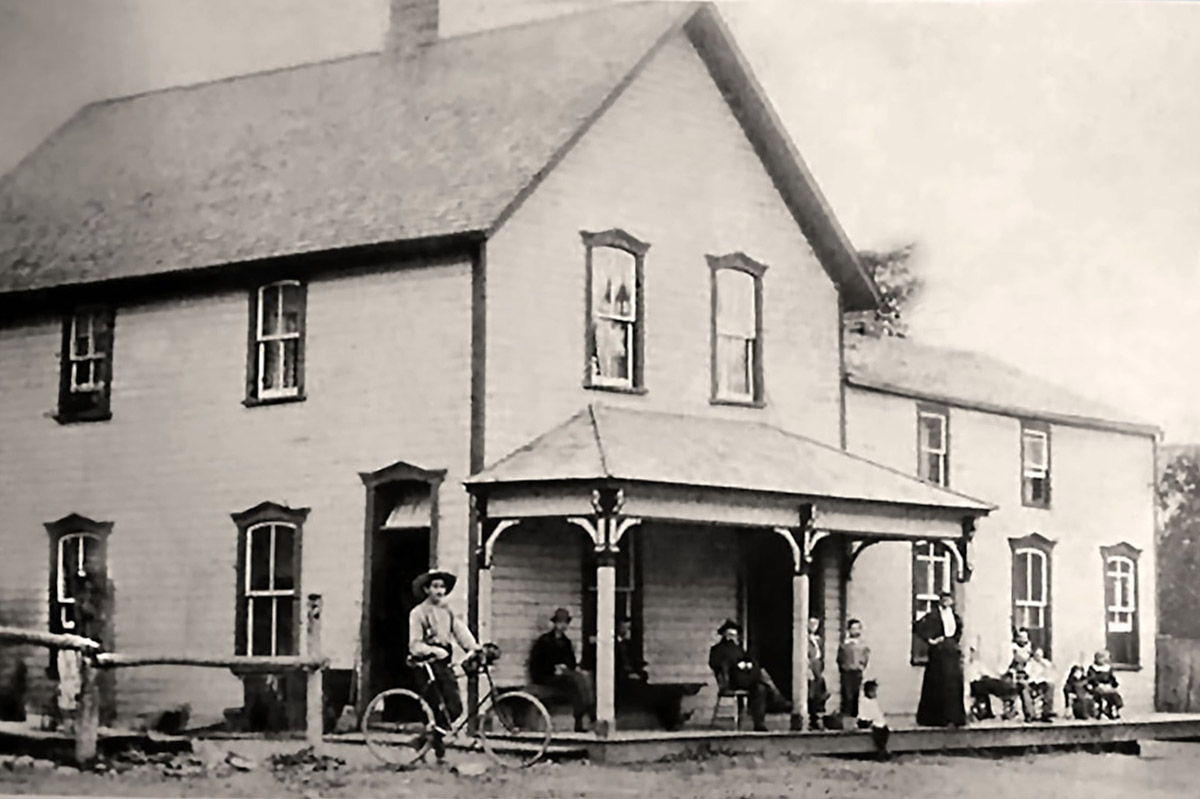
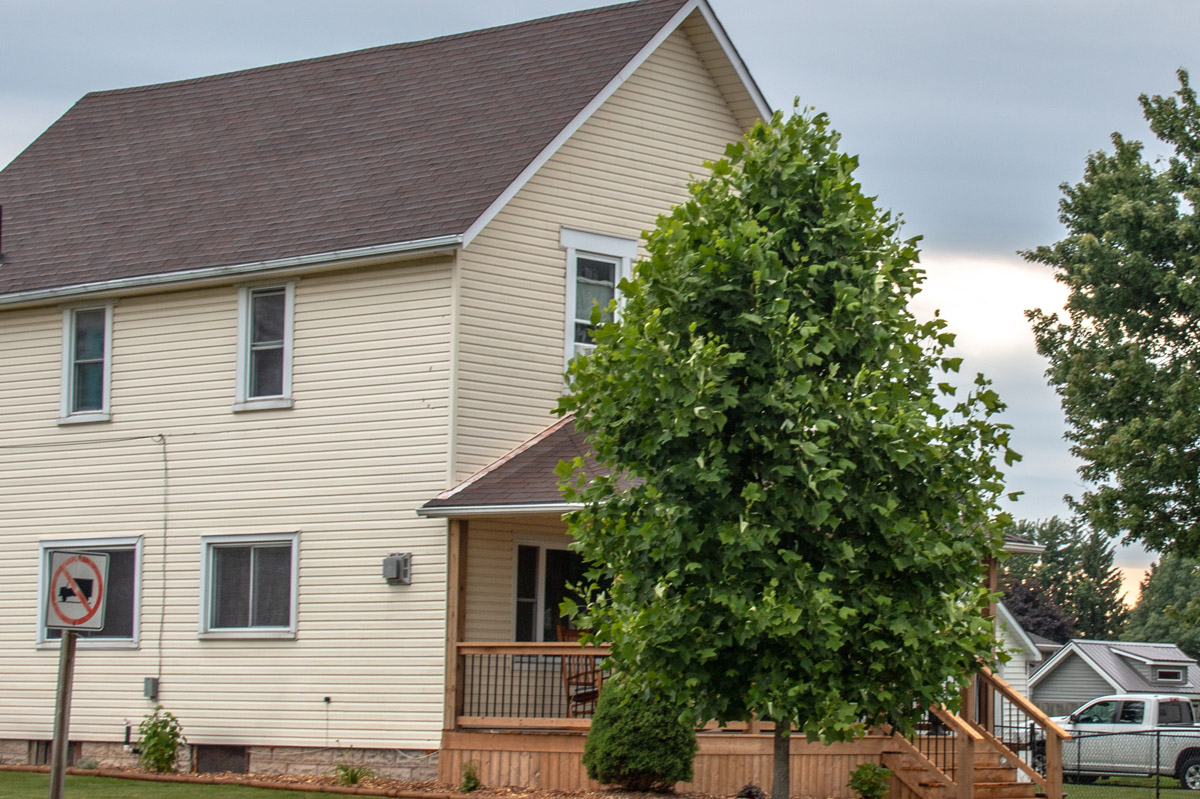
Elgin County Archives 022.028.003
ca. 1890s
The Inn appears to have been built about 1870. A rear section that once housed a bar and the hotel’s kitchen has been relocated and is now a residence. The main part had a wrap-around porch and sample rooms for traveling salesmen. The hotel was a stop on the Wallacetown and St. Thomas stagecoach line. By 1907, the property included a livery stable, pool room and a barbershop in conjunction with the hotel. It has been extensively renovated in recent years.
A.E. Orchard Garage
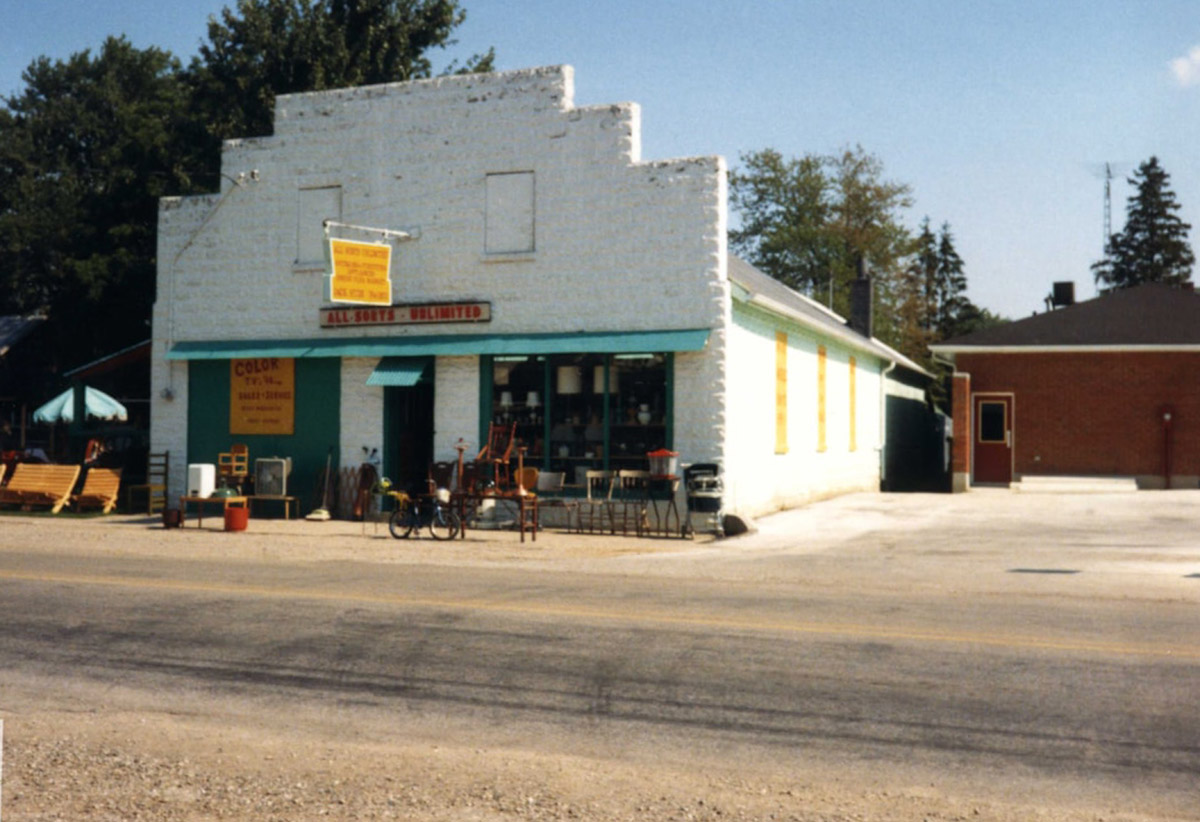
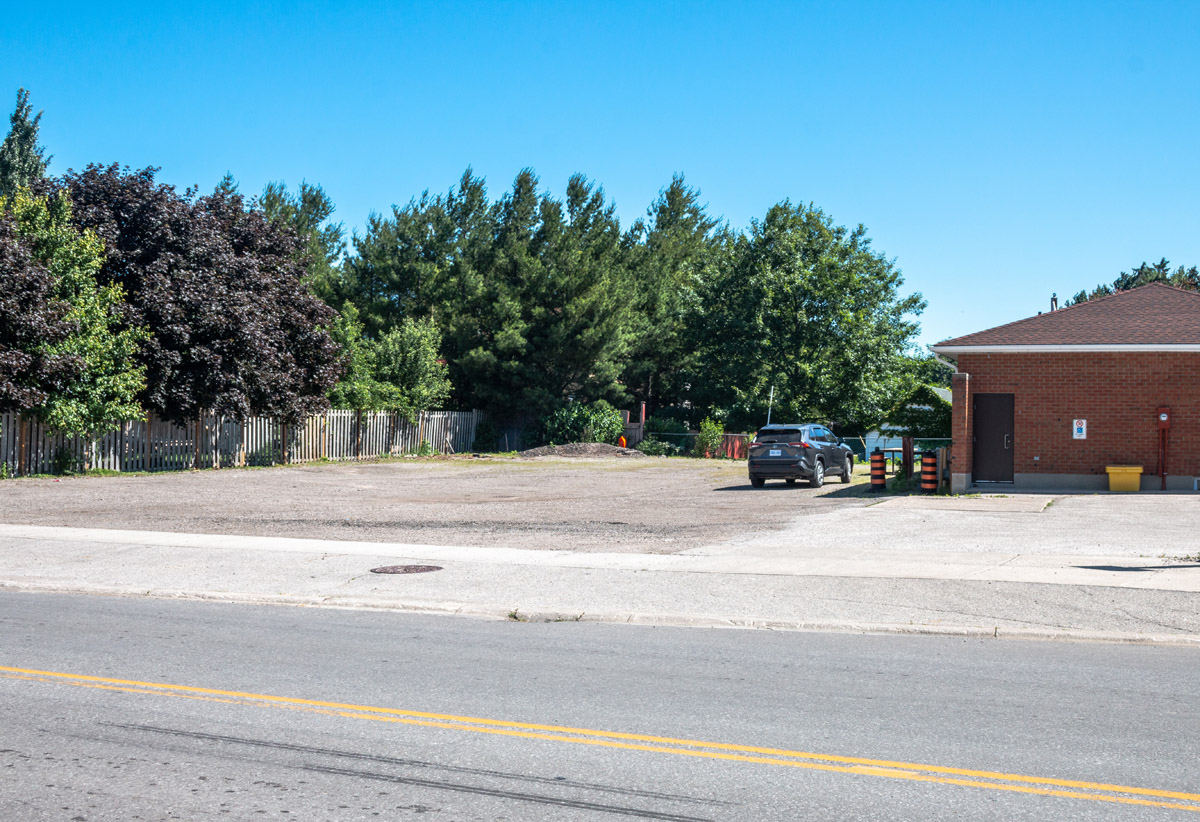
1988
All Sorts Unlimited New and Used Furniture, Union Road, Shedden, 1988.
In the late 1800s, William Orchard had a wagon shop near this corner close to where this garage was built c. 1915 by his son A. E. Orchard. Here he sold Gray-Dorts, an automobile made in Chatham. Other businesses which occupied the building in later years included a grocery store, a T.V. repair shop, and a flea market. In 1999 the building was purchased by the township and removed to provide more parking spaces for the Dr. D. A. Monteith Medical Centre.
Horton Store
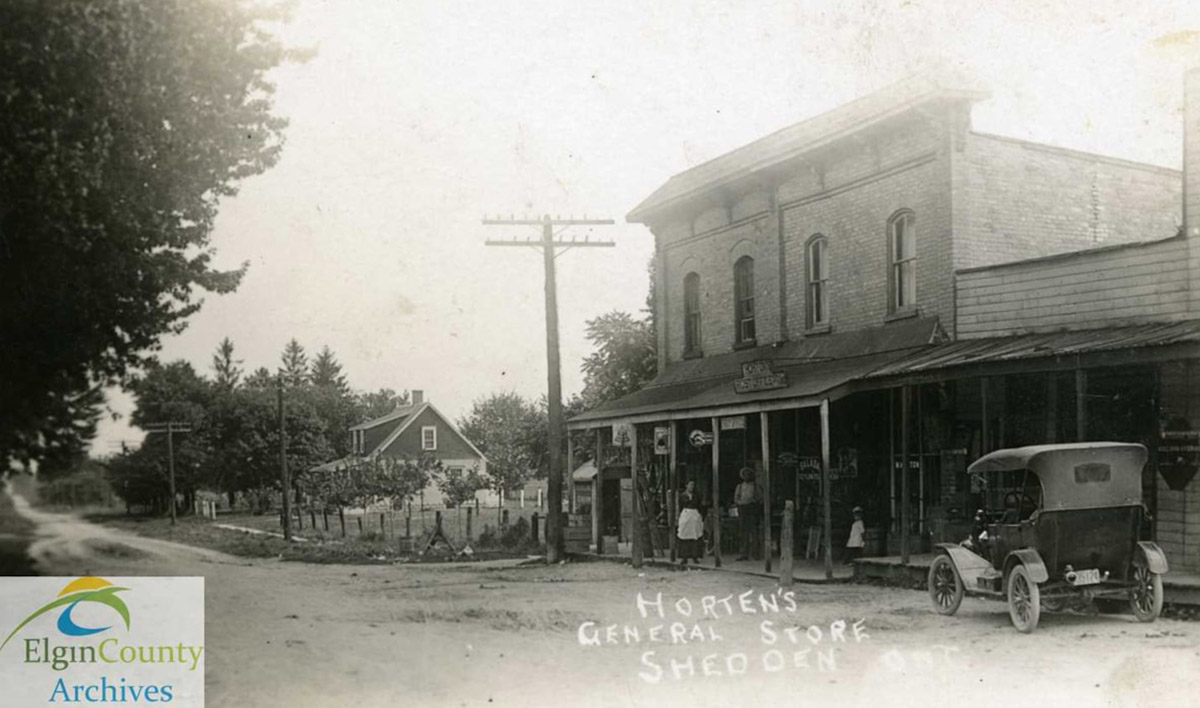
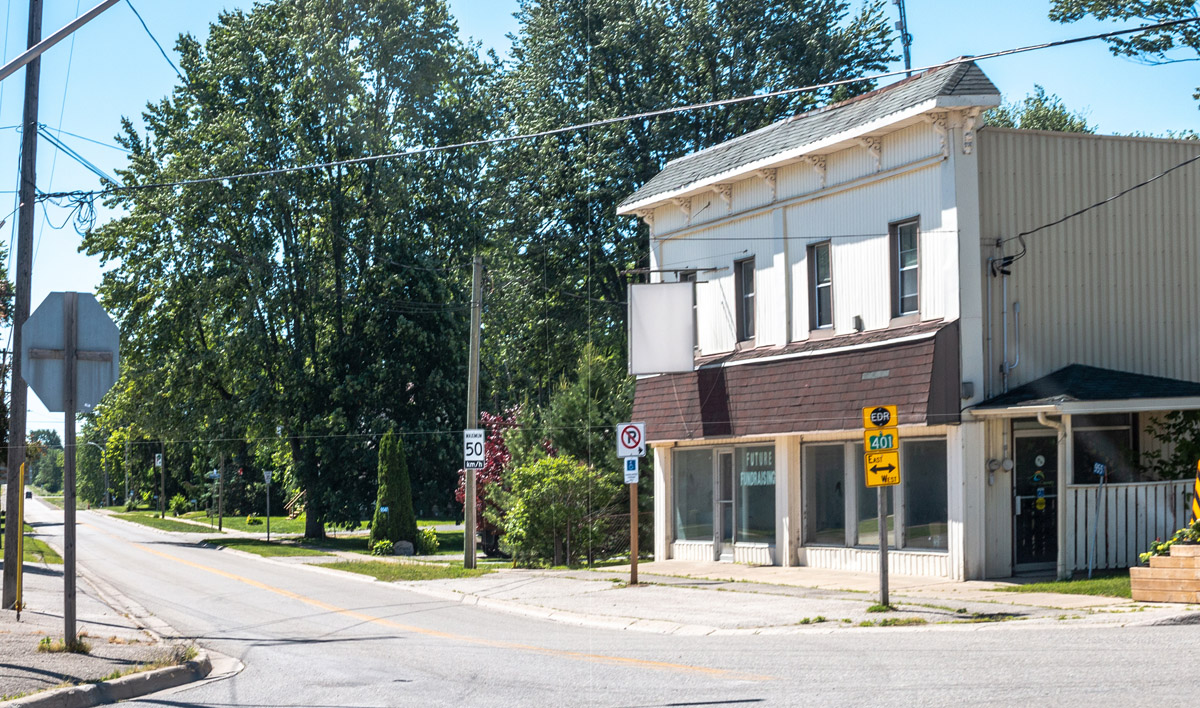
c. 1915
Built in 1881 by William Morrison to house his hardware store. The family lived upstairs. Sometime later Manson Horton opened a general store next door around 1915 which was also the location of the Shedden Post Office. Much later the store front to the south housed “Once a Tree” selling wood products including “Little Red Wagons” until it closed in 1997. West Elgin Mutual Insurance was there from 1997 until 2004. From 1984 to 2017 the store to the north was occupied by the Shedden branch of the Elgin County Library. Shedden has had a library since 1890 when its Mechanics Institute opened. Hardware store owner William Morrison was library treasurer for 48 years.
Matthias Hovey House
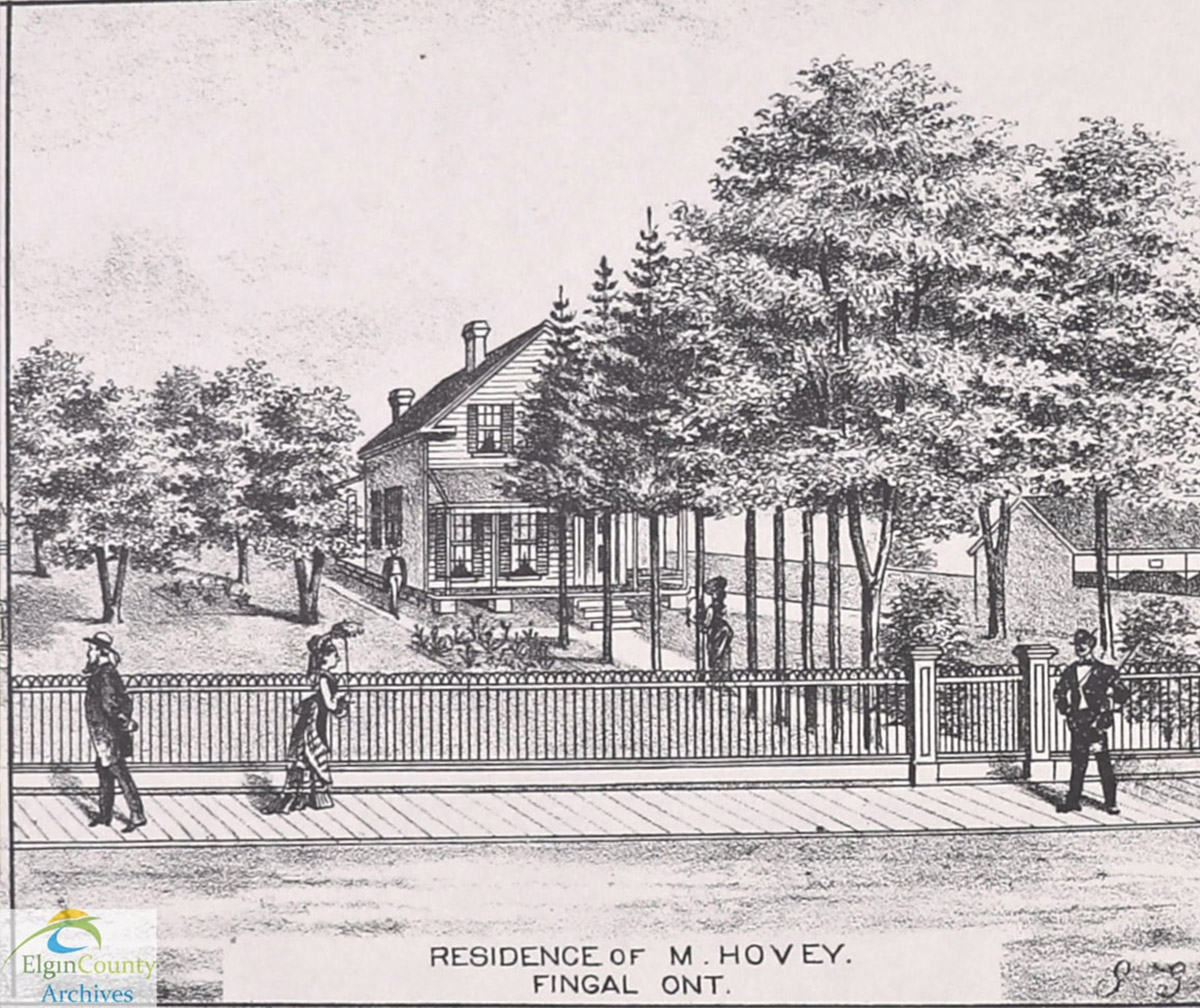
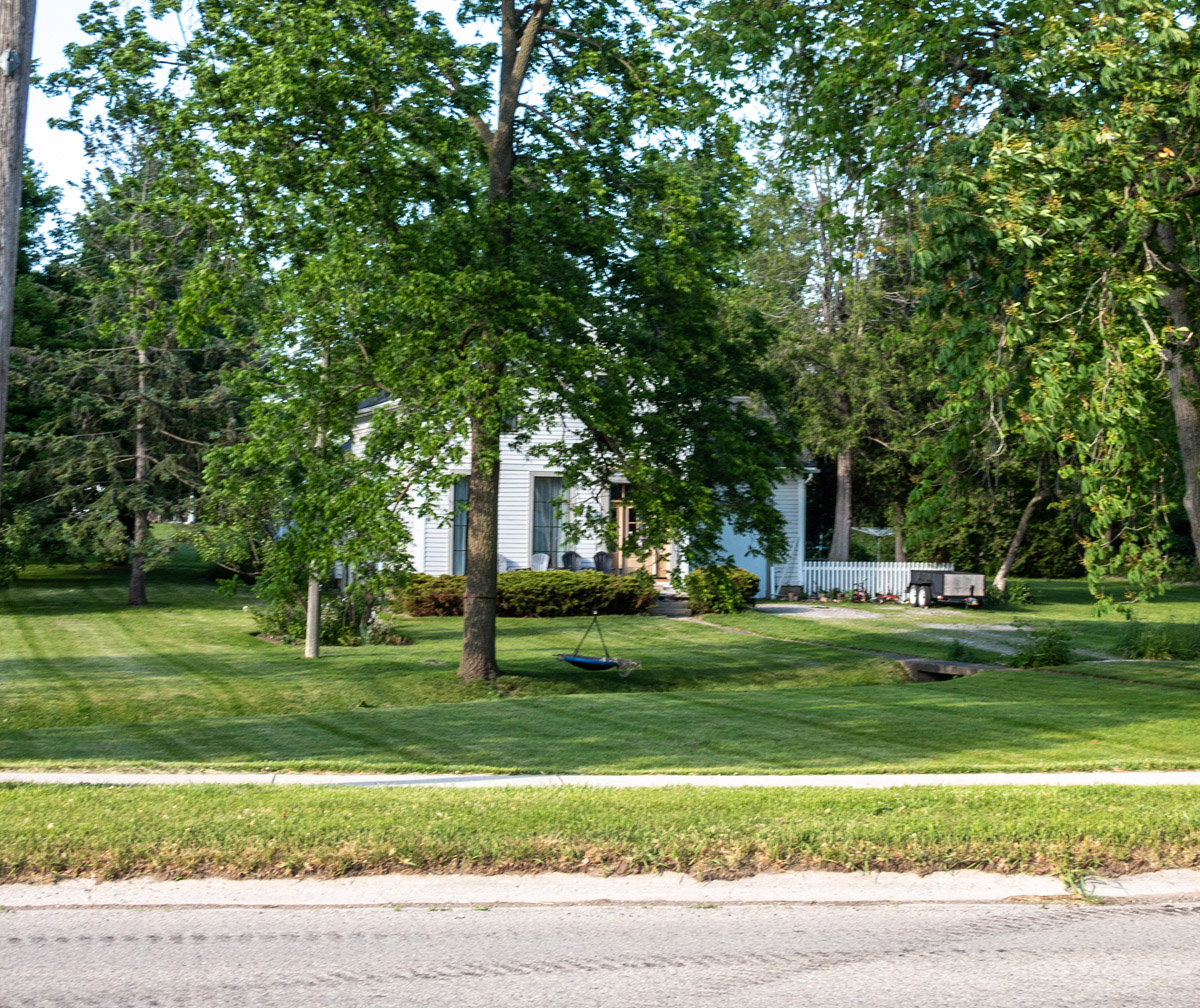
1877
This house was built by Matthias Hovey in the 1850s. Mr. Hovey was born in Otsego County, New York. He worked in a cotton factory, and then as a journeyman in an iron works in Lockport, near Buffalo. In 1848, he came to Fingal, along with William Glasgow, to assist with establishing MacPherson, Glasgow and Company. They made the machinery for the new foundry before leaving Lockport. Mr. Hovey was married in 1837, and he and his wife Phoebe Jane were the parents of three daughters and a son, who would later manage the company’s other plant in Clinton. Matthias Hovey died on August 19, 1903. The house features large front windows on the ground floor as well as sidelights and a transom surrounding the front door.
Knox Presbyterian
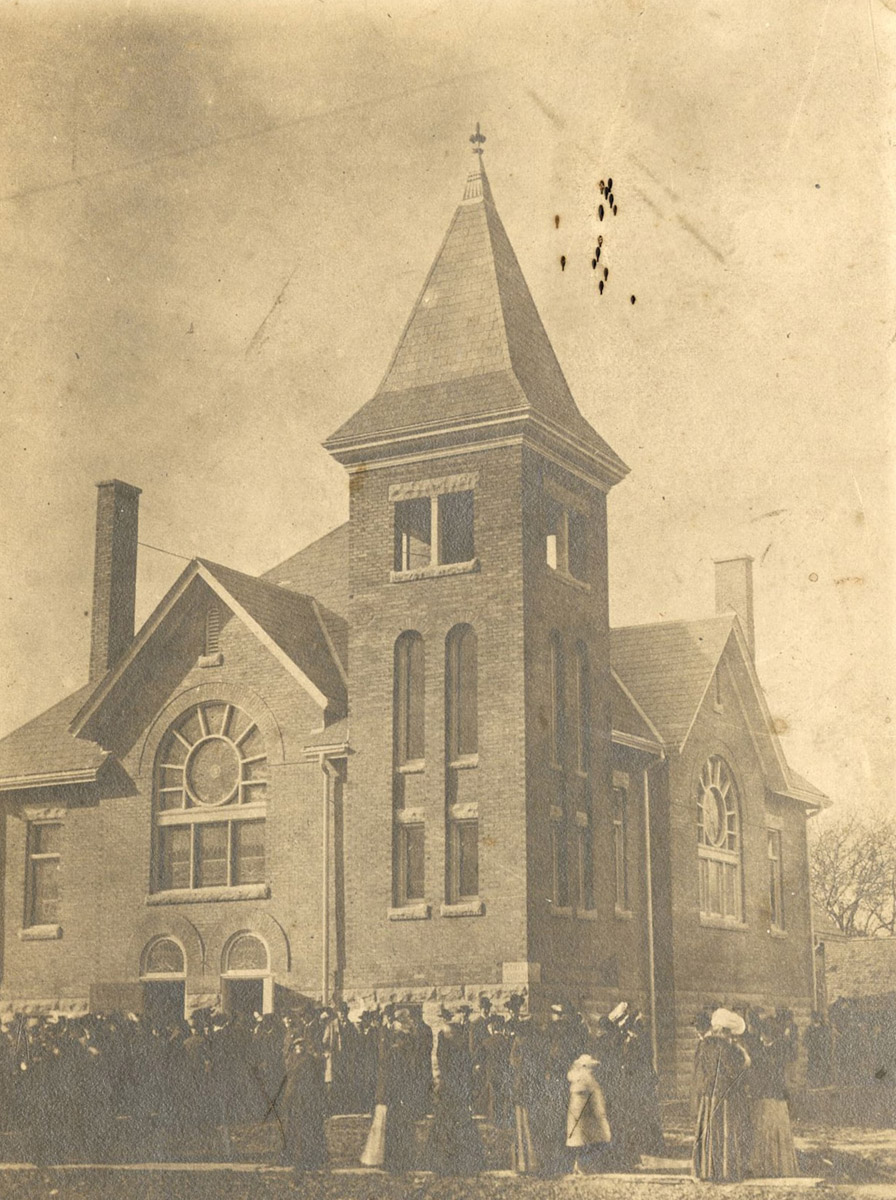
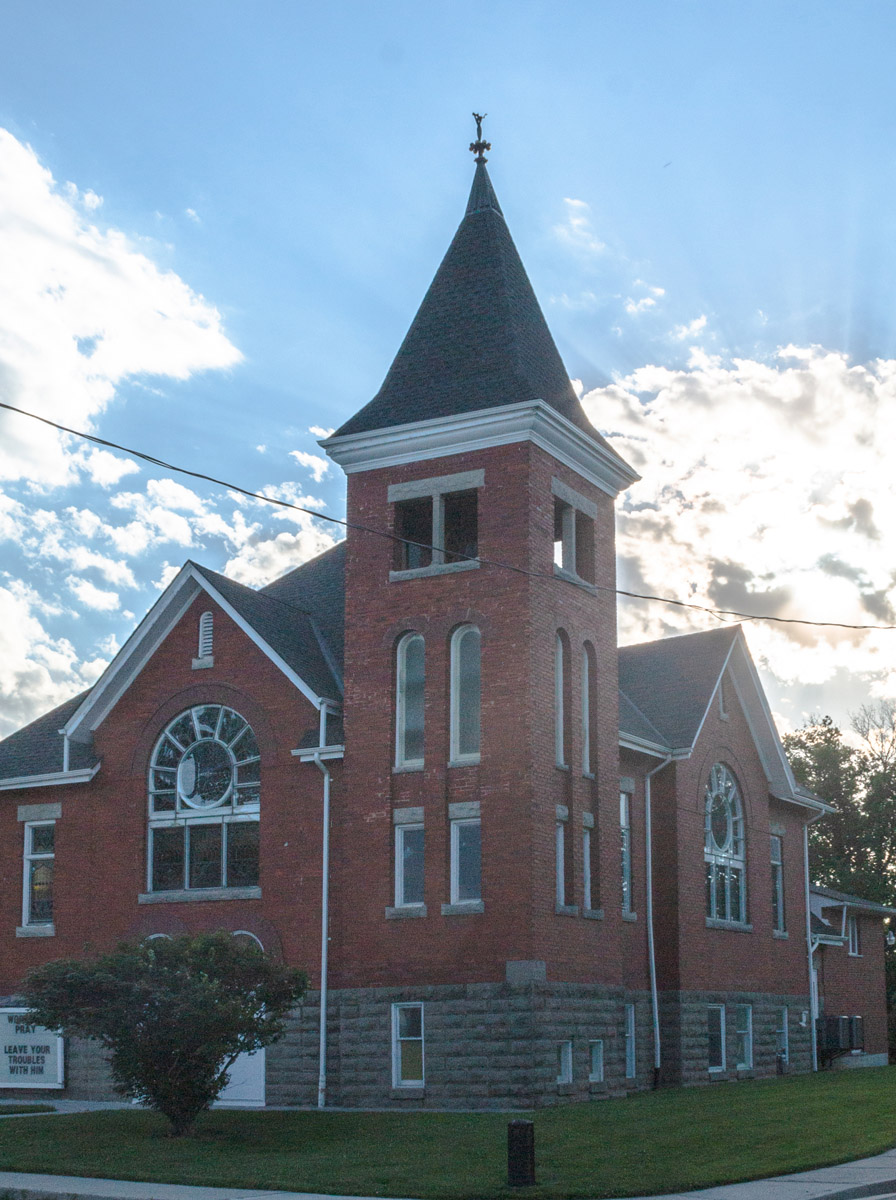
ca. 1910
Duncan McColl, a catechist (lay instructor) of the Church of Scotland immigrated to Canada in 1841 and began preaching in homes in Southwold, Yarmouth and Dorchester. In 1843 the Free Church of Scotland was formed and the movement spread to Canada. The reorganized congregation built a frame building on this site in 1850. Robert Blackwood, a merchant in Fingal, convinced his Montreal suppliers to donate funds for the purchase of a new bell for the Church. It served for 50 years before it had to be replaced. The church burned in 1906 and was replaced with this building.
Talbot Line from Union Rd.
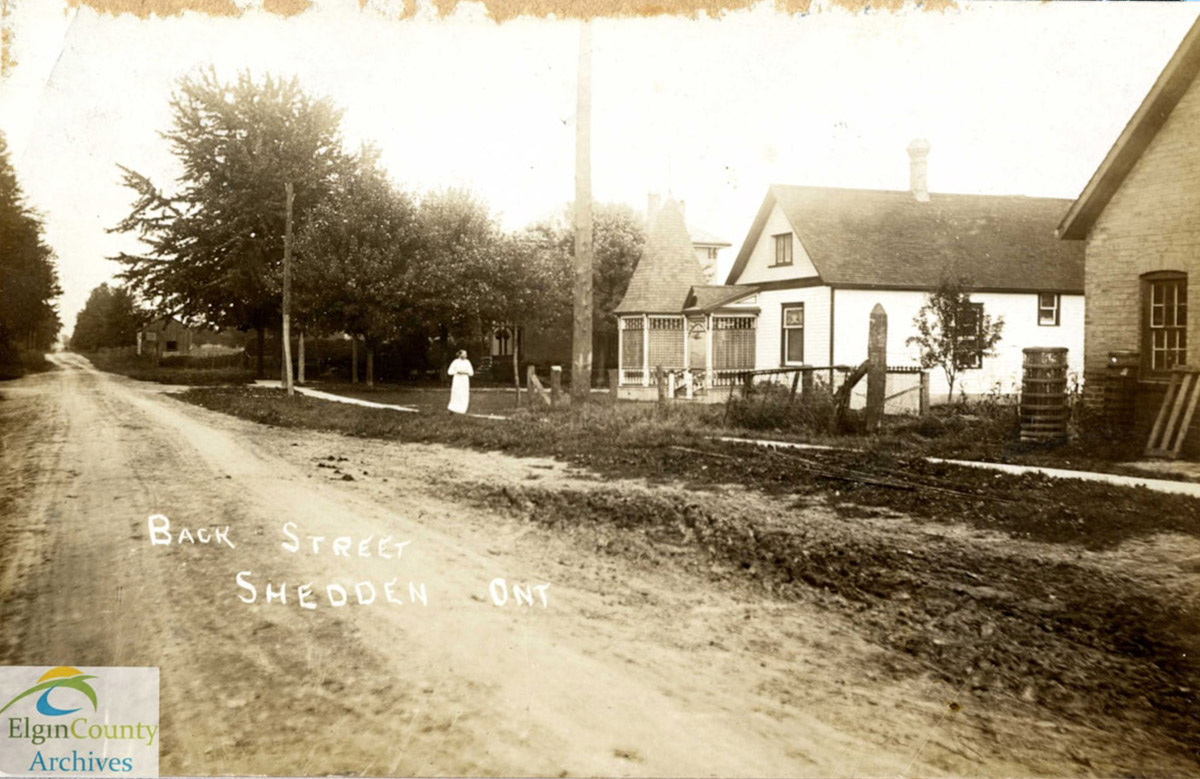
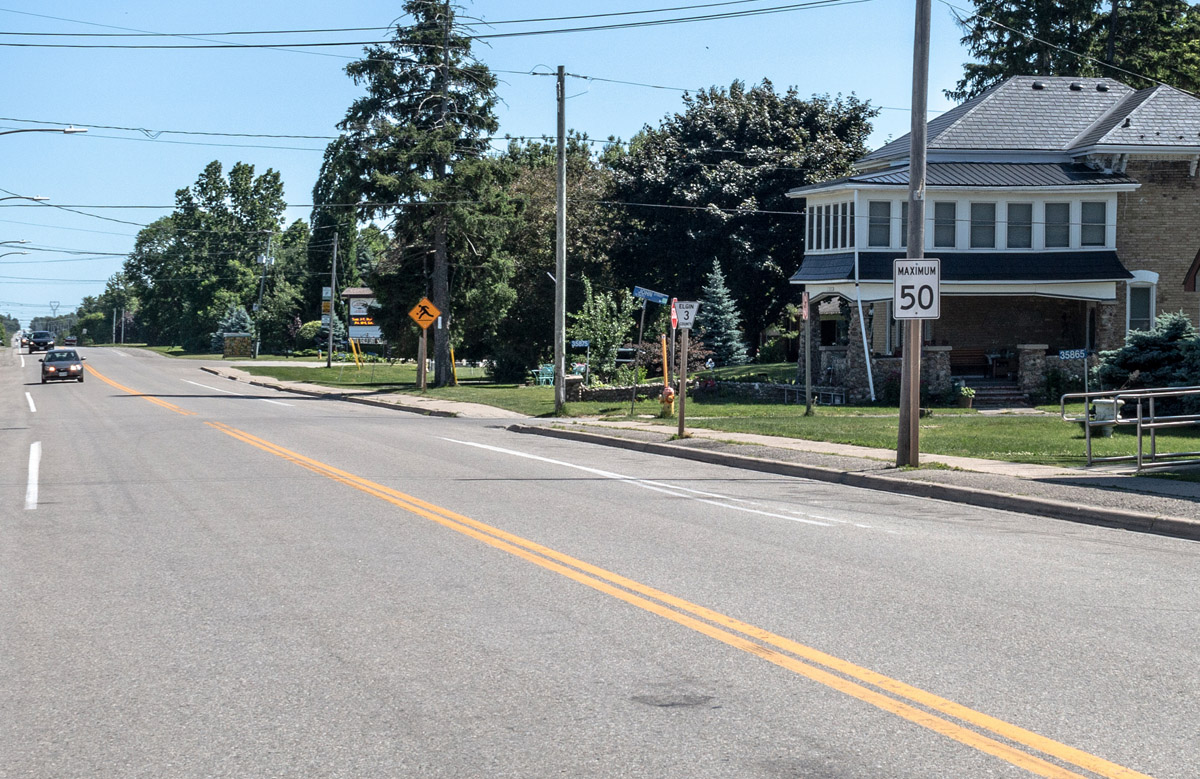
1918
The building at extreme right, only partially visible, is a blacksmith shop, now gone.
The house now at 35865 Talbot Line has a small round porch with a steep roof.
Talbot Line Garage
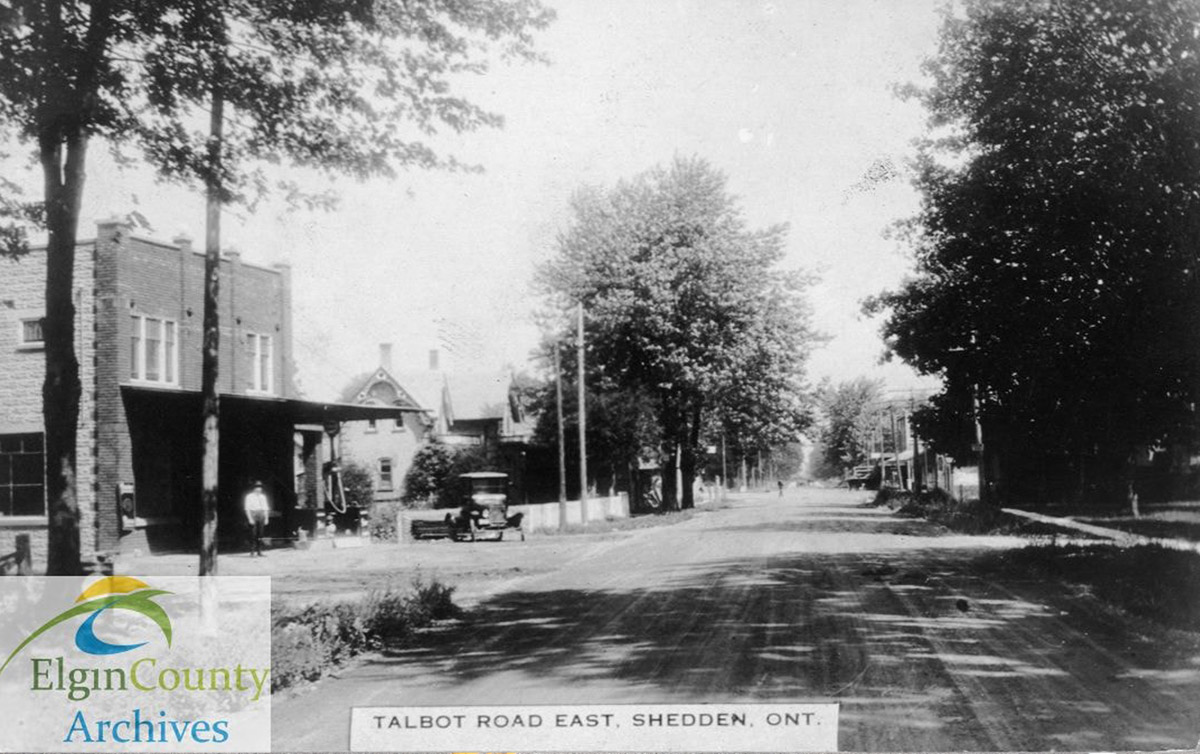
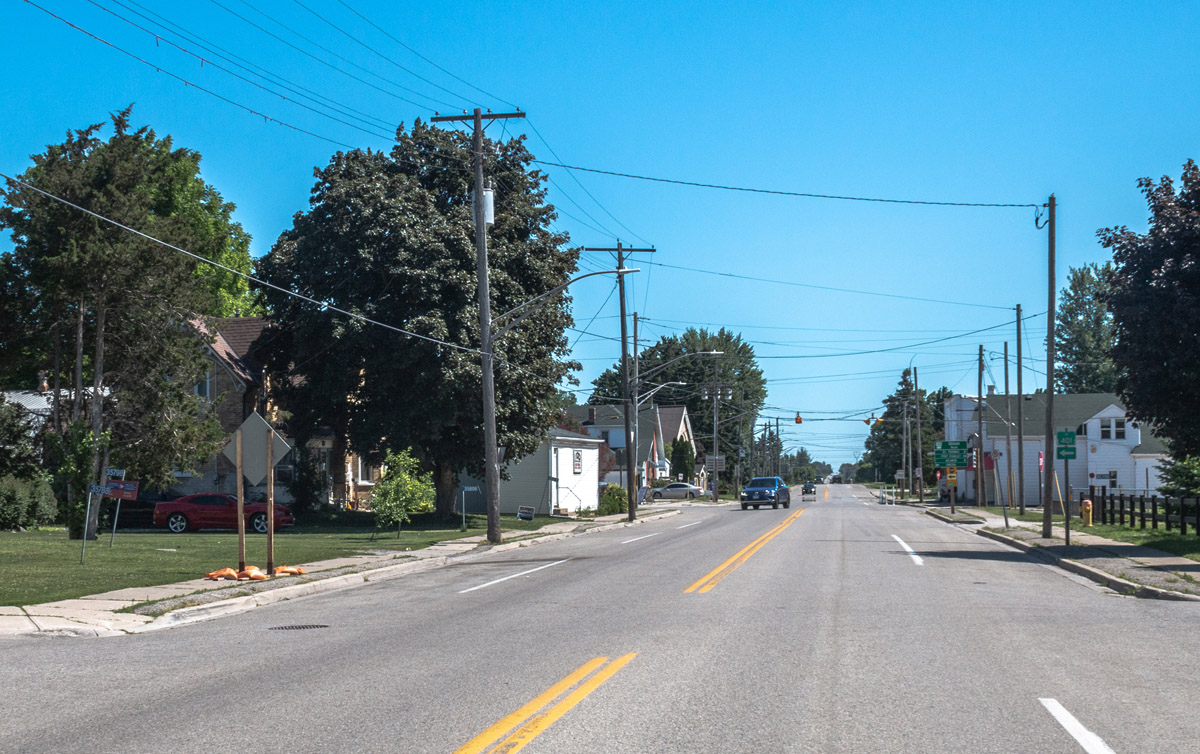
ca. 1920s
The presence of at least three garages in Shedden in the 1920s attested to the importance of its location on one of the province’s first highways (Highway 3). A gas pump stands under the far end of the awning. This was Mr. Brad’s garage in 1926 where he offered a motor camp, a rest room, refreshments, battery service, and vulcanizing.
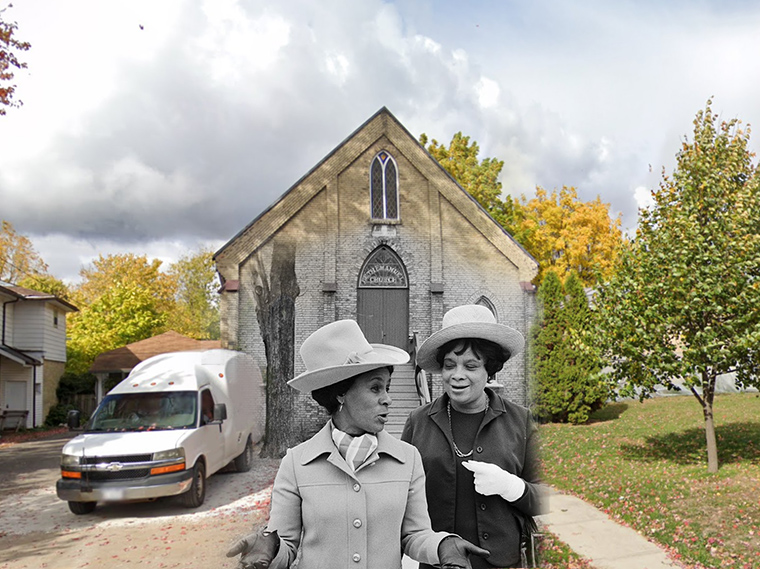
Talbotville United Church Parsonage
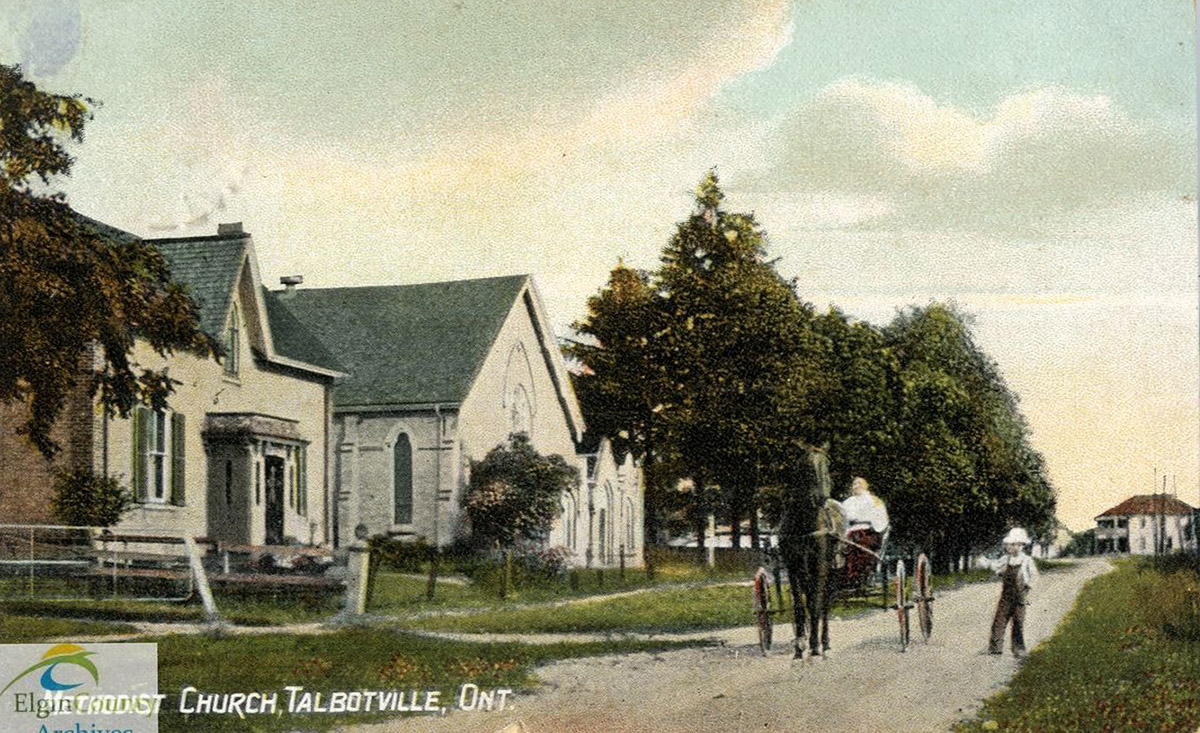
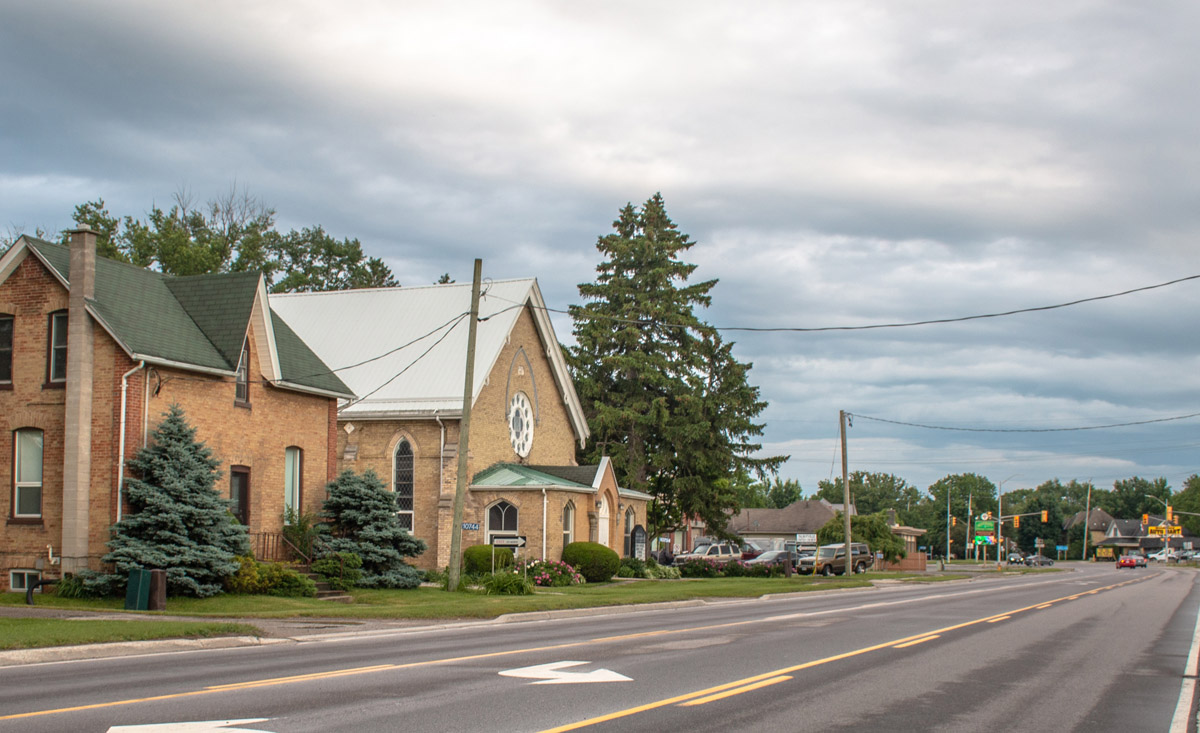
ca. 1910
The house, located next to the Talbotville Methodist, now United, Church, was purchased by the congregation in 1860 to serve as a parsonage or residence for the minister and was used as such until 2022. The enclosed brick porch was added in 1875 and later replaced with a verandah.
Amasa Wood House
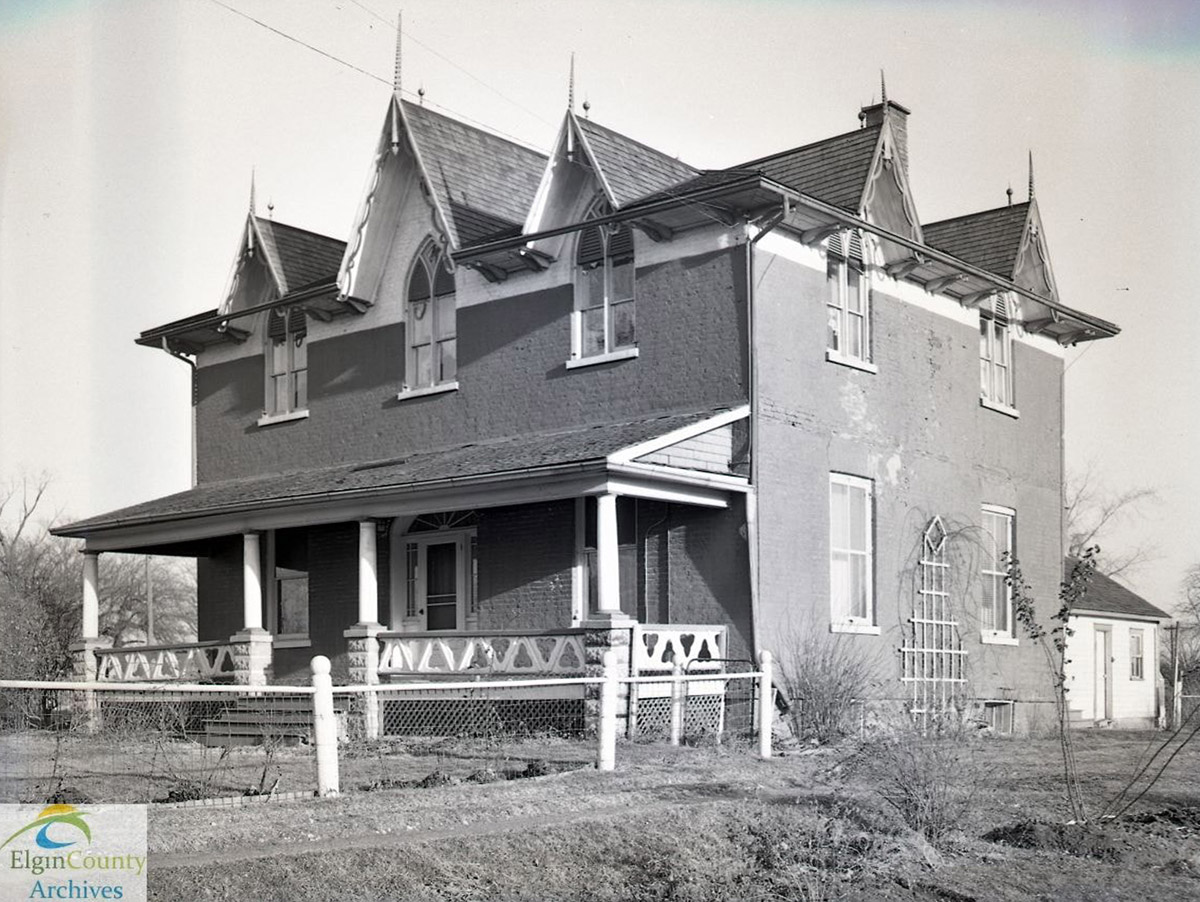
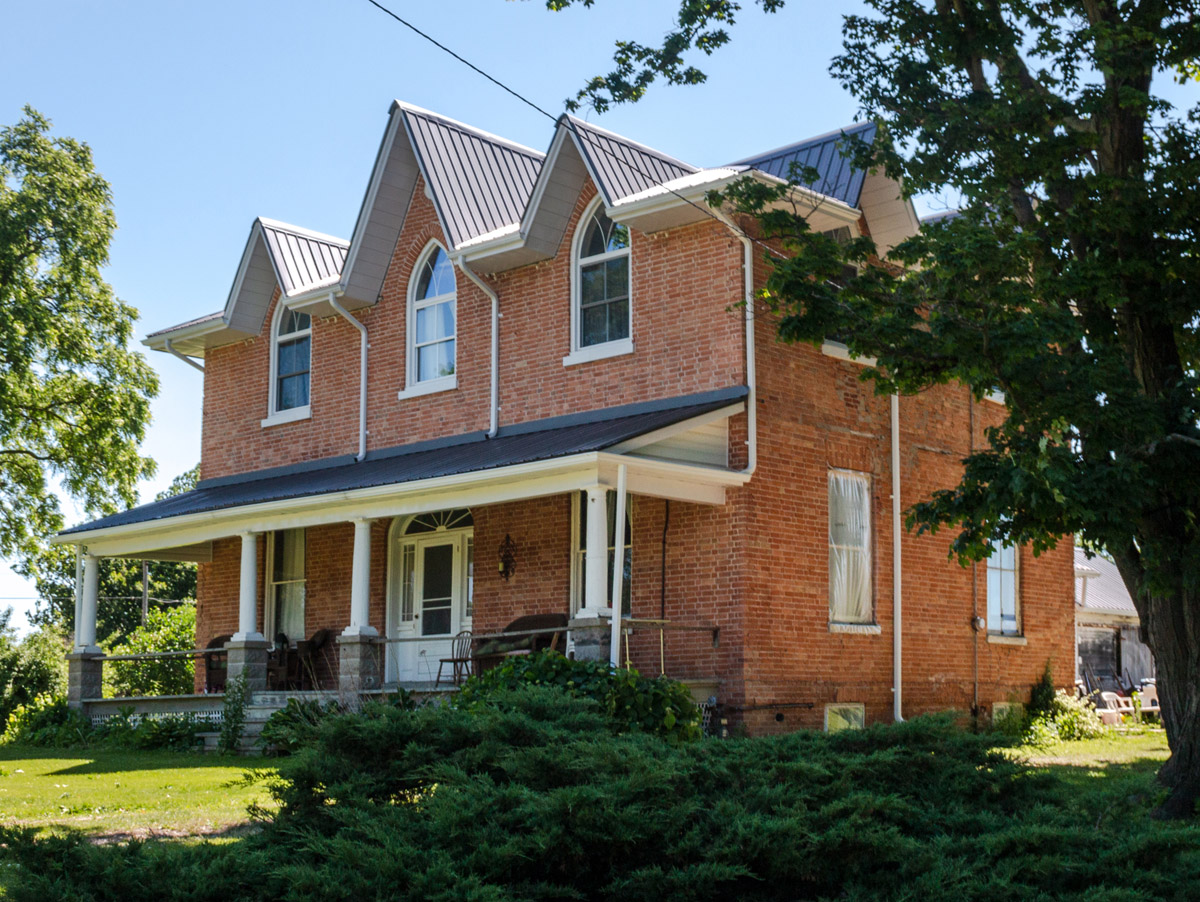
1949
Amasa Wood (1811-1899) was one of Elgin County’s most ambitious and successful entrepreneurs. In the 1830s, he started working in the store of Col. McQueen, a relative, located just east of Fingal. He later entered into a partnership with his brother-in-law Levi Fowler, operating a store in Fingal and obtaining government contracts to supply the First Nations reserves in the area.
He built this house in Fingal in 1850 where he became known as the “town bell” because he rose so early and spoke so loudly. In 1877 he moved to St. Thomas where in the 1890s he funded the construction of the city’s first hospital on Pearl Street which was named for him. It was in use as part of the Memorial Hospital until the 1960s. Wood was a staunch Methodist generously supporting the construction of new churches throughout the district. He even funded the construction of a Methodist church in Japan to replace one that had been destroyed by fire.
.
Former Bank of Commerce
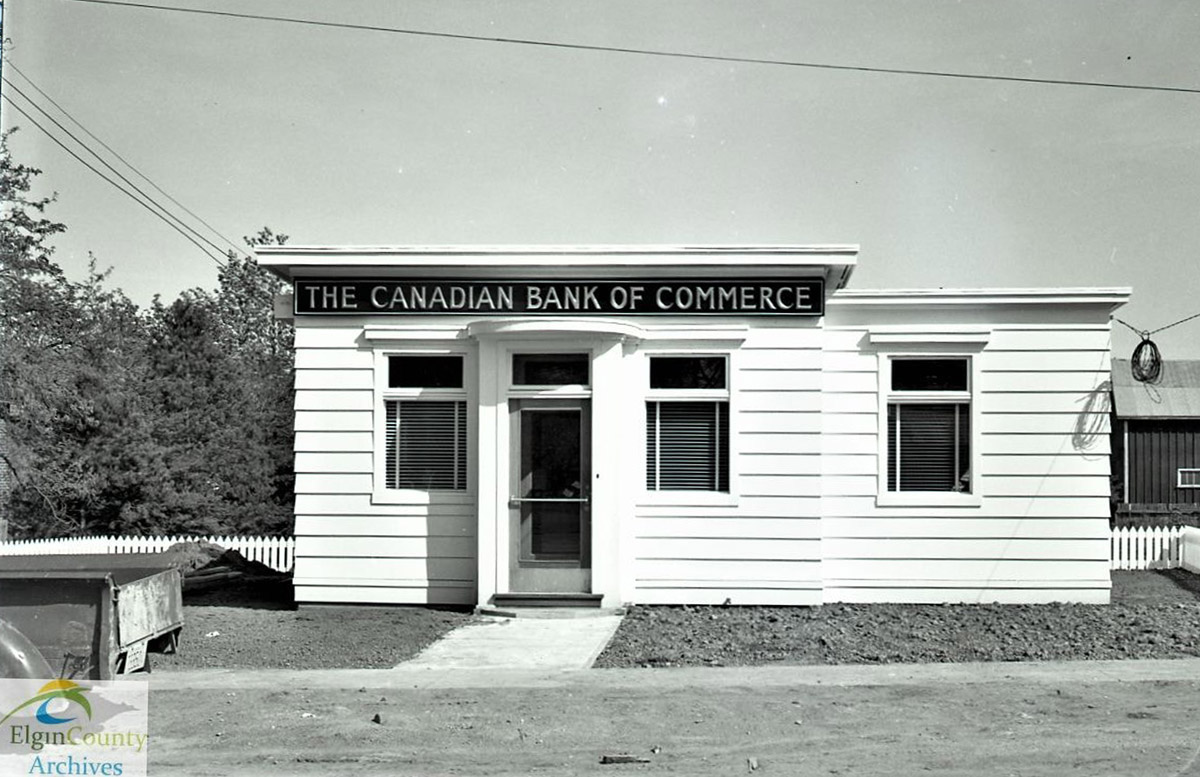
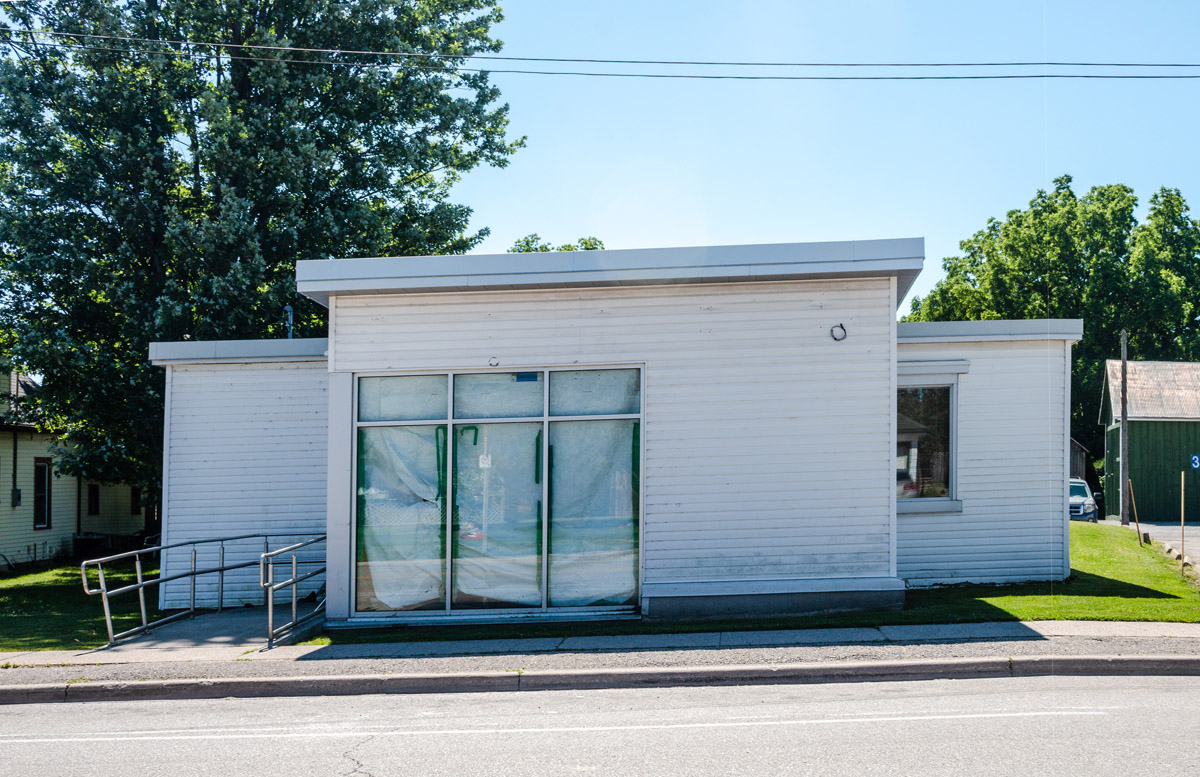
1951
A branch of the Standard Bank of Canada opened in Shedden around 1910. It was located on the southwest corner of Union Road and Talbot Line. The Standard merged with the Bank of Commerce in 1928 and the Commerce (which later merged with the Imperial Bank) built this new branch in 1951. It closed in 2018.
Glasgow House
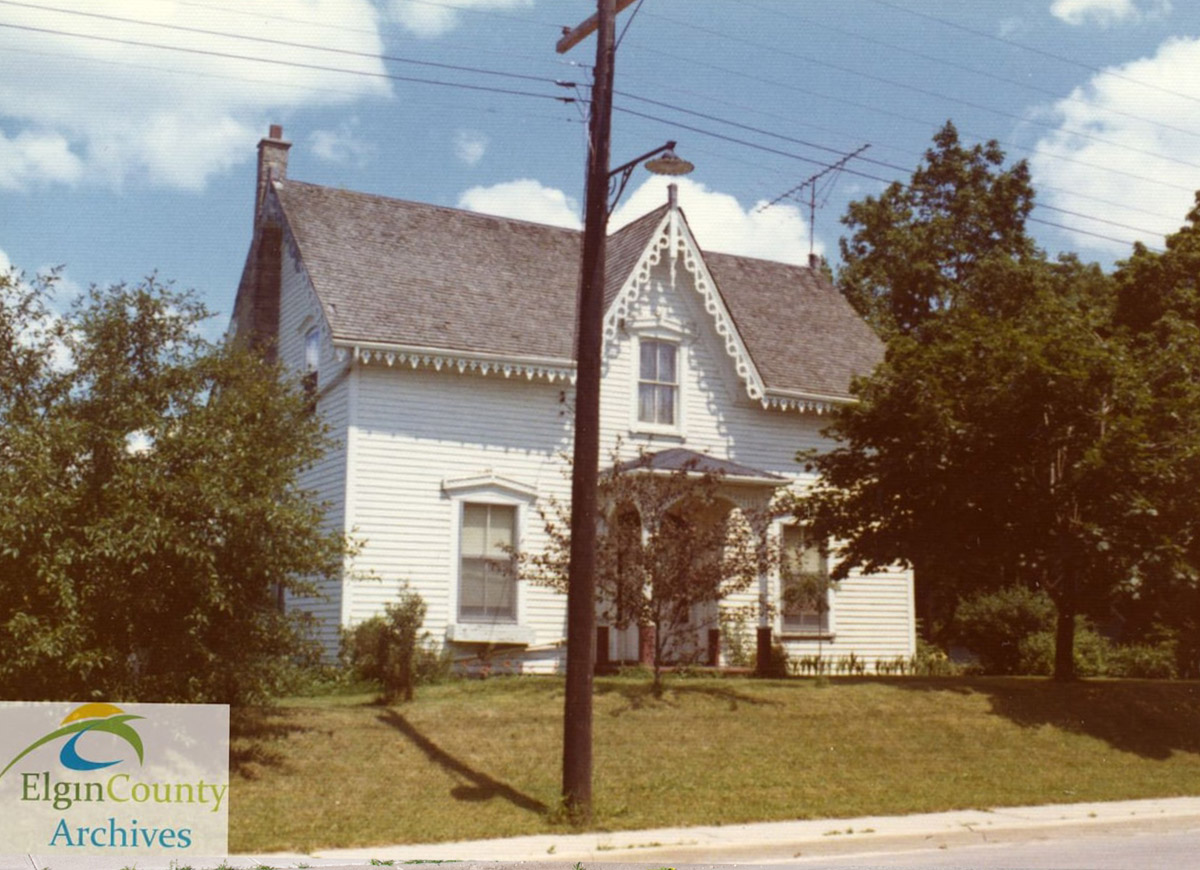
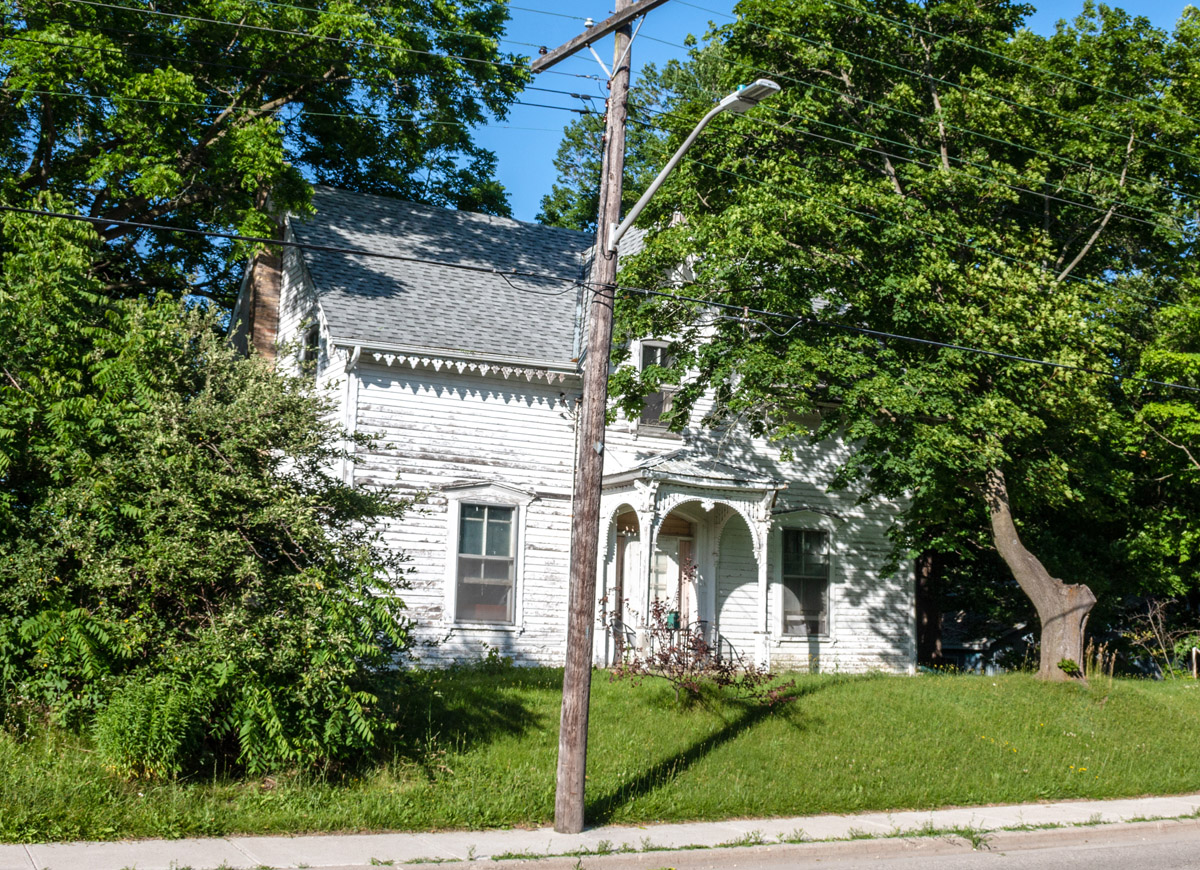
Elgin County Archives R6 S5 Sh1 B2 F1 2
ca. 1970
This home in Fingal is known as the Glasgow House. The Southwold Township Fingal History Tour says this of the house:
"William Glasgow, one of the partners in the MacPherson, Glasgow & Co, owned this house. As a young man Mr. Glasgow immigrated to America and found his way to Lockport, New York. He worked for a number of years and then made the acquaintance of another young Scotsman named MacPherson. Being ambitious young Scotsmen, they decided to go into the foundry business for themselves."
Chauncey Lewis House
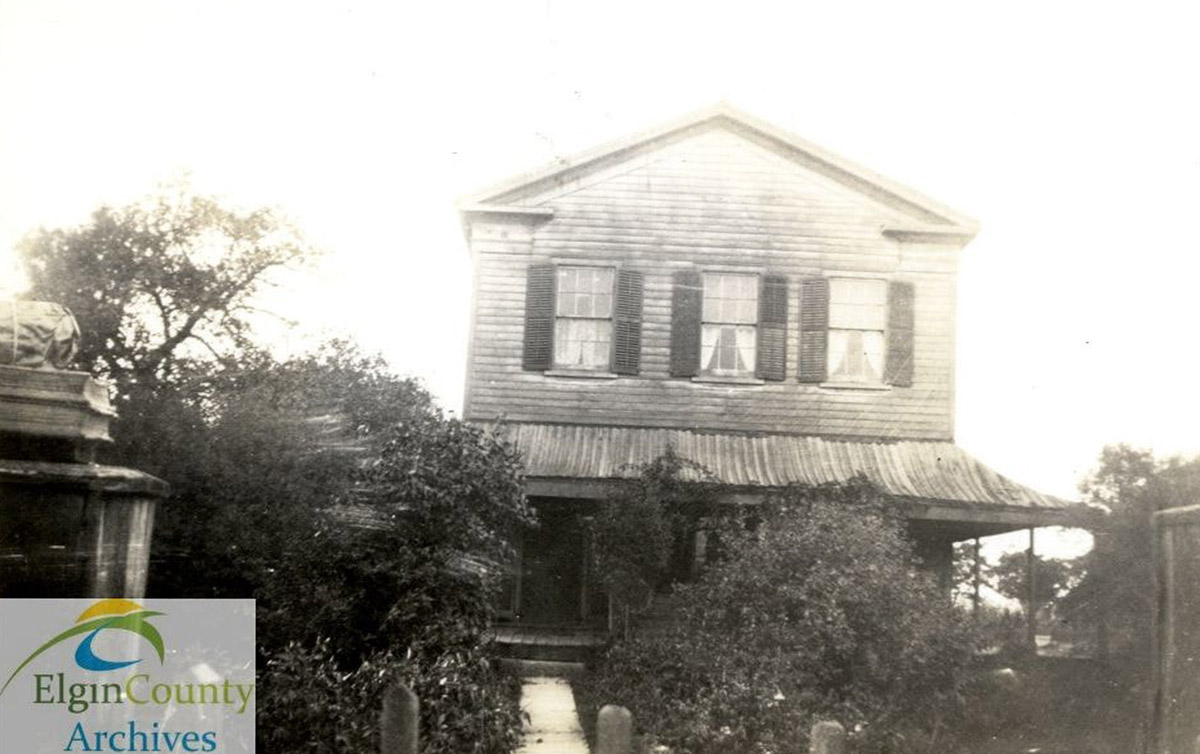
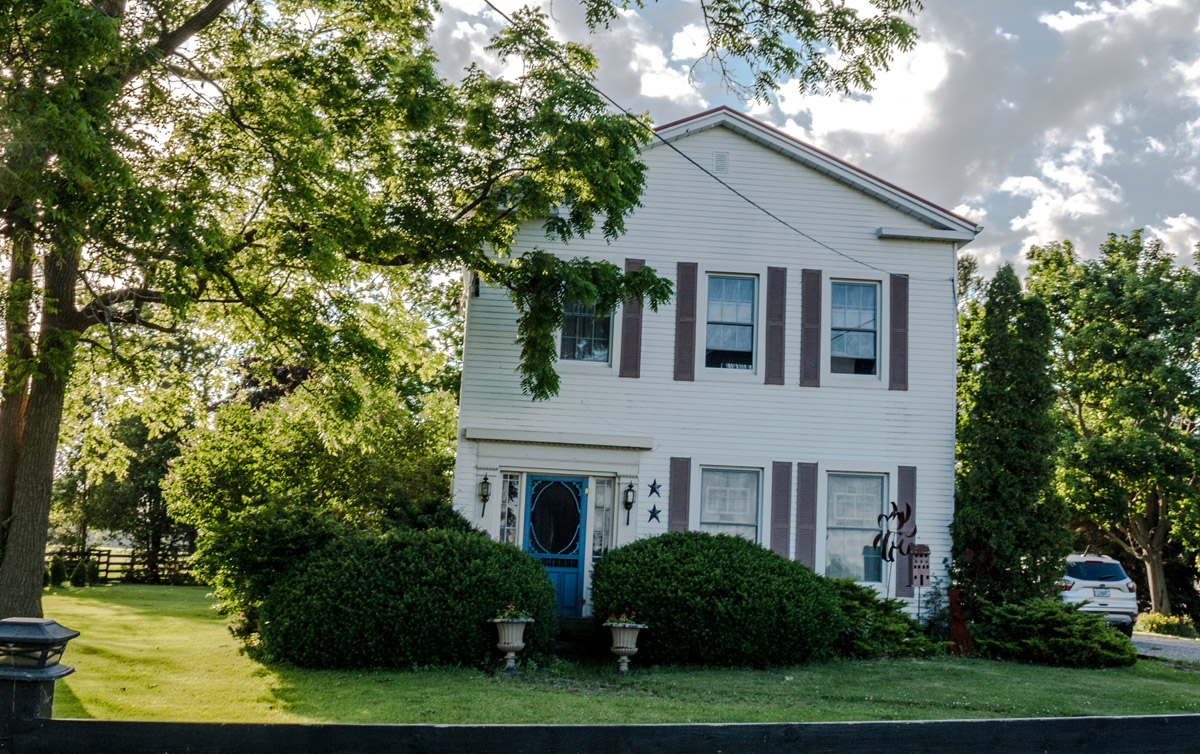
ca. 1933
Chauncey Lewis was one of six sons of Barnabas Lewis who came to Elgin County from Whitehall, New York in the mid-1820s. Chauncey bought the White Tavern, (southeast corner of Fingal Line and Union Road) from Amasa Wood in 1841. After this he opened a wagon shop on Fingal Line and built this house across the road in 1854.
This is an essentially Georgian building, denoted by the generous “returns” at the corners of the eaves which extend about four feet across the front of the house from either side. A porch once ran around both sides and the front.
Duncan MacNish House
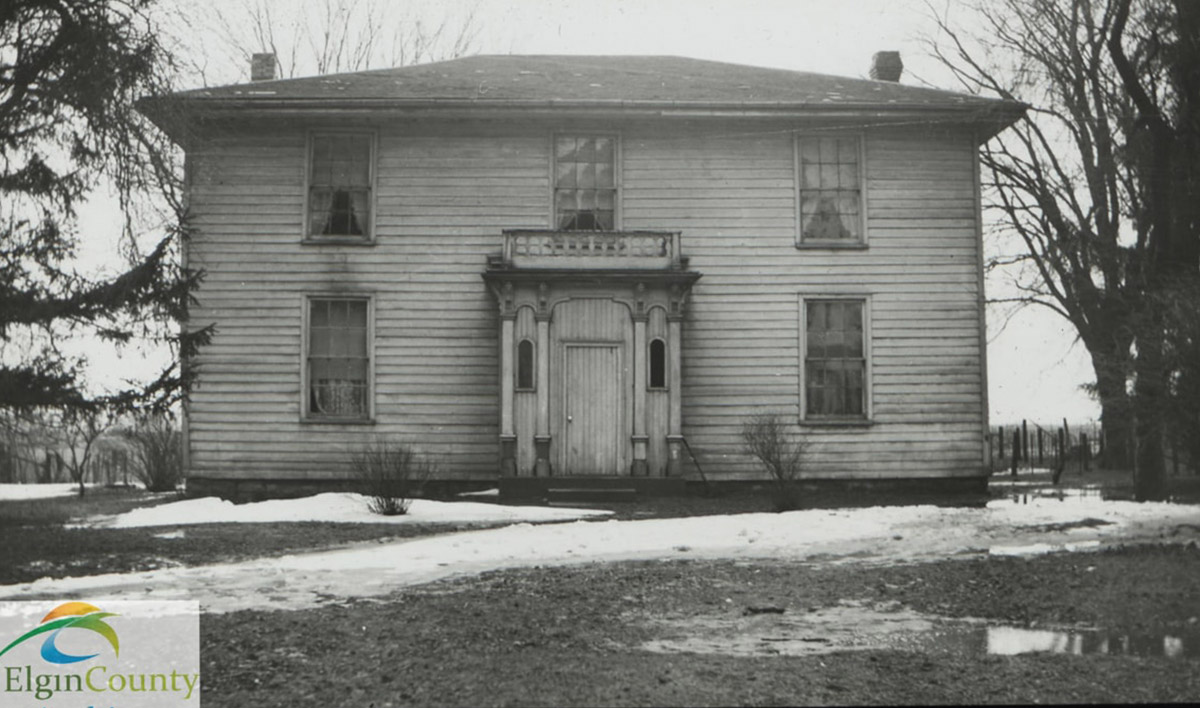
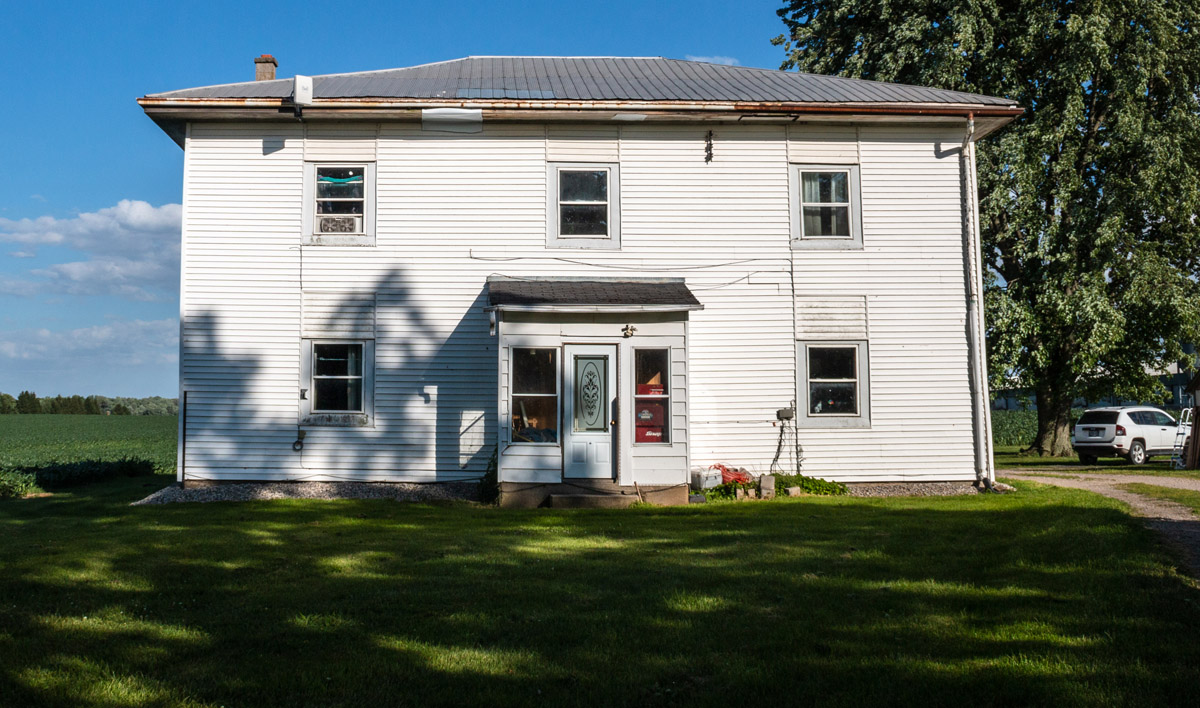
Elgin County Archives R7 S2 Sh3 B2 F21
ca. 1933
Duncan MacNish built this house in the Regency style in the early 1850s to accommodate his large family. The house to date, has belonged to only three families, Macnish, Hagerty and Luyks and is now a rental. The main house is two storeys with high ceilings. Two additions have been added at the back forming a “T” shape. The first is two storeys and the second is a one-storey section used as a summer kitchen and a woodshed. The last Hagerty family to live here divided the house into two separate residences. When the Luyks purchased it, they lowered the ceilings and replaced the windows with smaller ones. In earlier years the house had a portico type porch with an upstairs balcony, which has since been removed. Duncan’s son Donald was at one time MPP for West Elgin.
Ripley House
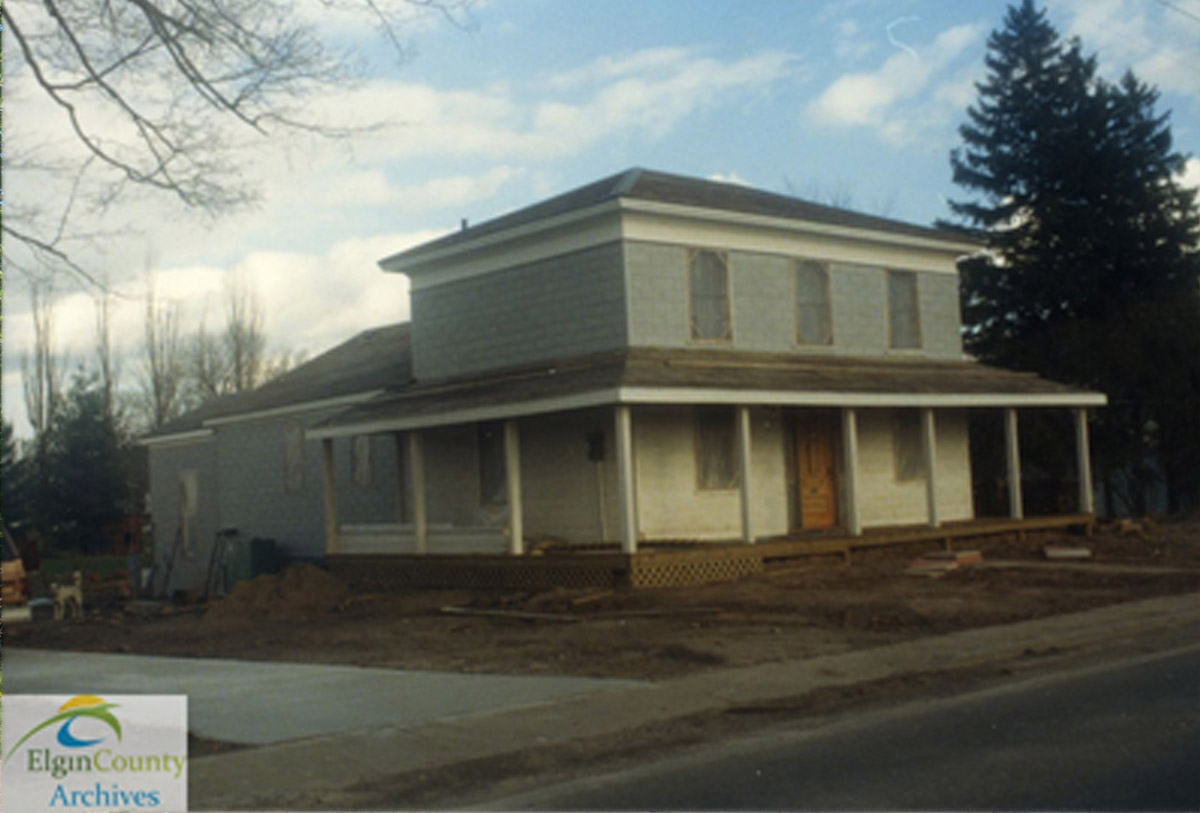
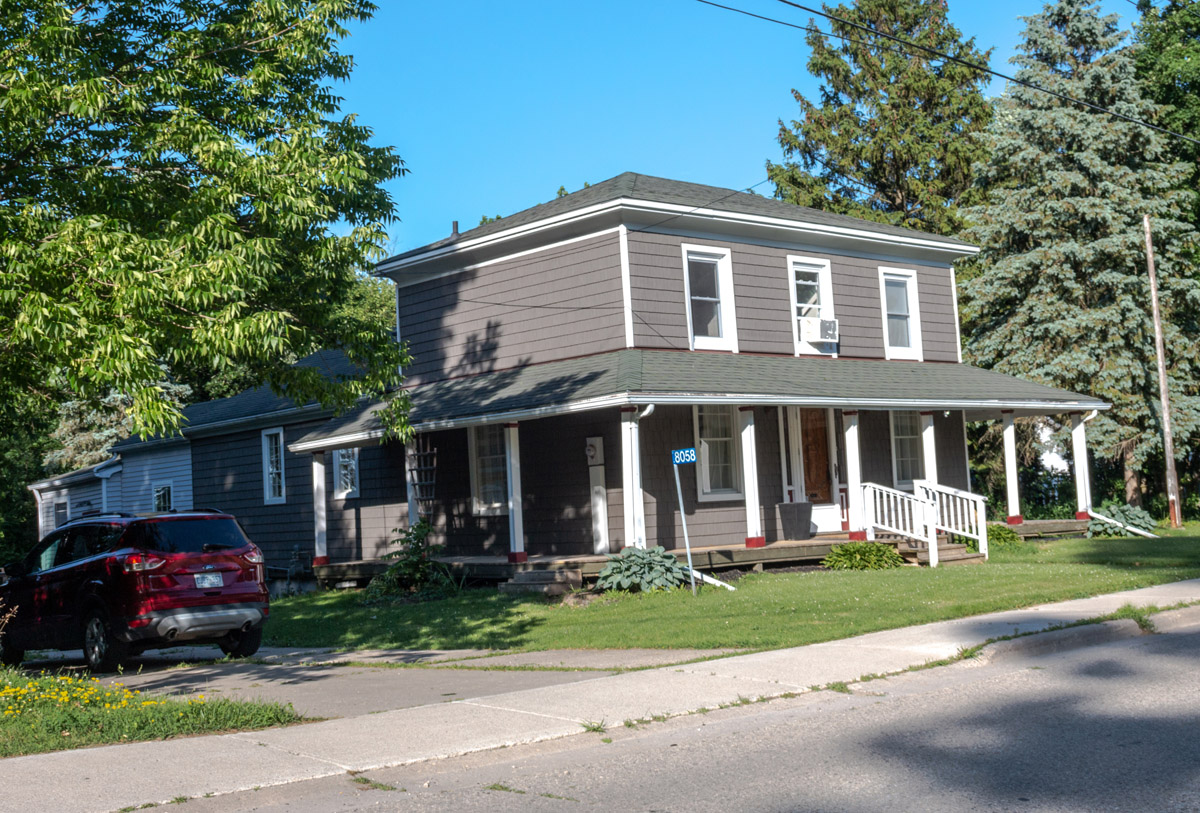
Elgin County Archives R6 S5 Sh1 B2 F4 15
c. 1987
Thought to have been built in the 1830s, the house was originally clad in siding milled to appear as dressed stone. It was purchased in 1984 and restored by Norman Ripley and his wife Mary. The Ripleys owned Ripley's Variety Store in Fingal, and Norman was a popular local musician who performed throughout the county. The building has been extensively renovated in recent times.
Watson's Corners School


Elgin County Archives R6 S5 Sh1 B1 F10 4
ca. 1947
The first school on this location, a one-acre plot donated by James Watson, was a log school built in 1818. The first teacher was William Hannah. Unfortunately, this school caught fire and was burned to the ground in 1820. School was held in private homes until a new frame school was erected in 1830. This sturdy white brick school was built in 1893. The longest serving teacher (29 years) was John McLennan. The school was closed in November, 1964 and area students were bussed to the new Southwold Public School.
Fingal


ca. 1880
Looking west on Fingal Line (former Talbot Road) from the Union Road, c. 1880.
The village was probably named by Colonel Thomas Talbot after Fingal County near Malahide, his home in Ireland. Fingal’s first lots were surveyed in 1830. By the 1880s, grocery stores, blacksmith and harness shops, hotels and inns, and tailor and cobbler shops lined the streets. During the 1950s and 1960s the village’s main street still had two grocery stores, a gas station, a barber shop and electrical construction store, but one by one they eventually closed. The brick block on the corner was demolished in December of 2017. In the distance is the first Presbyterian church built in 1850.
Fulton House


Elgin County Archives M5 S1 Sh1 B4 F4 2
ca. 1900
Samuel and Robert Fulton, hoteliers and sawmill owners, erected this building in 1872. One of the features of hotels in those days were the “sample rooms” which provided traveling salesmen from city wholesale houses and factories a place lay out their wares. Owners of general stores in the area would come in to see the goods and place their orders.
Rooms were also available for “boarders” should they plan to be in the area for a while. Through the years, the building passed through many owners and served many purposes including as a store, a Chinese restaurant and a Gospel meeting place. The building was demolished in 1981. Summit Food Service operated for many years in the building now on this site.
MacPherson, Glasgow and Company


1877
The Final Foundry. A horsepower sweep mounted on wheels and a threshing machine can be seen on the street in front of the main factory building in this sketch from the 1877 Elgin County Atlas.
The company was founded in 1848 to supply the region’s farms with a variety of farm machinery eventually specializing in threshing machines. A threshing machine in the mid-1800s was a metal cylinder with protruding spikes mounted in a wooden frame that could mechanically separate the wheat seeds from the stalks. Before this, threshing was done on the barn floor with a hand-held flail. The threshing machines required horsepower to turn the cylinders.
Horse-powered sweeps which ran the threshers through a system of gears were also made by the company.
They later sold portable steam engines, that were drawn by a team of horses from farm to farm, to power their threshers which had become much larger. The company employed about 50 men and shipped machines as far away as Manitoba. Daniel MacPherson, a Scot living in the Fingal area, brought William Glasgow and Matthias Hovey to Fingal from Lockport, New York to start the company.
The company was sold in the 1890s and not long after that the factory burned. The site was later the Fingal ball diamond and is now the Fingal Heritage Park. A scale model of one of the company’s threshing machines can be seen in the park today.
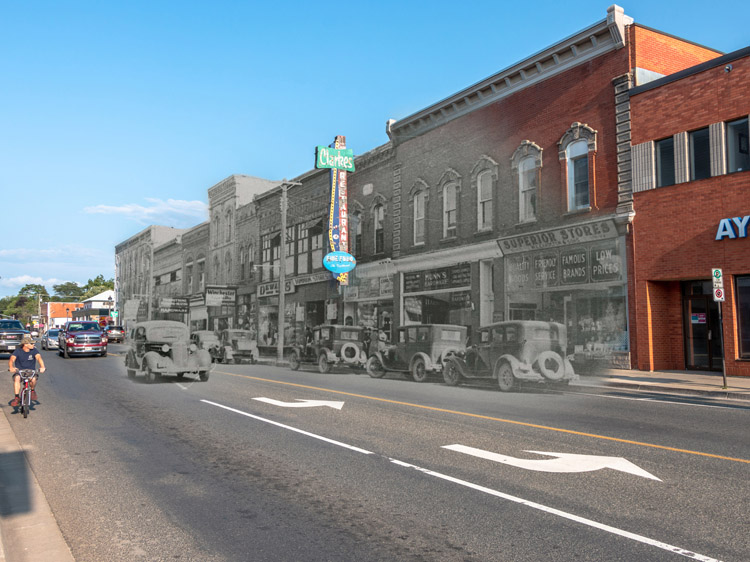
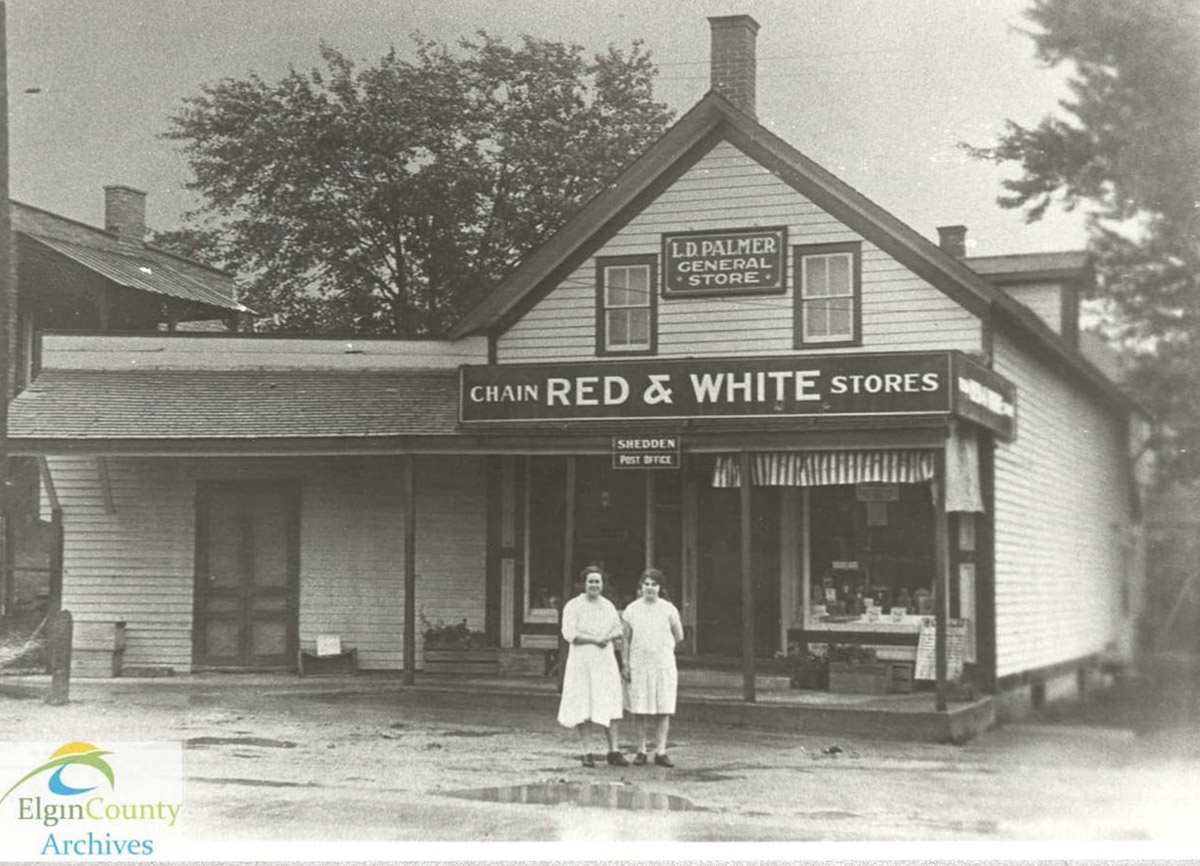
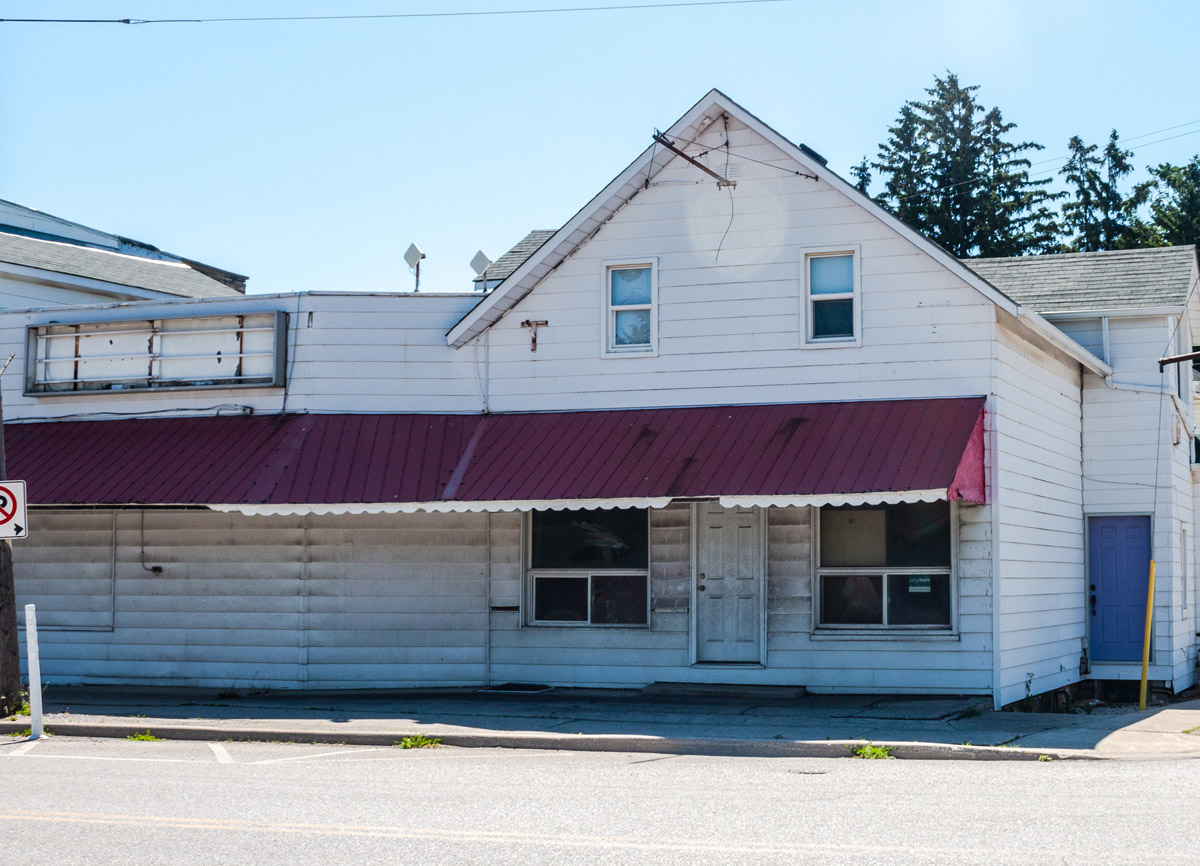
Palmer's Red & White


ca. 1930
Palmer's Red and White, Shedden, c. 1930. Mrs. L. D. Palmer (left) and Stella Schraeder (later Garrow)
Palmer’s store was opened in this building in 1922 by Leonard D. and Ruth Palmer who lived upstairs with their children until 1955. Between 1930 and 1957 the store also housed the Shedden post office.
Palmer’s became part of the Red & White chain in 1929, once the largest grocery chain in the world. Len’s sons Ralph and Clarence took over in 1952, overseeing a continuous expansion into the neighbouring block of stores until by 1962 they occupied the whole block. The east end of the block had seen many tenants previously including a men’s wear store, a barber, a doctor, an insurance office, and lastly Braddon’s furniture, tinsmith and plumbing. Palmer’s carried a huge inventory of groceries, dry goods, toys, and gifts.
Palmer’s was able to supply their customers’ needs even after leaving the Red and White group in 1990. The employed a large number of family members, each of whom looked after a specific department. Difficulty in finding suppliers who would deal with a small independent store and competition from the big chains brought about their decision to close in 2007.
School Section No. 12 School


Elgin County Archives 022.028.002
1930s
The school was constructed in 1918 to replace an earlier school on this site which had burned down the year before after only five years of service. As a “continuation school” students could attend grades 9 to 12 here in addition to the primary grades. Each township’s many small school sections were ‘consolidated’ in the 1960s which eventually meant all students would attend the new Southwold Public School, located further east on Fingal Line, which opened in 1964. The bell from S.S.#12, which rang for the last time on June 30, 1969, is now mounted in front of that school. Today this building contains four residential apartments.
Wayside Inn


Elgin County Archives Box 538, Envelope 104
ca. 1936
In 1936, this location was the intersection of what were then Highways #3 and #4, an ideal place to build a restaurant and gas station. From the beginning it was also a stop on the Greyhound Bus route from Detroit to Buffalo with as many as 40 buses a day stopping here. The bus terminal relocated to St. Thomas in the late 1940s, but buses continued to stop at this location until the 1970s. This is one of the oldest restaurants in southwestern Ontario and has served generations of area families. The structure was rebuilt after a devastating fire in 2001, but the original 1936 stone fireplace remains as a reminder of its early days.
Blackwood House


Elgin County Archives R7 S2 Sh3 B2 F13
c. 1933
Built in the 1850s for Robert Blackwood, a merchant who established himself in Fingal in 1839. He was associated with an uncle from whose wholesale house in Montreal he obtained most of his goods. He benefited from his location on the original Talbot Road which ran through Fingal in those years and saw a lot of traffic from settlers arriving in the area as well as from those heading further west. Most of his wares would have been brought up the Union Road from ships docking at Port Stanley.
The house is essentially Georgian in design, marked by a symmetrical facade, a hipped roof and a decorative line of brick work under the eaves. It is missing what was a substantial front porch, the outline of which can still be seen on the front wall.
House of Industry


1962
Shortly after Confederation, the Ontario Legislature passed an act requiring each county to build a House of Industry and Refuge to house the “destitute, poor and infirm.” Often the “inmates” were, in the terminology of the day, “weak in mind, idiots or insane” and also often destitute, sick, old, crippled, or blind. Elgin County’s home opened in 1876 offering food and shelter to residents who, if able, participated in the upkeep of the building, and worked the institution’s fields.
With accommodation for 125 people, the building was heated with wood stoves, and eventually a hot water system was added. A government grant permitted expansion in 1891 when a third wing was added, furnished with iron bedsteads and straw mattresses. In 1964 the first Elgin Manor senior’s residence replaced the House of Industry. Most rooms were four-person wards, with only a few two-person rooms. Common bathrooms with toilets and wash basins were shared by residents, and tub rooms were used for bathing. The cost to live here was determined by the Notice of Assessment on a resident’s income. In 1969 an addition was added on the west side which housed “bed care” patients.
This facility eventually became outdated and was replaced in 2003 by the present Elgin Manor located next door. Here greatly improved conditions are enjoyed by its 90 residents. The site of the old House of Industry is now occupied by a private senior living facility.
Daniel MacPherson House


Elgin County Archives R6 S5 Sh1 B2 F4 12
ca. 1970
Daniel MacPherson born in Helmsdale in the highlands of Scotland around 1816 came with his family to Port Talbot in 1819. A mechanically minded person, he imported what was likely one of the first threshing machines to the area and soon decided he could build them himself. With the help of two machinists from Lockport N.Y., he formed MacPherson, Glasgow and Company in 1848. When the foundry burned in 1867, he rebuilt it and then hosted a visit from Hon. George Brown, a Father of Confederation, who spoke to a crowd in the new factory. Brown was then invited to have dinner with the MacPhersons.
Daniel and his wife Mary raised their family in this brick house, built in the 1850s. A highlight is the curved arch over the door containing a fan light (though not the original). It is said that Daniel built a corduroy sidewalk (made by laying logs side by side) from the house to Knox Presbyterian Church in order that Mary could walk to church and keep her skirts clean.
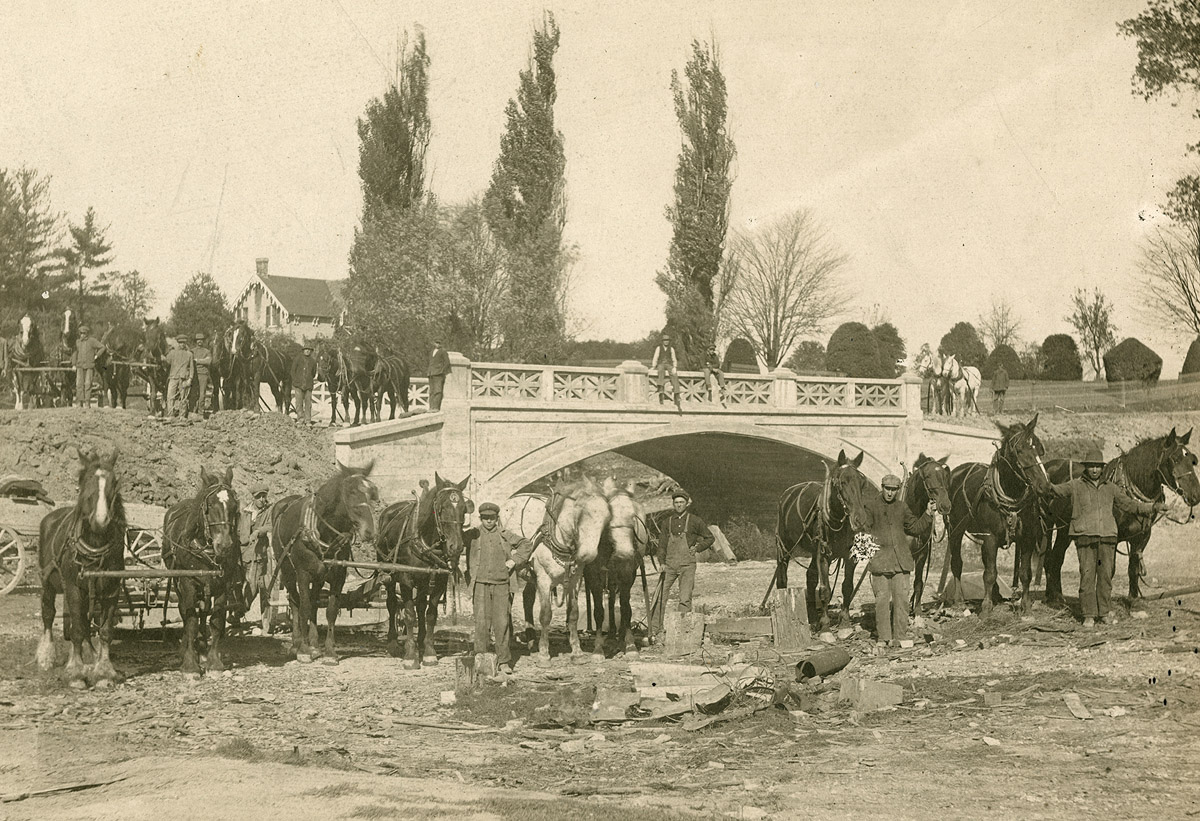
Paynes Mills


1918
A newly completed cement bridge over Dodd Creek, east of Paynes Mills. The decorative railings were cast in Aylmer and brought to the site by William Futcher. In the background in the Pow house.
Squire George Robb House


Elgin County Archives R7 S2 Sh3 B2 F15
ca. 1933
This house is a large two-storey brick structure with a hipped roof in the Regency or Georgian style. The main entrance had an ornate porch which has since been removed. George Robb acquired the title “squire” as he was one of Elgin County’s first magistrates. He arrived here in the 1820s from Aberdeenshire, Scotland and having received a good education he was appointed to the office. The house was built about 1850.
Middlemarch Stage


ca. 1890
Middlemarch Stagecoach stopped at the northwest corner of Fingal and John Wise Line, c. 1890
The stagecoach is stopped here in front of Stinchcombe’s general store and blacksmith shop.
Middlemarch mail was delivered by a stagecoach service which travelled from Fingal to St. Thomas and back 3 times a day. Iona was later added to the route when a Post Office opened there in 1853. Both the store and the blacksmith shop which has been moved back behind the house, are still standing. Middlemarch was once known as Smoak’s Corners after an early resident. It was later renamed after the George Eliot novel by Jabel Robinson, a one-time Member of Parliament for the county,