Walking Tour
Trail History Quest
Riddles of Trail's Past
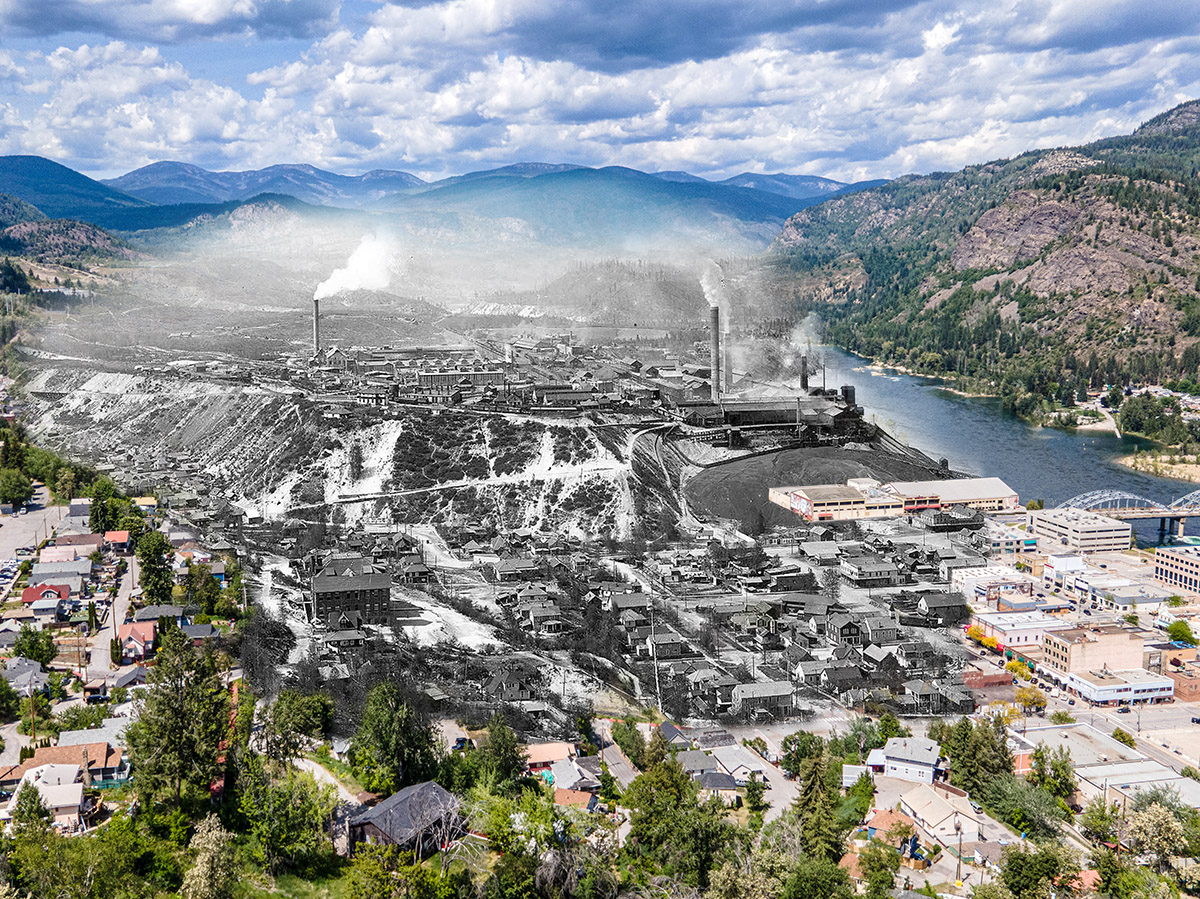
Decipher Trail's fascinating history in this interactive scavenger hunt experience. With six different puzzle types to solve that cover many aspects of Trail's story, you'll get to know this city in ways you never thought possible, and have a blast while doing it!
This scavenger hunt covers much of downtown Trail and should take around two hours.
When taking the hunt, always be aware of your surroundings and avoid trying to restage photos in the streets.


This project is a partnership with the City of Trail and the Trail Museum & Archives, part of the celebrations of Trail 125. We also thank the Columbia Basin Trust, Teck Trail Operations, and FortisBC for their generous support.




. Flooding AR Experience
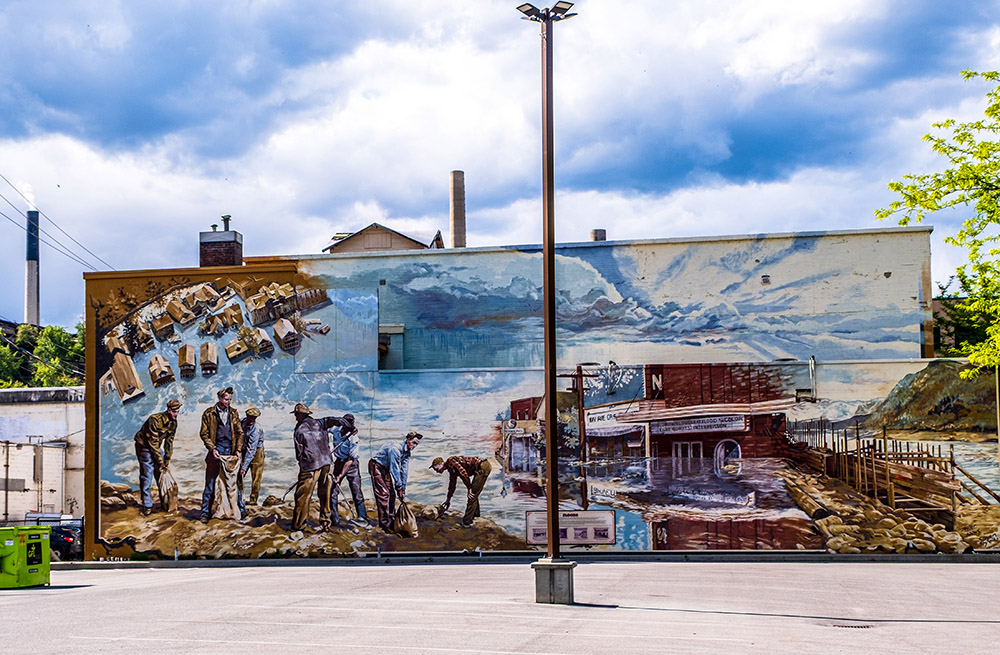
Aim the camera at the mural to activate the Augmented Reality experience. Once you've activated it press the speaker button to activate sound.
. The Crown Point Through Time
1908-1997
Arrange these four photographs from oldest to most recent.
* * *
. Trail's Evolution
1896-1950s
Arrange these four photographs from oldest to most recent.
* * *
When Trail was founded, the downtown was cut in half by Trail Creek, and a bridge on Bay Avenue was built across the creek to connect the two sides. It wasn't until 1911 that the creek was culverted and slag from the smelter was used to fill in the creek bed, which was quickly built upon with new businesses.
East Trail also became an important community, after a bridge was built across the Columbia River in 1912. The bridge still stands, though it is closed to the public. That bridge was the only one across the Columbia in Trail until 1961, when the large highway bridge was built on Victoria Street, just beneath smelter hill. Known as the “New Bridge” for decades, the term is used less since a newer bridge, the Columbia River Skywalk, opened in December 2016.
. Trail's Methodist Church
Trail Museum & Archives No. 12208
ca. 1898
Choose the photo showing Trail Methodist Church that was once taken from the spot you are standing on.
* * *
It was built in 1896 (the photo was likely taken shortly after) and was a modest wood-frame building with a square bell tower at the corner closest to the intersection. It was built in the Gothic Revival style, which took inspiration from Medieval European cathedrals. You can see this in the pointed arch windows and doorway, as well as the decorative trim at the top of the roofline and on the bell tower. Instead of great carved stone blocks like its European antecedents, on the Canadian frontier these effects were achieved with timber and clapboard.
Sitting at the bottom of the steep hills surrounding Trail, and facing out towards the mighty Columbia River, this simple, sturdy, and unpretentious church was a reflection of the Methodist faith of those who worshipped here.
Most striking is the attached square bell tower, open on all sides near the top so the bell's ring could carry across town, and capped with a small pyramid roof. Simple, sturdy, and unpretentious, the church sits comfortably against the forested mountains of the Columbia River valley
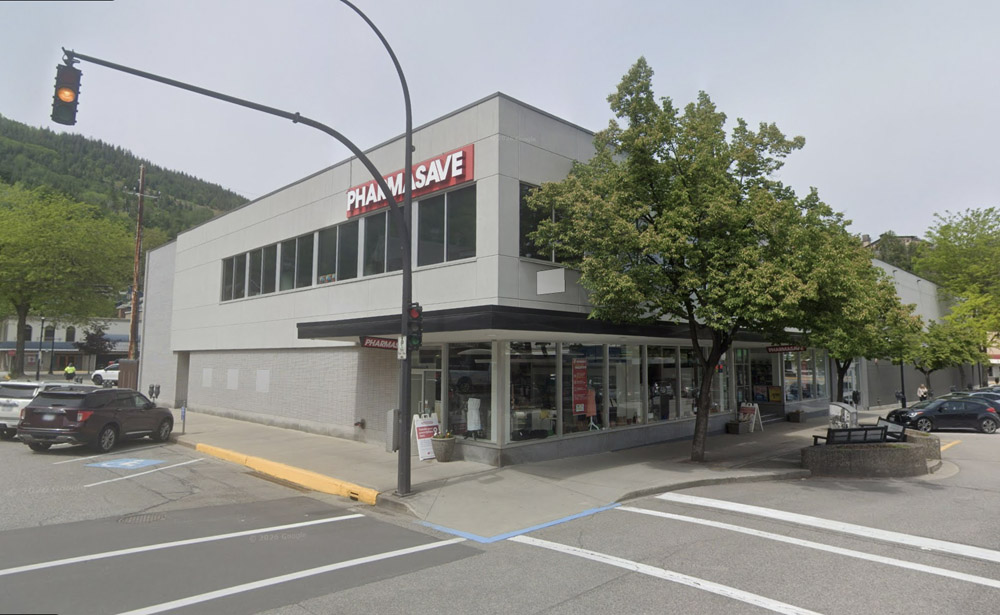
. The Company Store
1946
Choose the photo that shows the CM&S Company Store that was once photographed from the spot you are standing on.
* * *
It sold all the necessities like groceries, clothing, and household wares at relatively cheap prices. Though Trail Mercantile was just a couple blocks away, a company store was designed to ensure employees of operations in more remote areas had access to necessities. It also allowed employees to pay for items on credit from their upcoming pay cheques. It was a win-win, as profit cycled back into the company.
But, in 1951 the Hudson's Bay Company bought out the store as the town grew to over 12,000 people. Trail would welcome an Eaton’s two years later. The old Company Store was soon demolished, replaced by the clean brick facades and distinctive clock on the corner with the more toned down modernist style building you see today. In the 1980s, it became a Zellers, and then a video rental outlet, and finally, in 2012, Pharmasave.
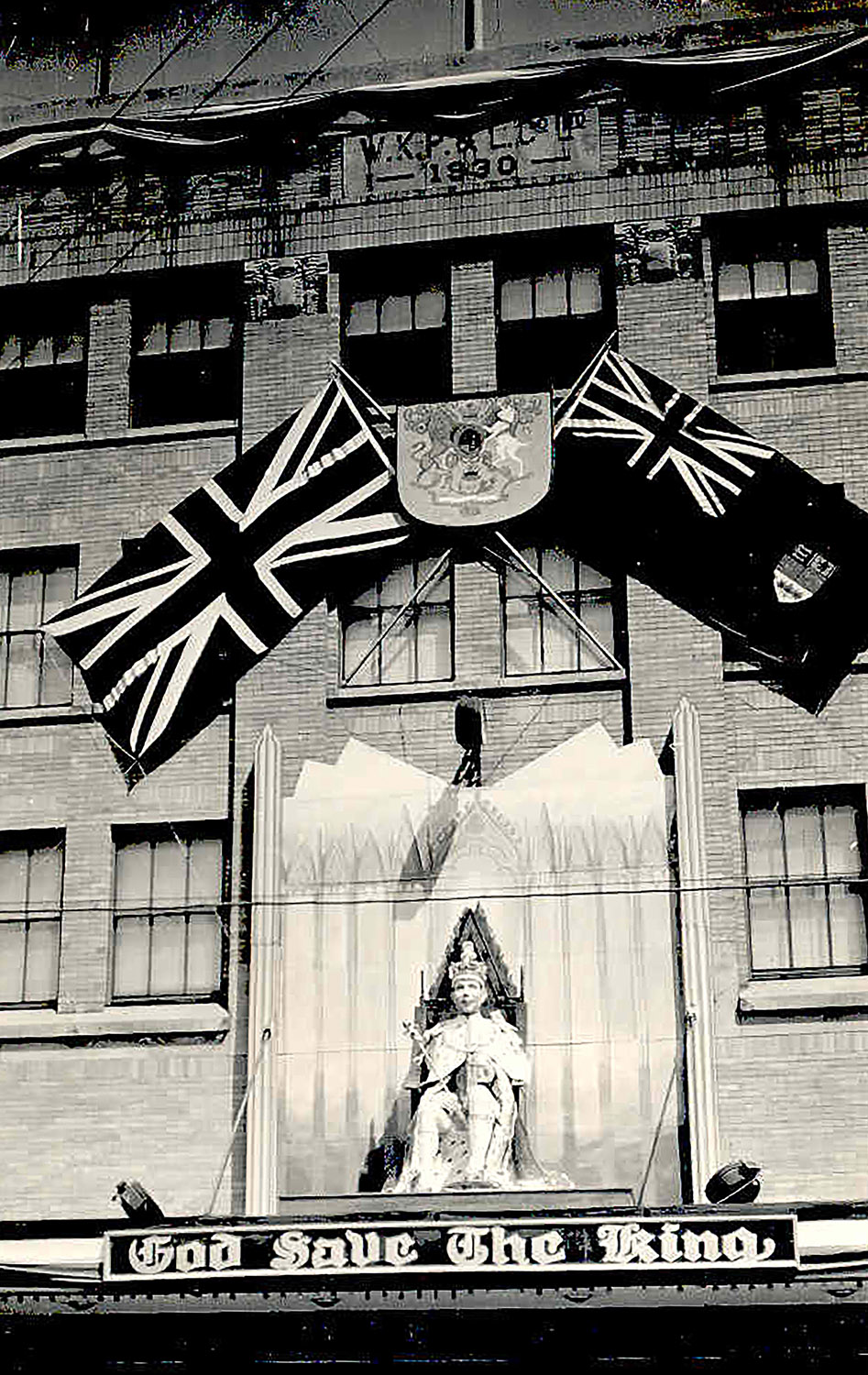
. A King is Crowned
Trail Museum & Archives No. 5950
1937
Somewhere within the indicated area of the map, this historic photograph was taken. Figure out where the photo was taken and use the in-app camera to restage the photo as closely as you can to the original. The building is still standing!
* * *
. City of Champions
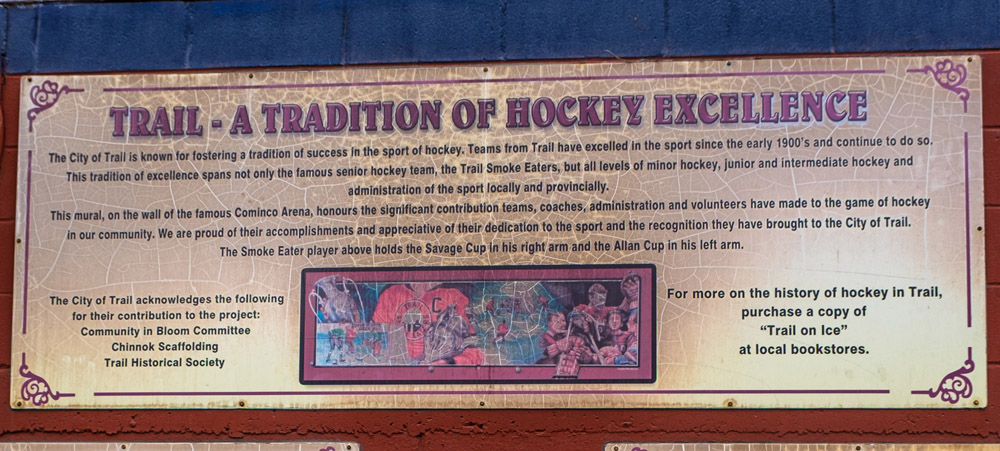
The Smoke Eater player in the mural holds the Savage Cup in his right arm and the Allan Cup in his left. The Savage and Allan Cups were awarded to them for becoming champions of what?
* * *
This mural, on the wall of the Trail Memorial Centre, honours the significant contribution that teams, coaches, administration, and volunteers have made to the game of hockey in our community. We are proud of their accomplishments and appreciative of their dedication to the sport and the recognition they have brought to the City of Trail.
Read the placards at the bottom of the mural to learn more about Trail's triumphant hockey history.
. Trail's Police & Fire Departments
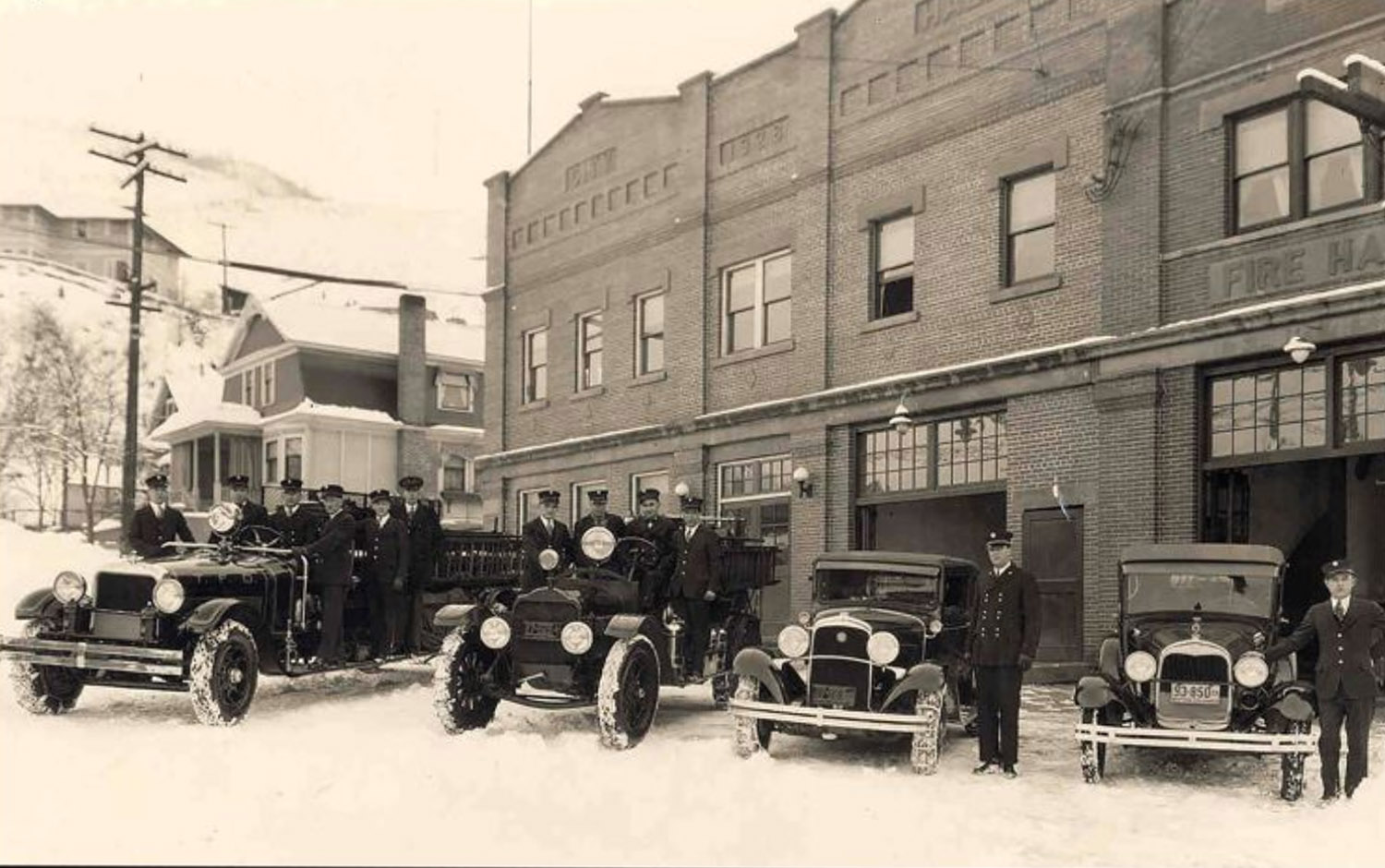
Trail Museum & Archives No. 1087
1929
This historic photograph was taken somewhere within the indicated area. Find the spot where the historic photographer was standing and use the in-app camera to recreate the photo as closely as you can.
The building has been heavily modified, but you can still find it.
* * *
. The Bowery Bridge
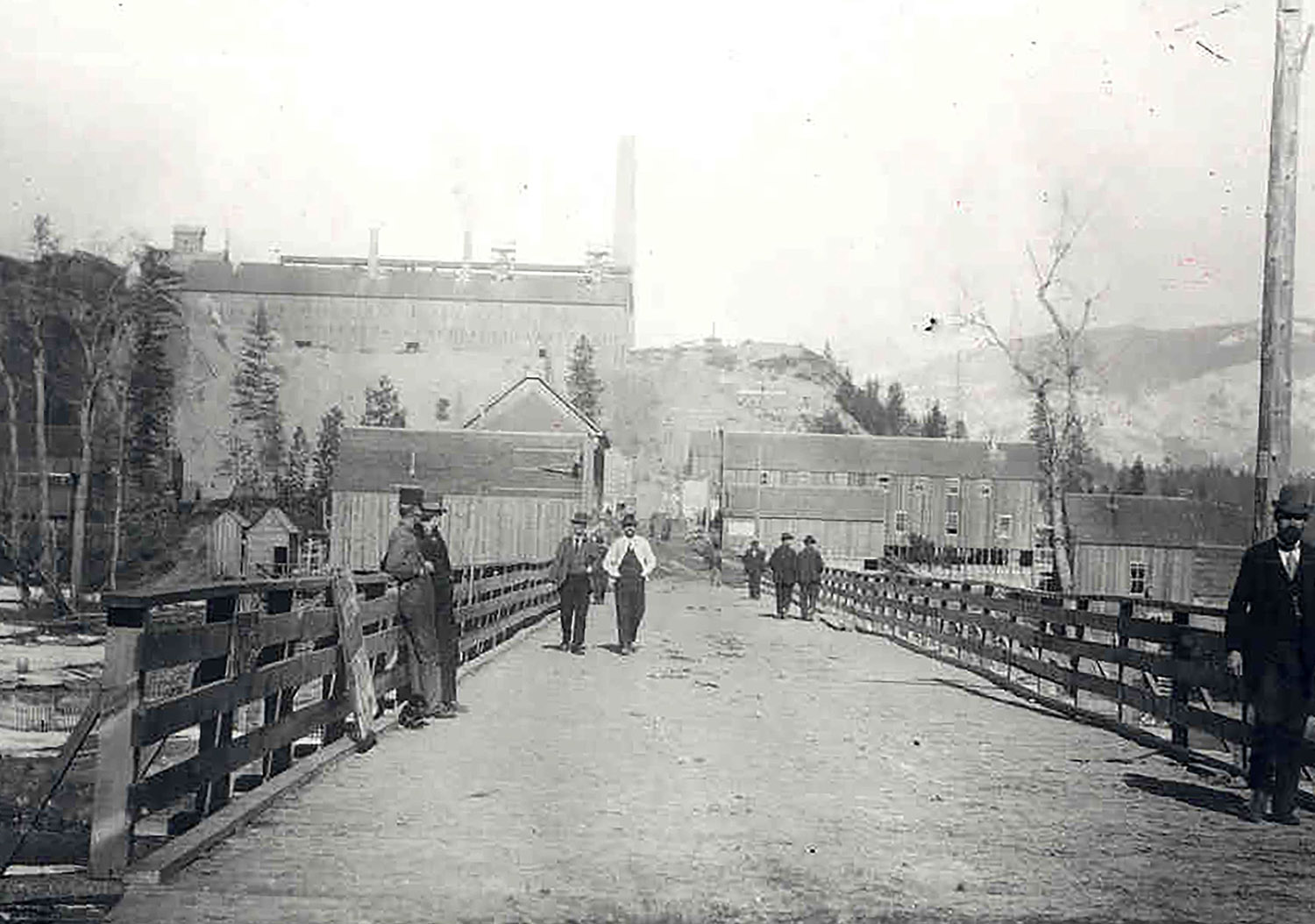
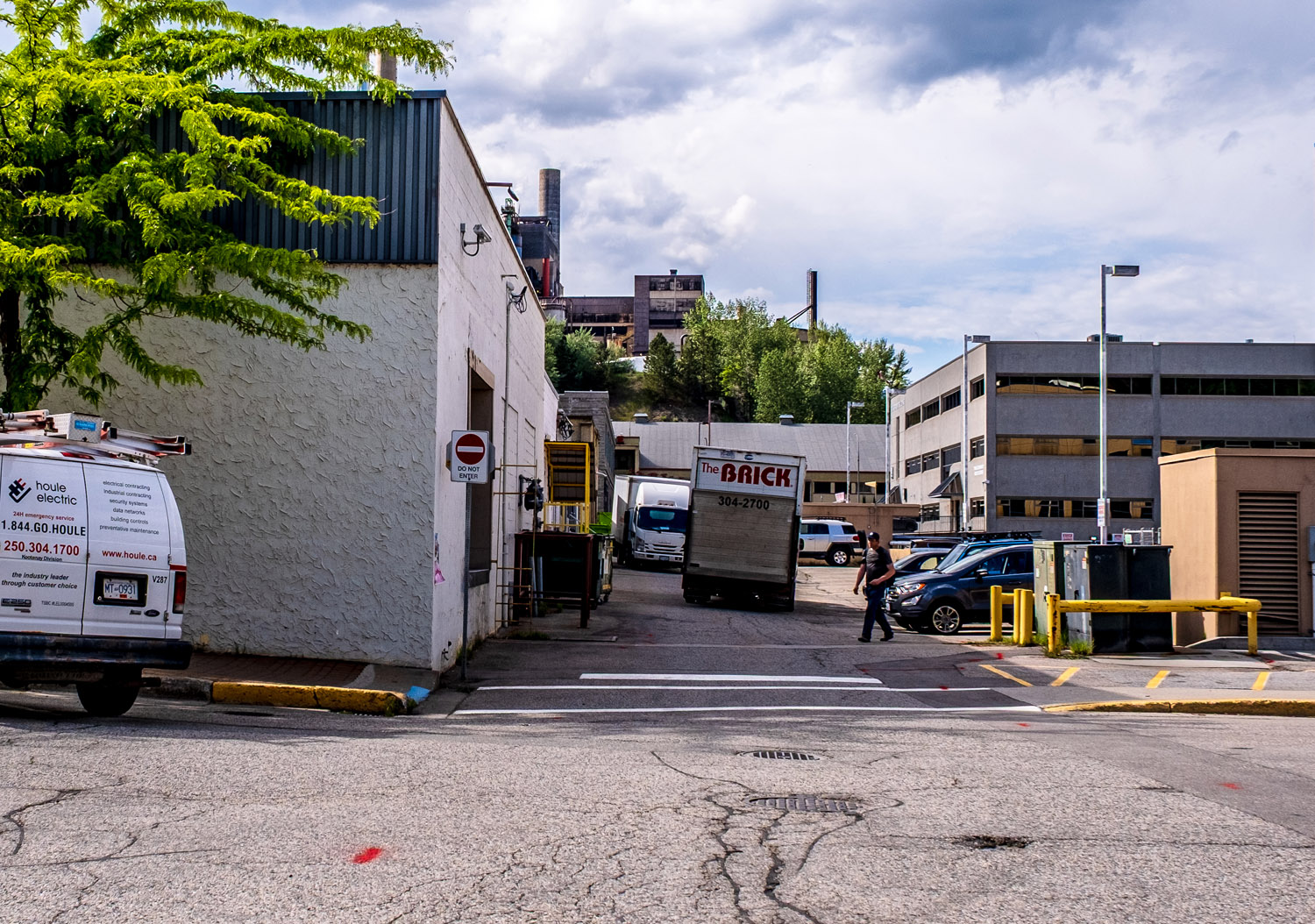
Trail Museum & Archives No. 5335
1897
What was the name Bowery changed to? Today it is _______ Avenue.
* * *
The Bowery, along with Bay Avenue, were together the main business thoroughfares in early Trail, and many frontier-style businesses were built on stilts on either side of the bridge. This area was home to many of Trail’s Chinese residents, with rooming houses, laundries, and cafes.
In 1911, the creek was culverted and the gulley filled in with slag from the smelter. A range of new businesses sprang up on either side of the Bowery, until it had its name changed to what it is today.
. A Premier Surveys the Damage
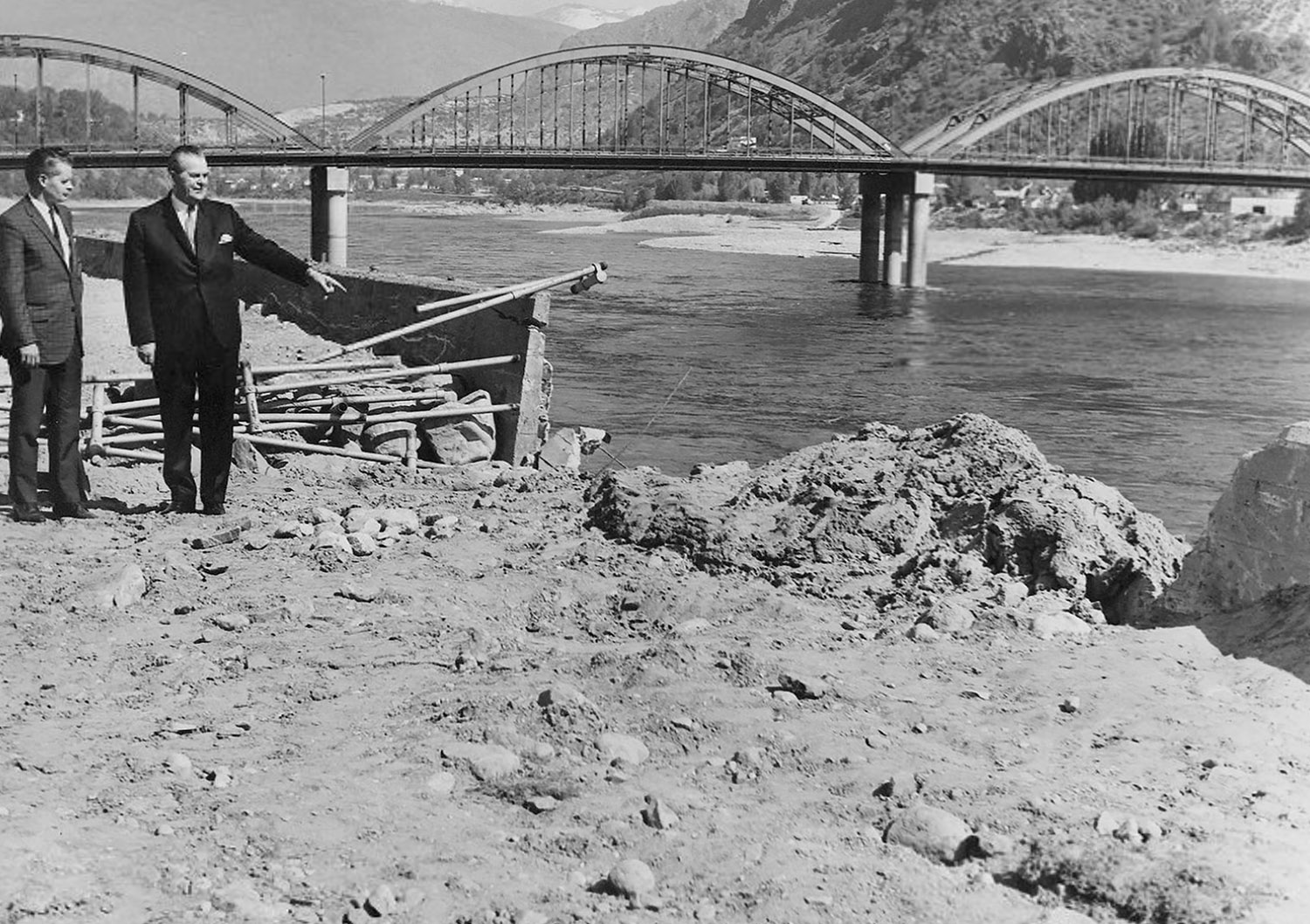
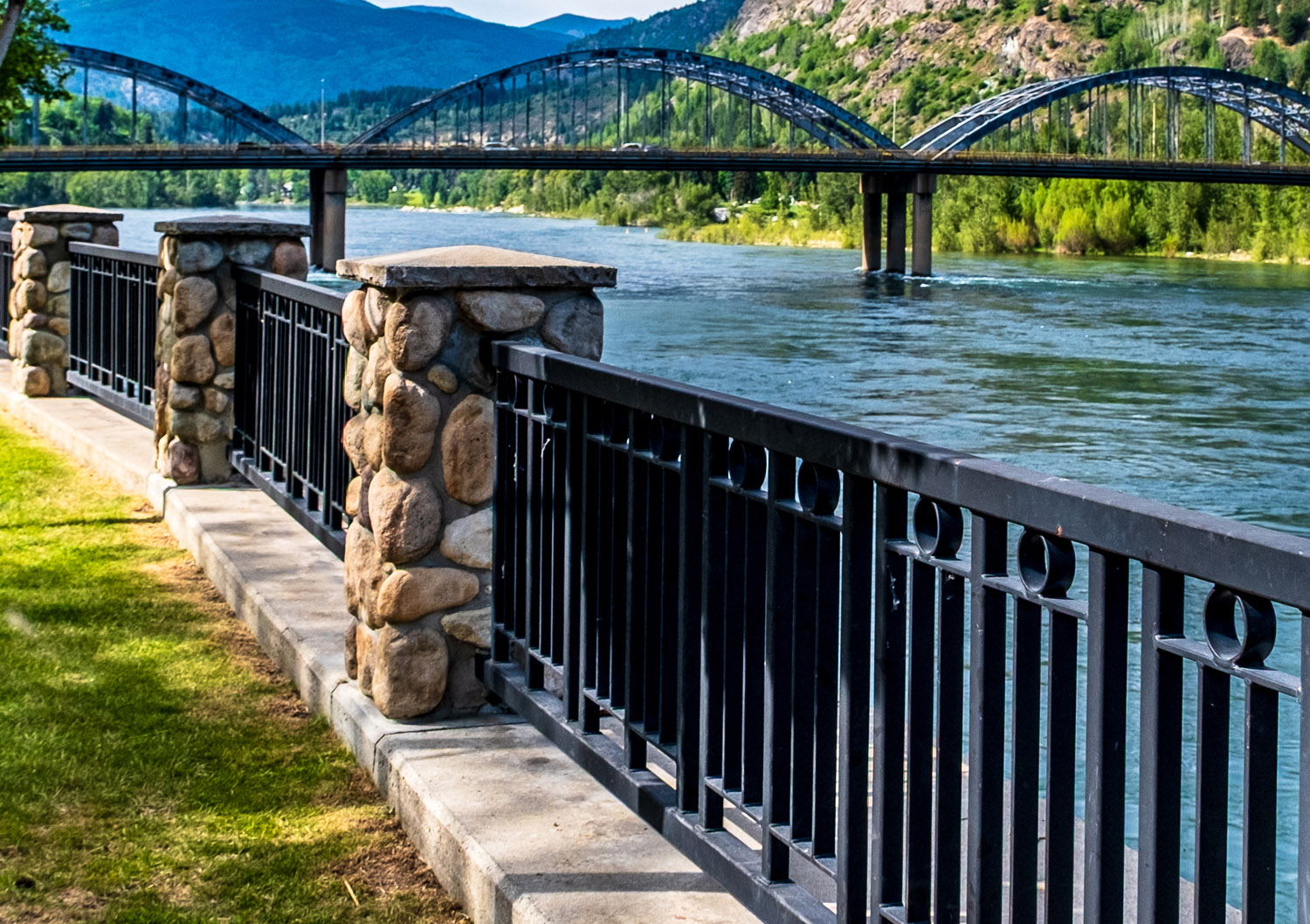
Trail Museum & Archives No. 12734
1969
Which premier is this?
* * *
. Trail's Roll of Honour
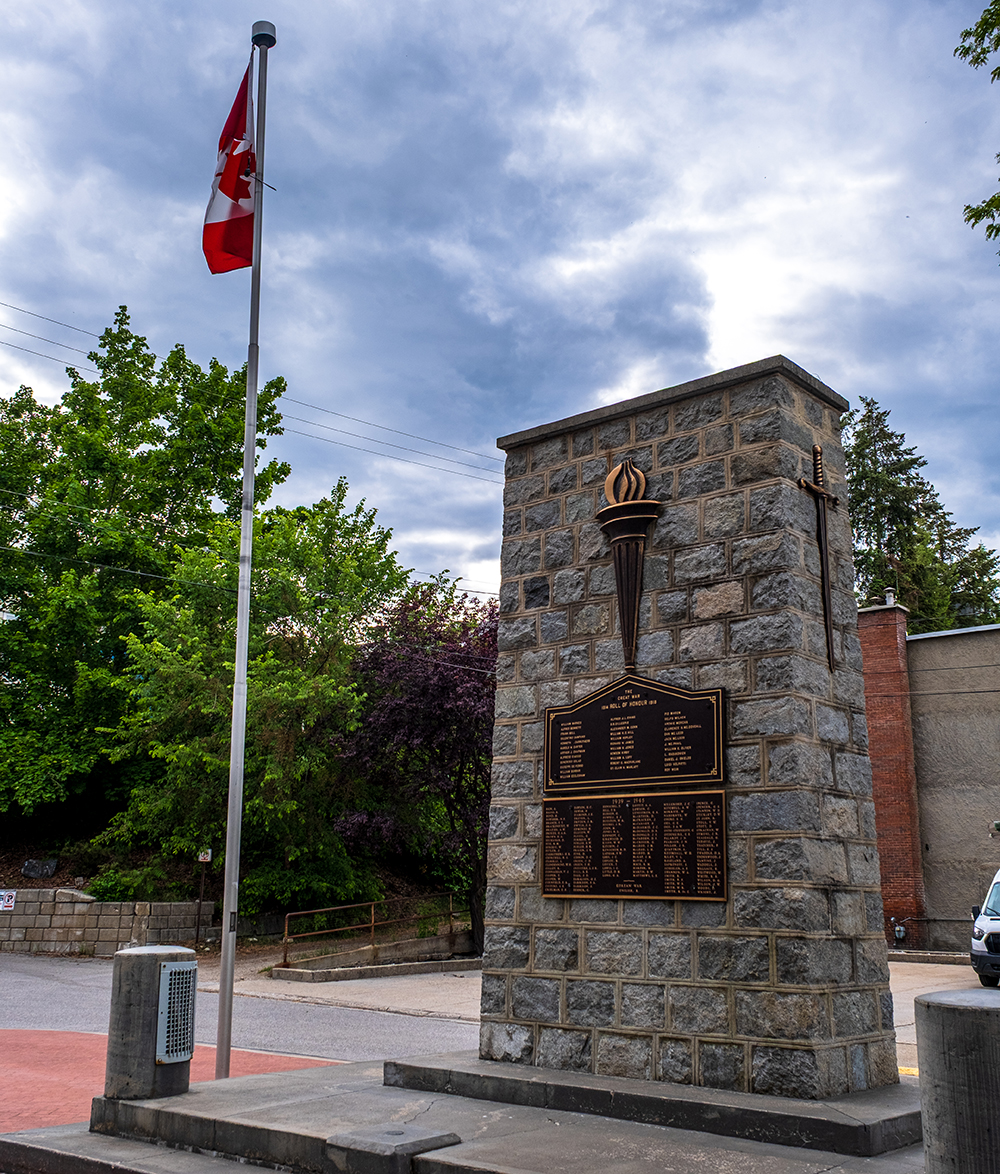
1914-1953
Which Trail soldier who fell in the Second World War shares his last name with a legendary wartime leader?
* * *
Walk around the cenotaph and take a moment to read the names: the people of Trail paid a heavy price in blood.
One of the men who fell in the Second World War, shared a last name with a war-time leader. The soldier's first name, Randolph, also happened to be the first name of that leader's father, as well as his son. There was no known relation between the Trail soldier and the wartime leader.
Bibliography
We hope you enjoyed this scavenger hunt experience brought to you by the Trail Museum and the City of Trail! Be sure to check out our other On This Spot scavenger hunts and walking tours in Trail, and more will be added all the time!