Walking Tour
The Gimli Saga
The Birth of New Iceland
By Mack Stanbridge & Andrew Farris
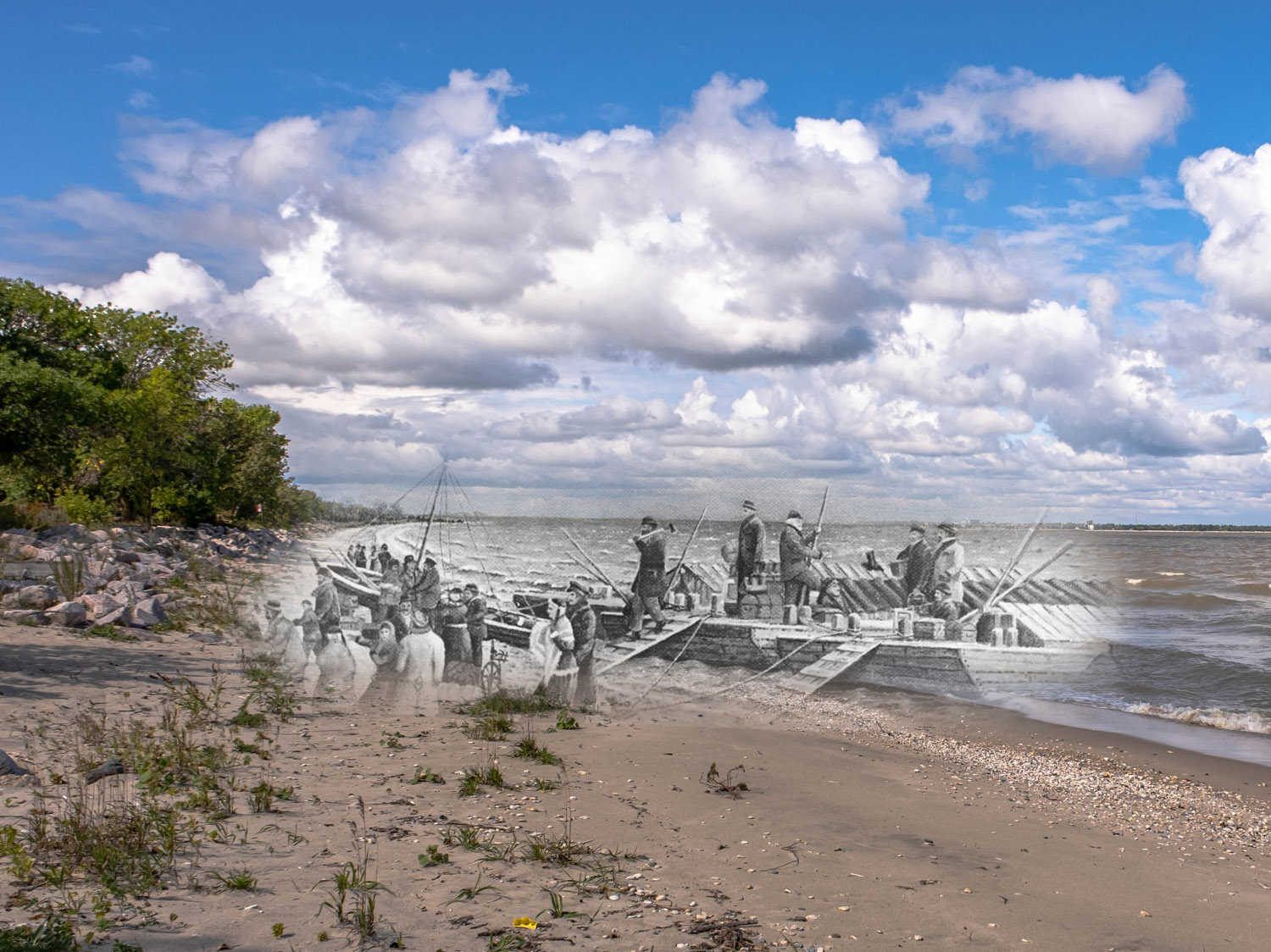
In 1875, a small group of exhausted Icelanders came ashore near this spot. They had fled a country ravaged by volcanoes and famine, and embarked on an epic journey to found a New Iceland here, on the shores of Lake Winnipeg. They were relieved to have finally made it to their new home, and they decided to call their town Gimli, the paradise-like golden hall of Norse myth that survives the apocalypse.
But their troubles were only just beginning. They arrived at the onset of a harsh winter, and lacked proper food, clothing, and shelter. In the years to come they faced starvation, isolation, plague, religious strife, and often just plain bad luck. Several times New Iceland came to the brink of complete collapse. After taking this tour you may wonder how Gimli survived at all.
But the hardy pioneers were blessed with Iceland's remarkable cultural legacy of exploration, seamanship, democracy, and literature. They were also immensely fortunate to have an extraordinary friendship with their First Nations neighbours, especially that of a Saulteaux man named John Ramsay. In this tour we will see how these foundations allowed the Icelanders to not just survive, but prosper.
The tour covers two kilometres through the heart of Gimli, from the Viking statue on the waterfront to the sands of Loni Beach, and will take between 90 minutes and two hours to complete. Along the way you will encounter the stories that shaped this town and that continue to shape it today.


This project is a partnership with the Gimli Glider Exhibit, and has been made possible by support from the Manitoba Ministry of Sport, Culture, Heritage and Tourism.

1. The Hall of Gimli
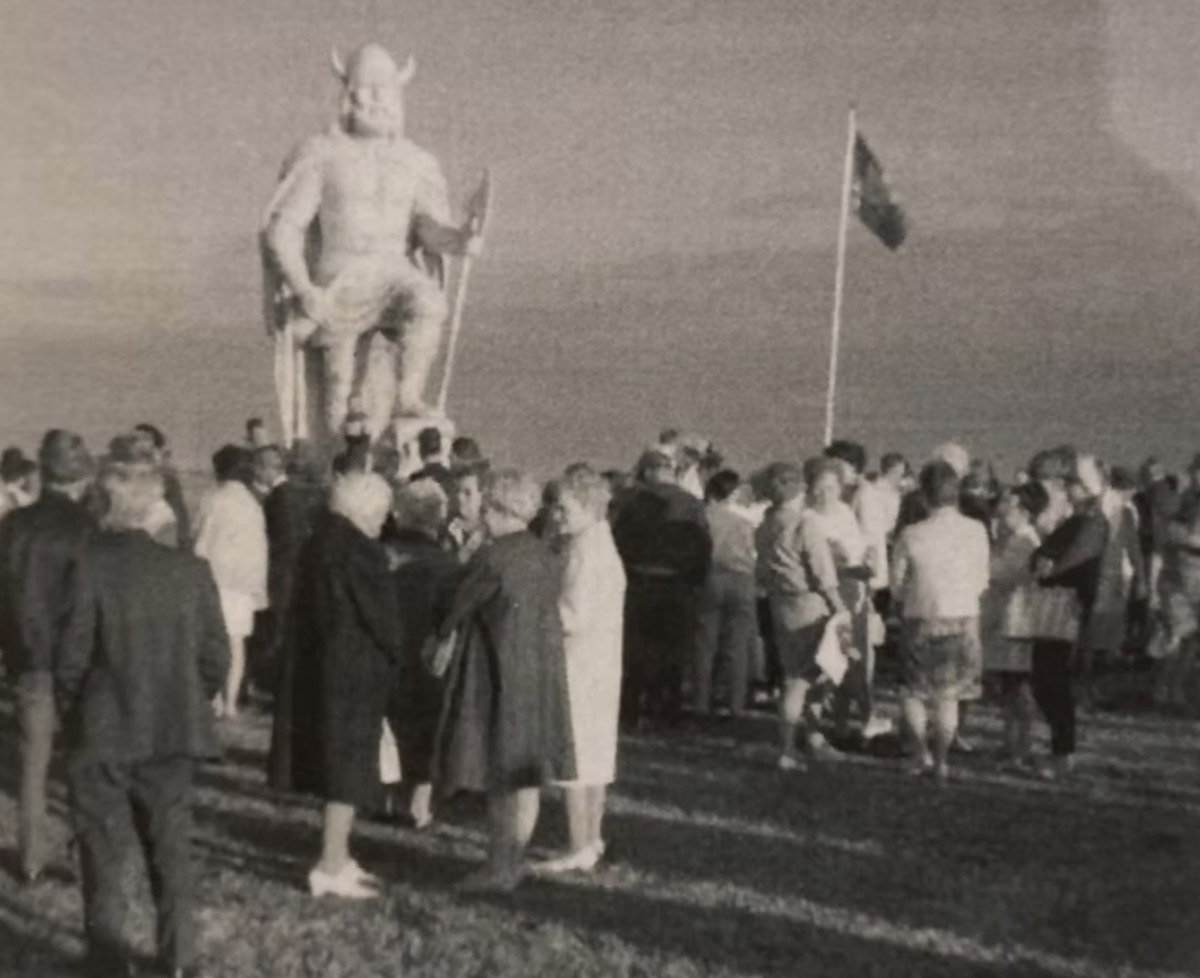
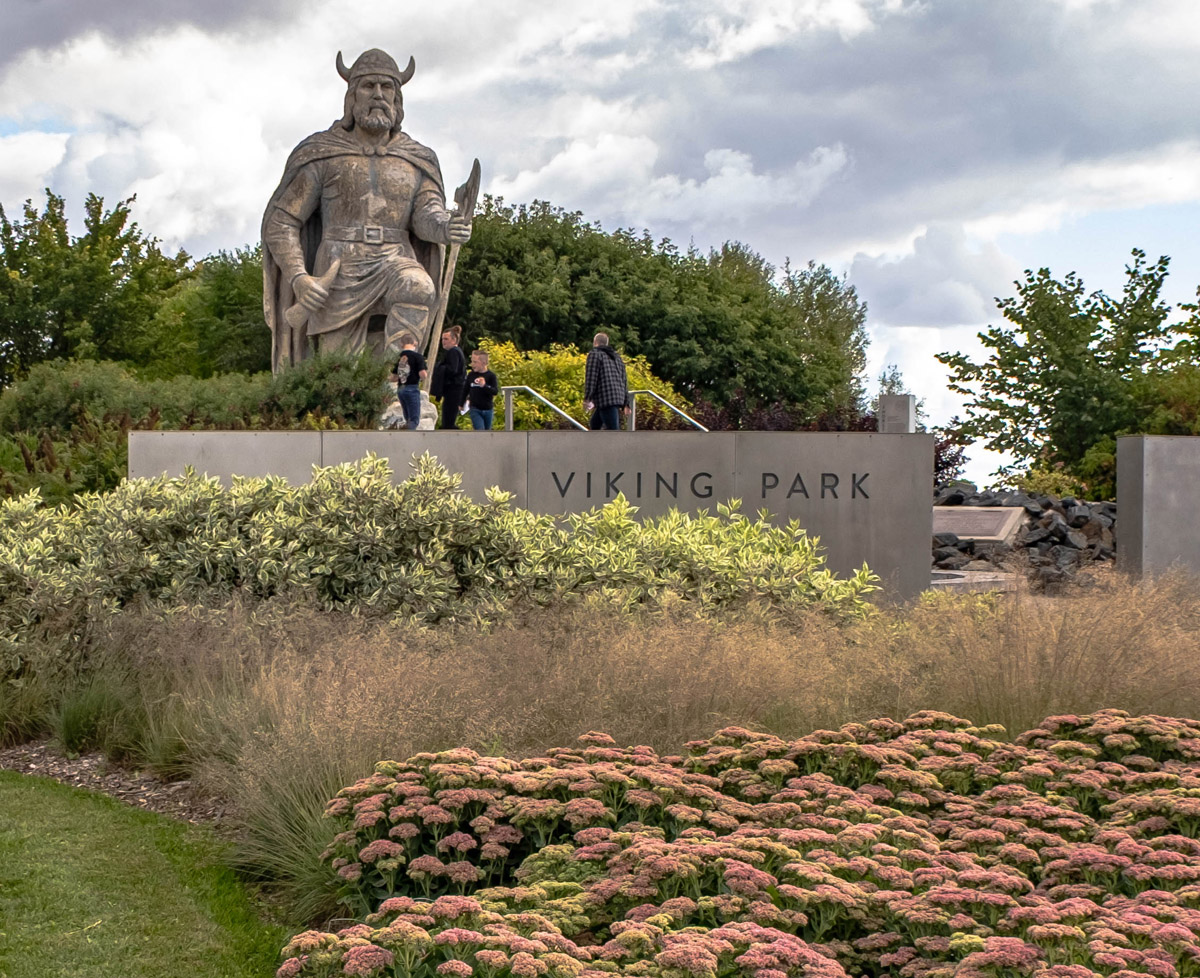
1967
We begin our journey into the saga of New Iceland at the Giant Viking Statue, a tribute by the people of Gimli to their proud heritage. The Viking was unveiled by the visiting president of Iceland in 1967 as part of Canada's Centennial celebrations. The statue may be the most conspicuous reminder of this town's Nordic origins, but as you walk through Gimli, you'll see the signs everywhere: Blue, red, and white Icelandic flags in shop windows; homes with placards announcing the home's name (naming your house being an Icelandic custom); and of course the unmistakably Icelandic names.
We will come across many of these names during this tour, but let's start with the name of Gimli itself. Most visitors can be forgiven for associating 'Gimli' with the dwarf lord in Lord of the Rings. But J.R.R. Tolkien got the inspiration for his character from the same place as this town's Icelandic pioneers (the pioneers also picked it first, for the record).
In Old Norse mythology, Gimli is a great hall with a golden roof, the most beautiful place in Asgard, the realm of the Gods. When the great apocalypse of fire and ice at the end of the world comes, Ragnarok, then Gimli will be protected, and will serve as a paradise-like shelter for the survivors. Depending on which scholar you ask, Gimli means literally 'fire-protected' or 'gem-roofed.' You can think of it like Viking heaven.
As we will see, when the pioneers picked that name for this town in 1875, they may have meant it a bit more literally than you might think.
* * *
It is thought Iceland's first settlers arrived in the 9th Century, at the height of the Viking Age. It was a time when the Norse, bold adventurers and the most skilled seafarers of the day, sailed out from Scandinavia in sturdy longboats. They sailed east to Russia and, via its great rivers, travelled as far south as Baghdad and Constantinople. To the west they paid many unwelcome visits to France, Britain, and Ireland, and reached further south into the Mediterranean Sea.
All Europe trembled at the sight of their ships' dragonhead prows and lived in fear of their pitiless raids along the continent's coasts and rivers. It's hardly surprising that raiding is the main thing most people remember about the Vikings today: at that time the people who were being raided were the ones writing down the history. Just as important to the Viking story however was trade and settlement.
In the North Atlantic, the Vikings were looking to settle. They ventured out across the treacherous sea and settled the Orkney, Shetland, and Faroe Islands. Around 860 CE the first Viking explorers made it to Iceland.
They found a land of ice and fire: amidst jagged mountains topped by vast glaciers, one could see violent volcanic eruptions, belching out horizon-spanning palls of ash and great rivers of molten lava, while forks of lightning violently stabbed into the maelstrom.
To the Vikings, this forbidding land must have seemed disturbingly similar to how Ragnarok was supposed to look when the world ended.
The Arctic climate, barren landscape, and resemblance to the impending apocalypse would probably make most people think twice about settling down. But the Vikings saw there were no people to compete with for land, and the surrounding seas were teeming with fish. So they decided to make Iceland home. In this most dramatic setting, they would go on to establish one of the most peaceful, democratic, and literate societies the world has ever seen.
By the late 1800s however they were in dire straits. Increasingly devastating volcanic eruptions covered the land with ash, killing all the crops, while bitterly cold winters locked their fishing boats in frozen bays. Of the 70,000 or so people who called Iceland home, 75% were subsistence farmers.1 Now they were starving.
It might have seemed as if the long-prophesized events of Ragnarok were coming to pass.
Many felt they had no choice but to emigrate, and in the mid-1870s Icelanders began departing for Canada to start a new life. They wanted to preserve their culture and traditions, and settle as a single unified colony where they could live according to their customs: they wanted to create a New Iceland.
During their epic journey to the promised land, the pioneers debated what they would call the town they would found at the heart of New Iceland.
As they debated, Olafur Olafsson, a farmer from Iceland's remote far north, interjected: "Call the town Gimli."1 A great golden hall that would protect them from the apocalypse of fire and ice that had threatened to consume them in Iceland? What could be a better name?
The rest of the pioneers agreed: The town would be Gimli.
More fair than the sun, a hall I see, Roofed with gold, on Gimli it stands; There shall the righteous rulers dwell And happiness ever there shall they have.2
- Excerpt of the Völuspá, or Prophecy of the seeress, dating to the 10th century.
2. The Odyssey
1875
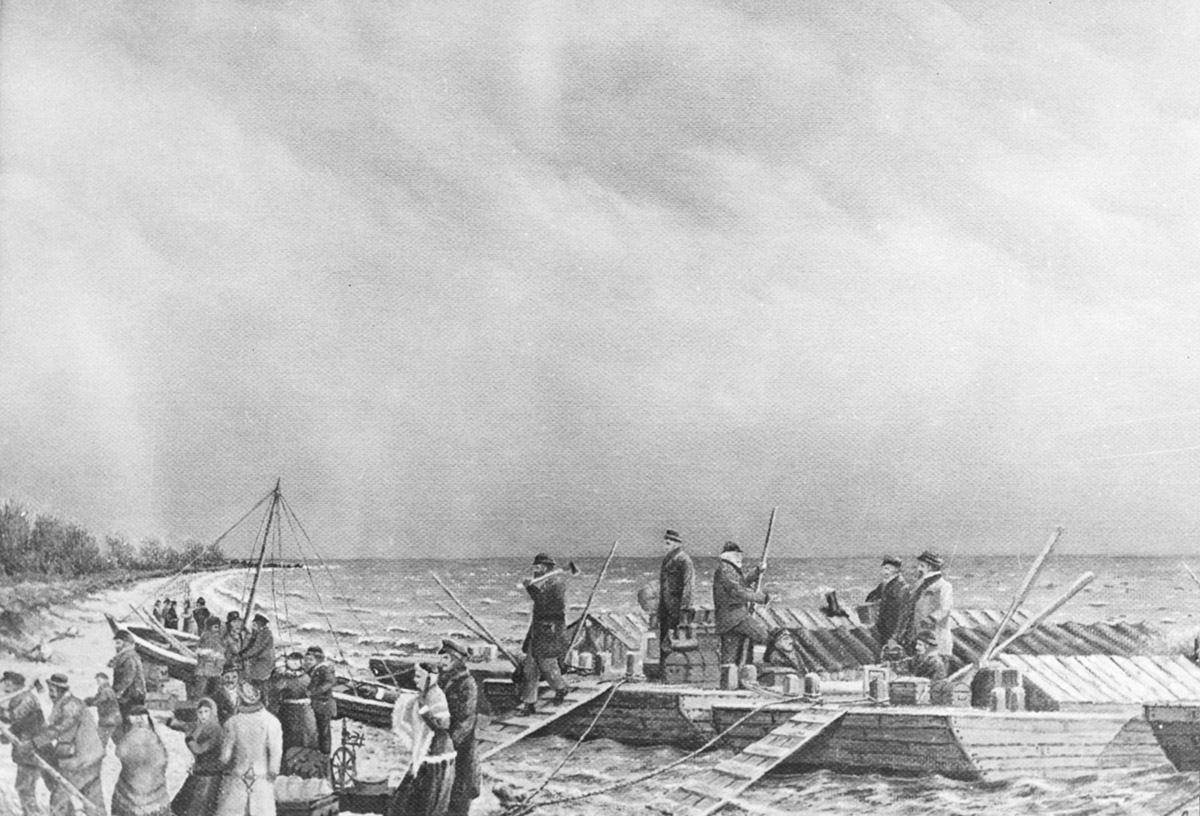
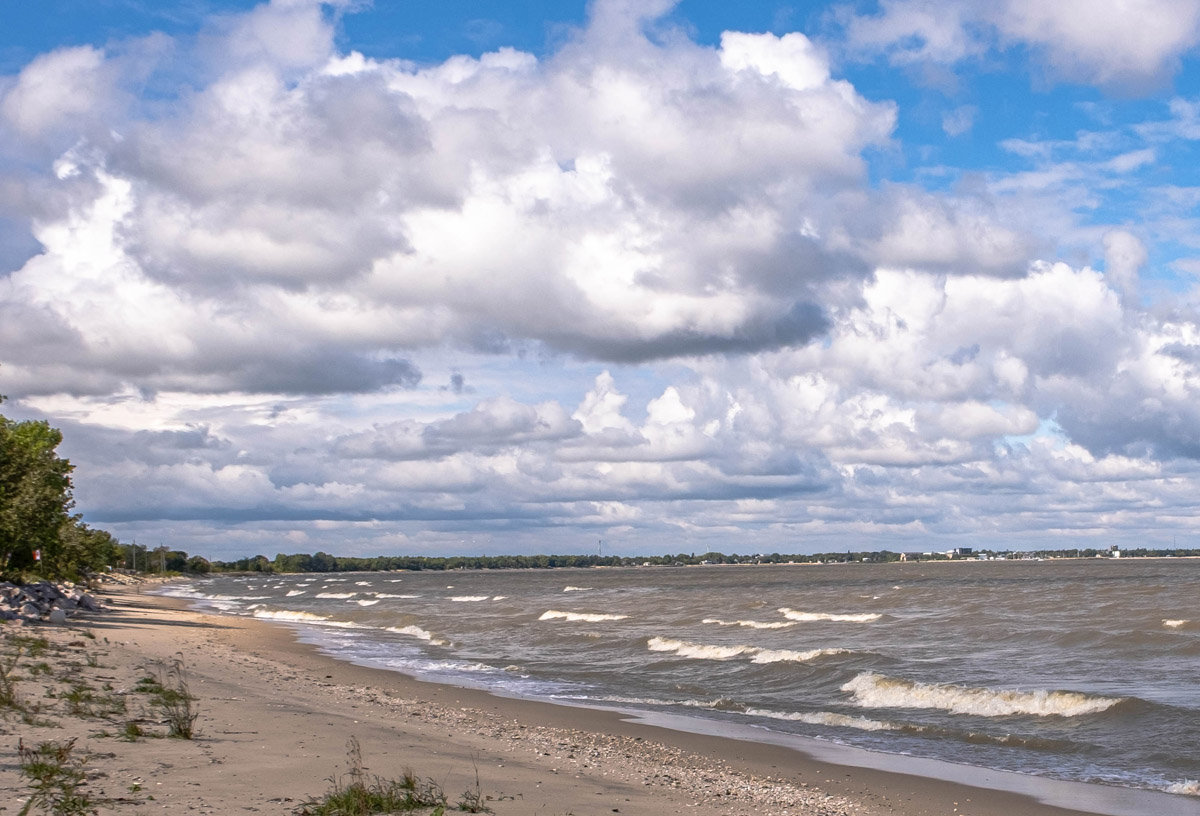
As we walk down the path into Harbour Park, look south across the bay, and see the shoreline gently curving out into the lake to form a cape. That is Willow Point. That is where, on October 21, 1875, the first 220 or so Icelandic settlers came ashore to found New Iceland. Unfortunately, nobody who was there that day had a camera, but this 1950 painting by Arni Sigurdson imagines what it must have looked like.
You can see that they've landed in flatboats, which were effectively lumber barges, and a york boat, which was effectively a rowboat. These were not designed to withstand the stormy late October waters of Lake Winnipeg.
For the Icelanders, the epic and perilous journey just to get to this spot was an odyssey all itself, and it marked the beginning of New Iceland's saga.
* * *
It was the onset of winter, and they lacked money, homes, and even land to settle on. They were squeezed into four large dilapidated sheds, all the railway company had available. The men took what work they could--hard labour on the railway--while their families shivered in the drafty sheds. According to the Gimli Saga, "almost all (if not all) children under two died at Kinmount, as did several older people."1
Fortunately, Jonasson soon met John Taylor, a colourful English missionary and immigration agent, who took the Icelanders under his wing. That spring the two went to Manitoba to scout a suitable site for a colony. When they got to Winnipeg Wilhelm Kristjanson writes they found it in the midst of a grasshopper plague "that darkened the sky and dead grasshoppers were swept up by the wagon-load on Main Street and piled several feet high along the river bank."2
Heading north on the western shore of Lake Winnipeg they found an ideal spot, with abundant farmland, timber, and a lake for fishing. They returned to Ottawa to request a land grant and funding to help the immigrants get there.
Governor-General Lord Dufferin, who had been to Iceland and admired its people, personally intervened to get the government to set aside the block of land set aside for settlement, as well as grant them a loan.
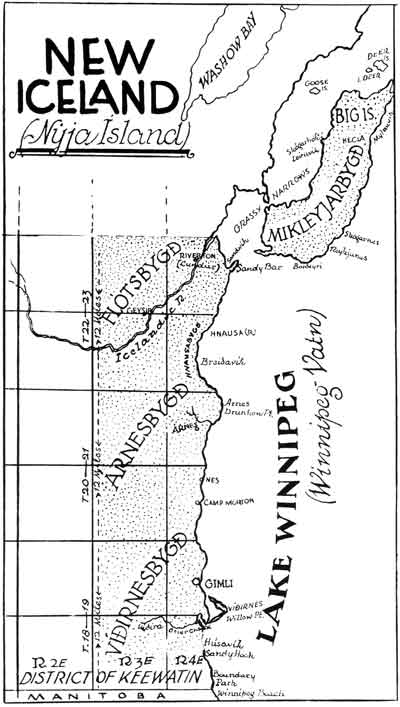
An 1877 map of New Iceland. Source: Archives of Manitoba.Jonasson returned to Iceland to recruit more immigrants while Taylor went to Kinmount to supervise the move west. In September they began the journey, via Toronto (train), Sarnia (train), Duluth, Minnesota (steamer), Fisher's Landing, North Dakota (train), and finally reached Winnipeg (steamer) on October 11.
Kristjanson writes the people of Winnipeg had heard Icelanders were coming and an excited crowd met them on the riverbank:
"Where are the Icelanders? Show us the Icelanders!", were exclamations heard. John Taylor pointed to the group. "There are the Icelanders. You can see them there." But he was not believed. "We know what the Icelanders are like. They are short, about four feet tall, rather stout and thick set, with long, black hair and much like the Eskimos. These people are not Icelanders. They are white people."After Taylor cleared up the confusion, the Manitoba Free Press wrote of the new settlers: "They are a smart-looking, intelligent, and excellent people and a most valuable acquisition to the population of our Province."3
Winter was bearing down and those who could find work in Winnipeg (mostly women working as domestic servants) decided to overwinter there. The rest, some 200-235 immigrants, pressed on. They were urged forward by Taylor's increasingly messianic preaching (he had appointed himself leader of the settlers, both spiritual and secular).
They purchased the six flatboats and a york boat and sailed down the Red River, navigating challenging rapids along the way. At Lake Winnipeg they were taken in tow by the steamer Colville, whose captain warned that if any storm came up, the flatboats would capsize.
The Colville was to tow them to the mouth of the Icelandic River, but rounding Willow Point the steamer dropped anchor several kilometres offshore. As the Gimli Saga recounts:
The skipper said it would be insane to tow the [flatboats] all the way to Whitemud (Icelandic) River, for there was a southeasterly breeze and the lake was ruffled. Neither would he land closer, nor move the fleet into the bay where Gimli now stands. So the settlers were prevented from making their first settlement at the Icelandic River."The Icelanders had not come so far to give up at the last moment. The york boat's eight oarsmen took the entire line of barges into tow, and rowed them to shore. The Saga records that the herculean task was completed "with great difficulty."4
The exhausted and freezing settlers made landfall just before sunset. They walked up and down the sandbar to study their new home, and then settled down for a much-needed rest in makeshift shelters on their flatboats.
It was October 21, 1875. The next day they would begin building New Iceland.
3. The Terrible First Winter
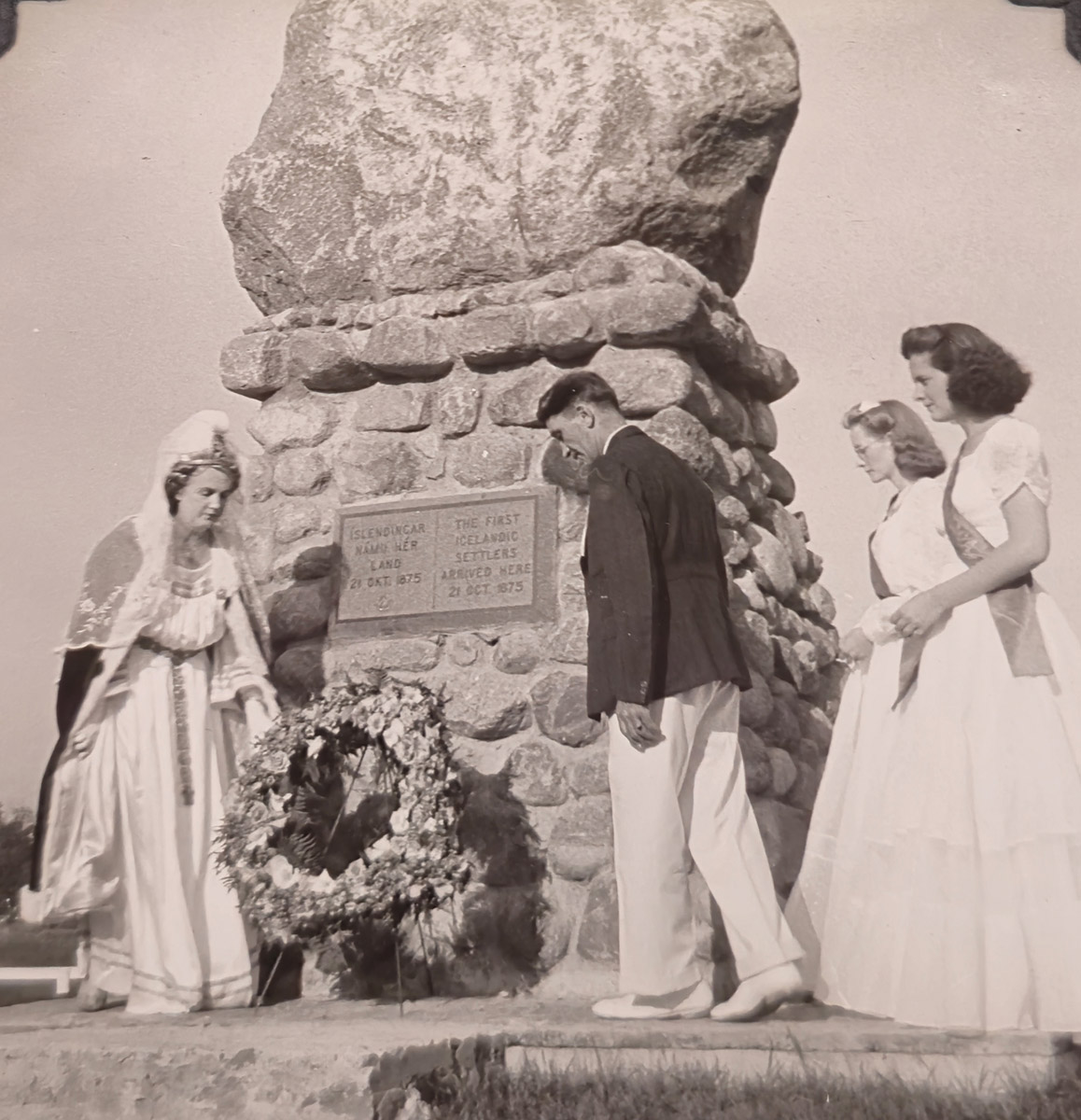
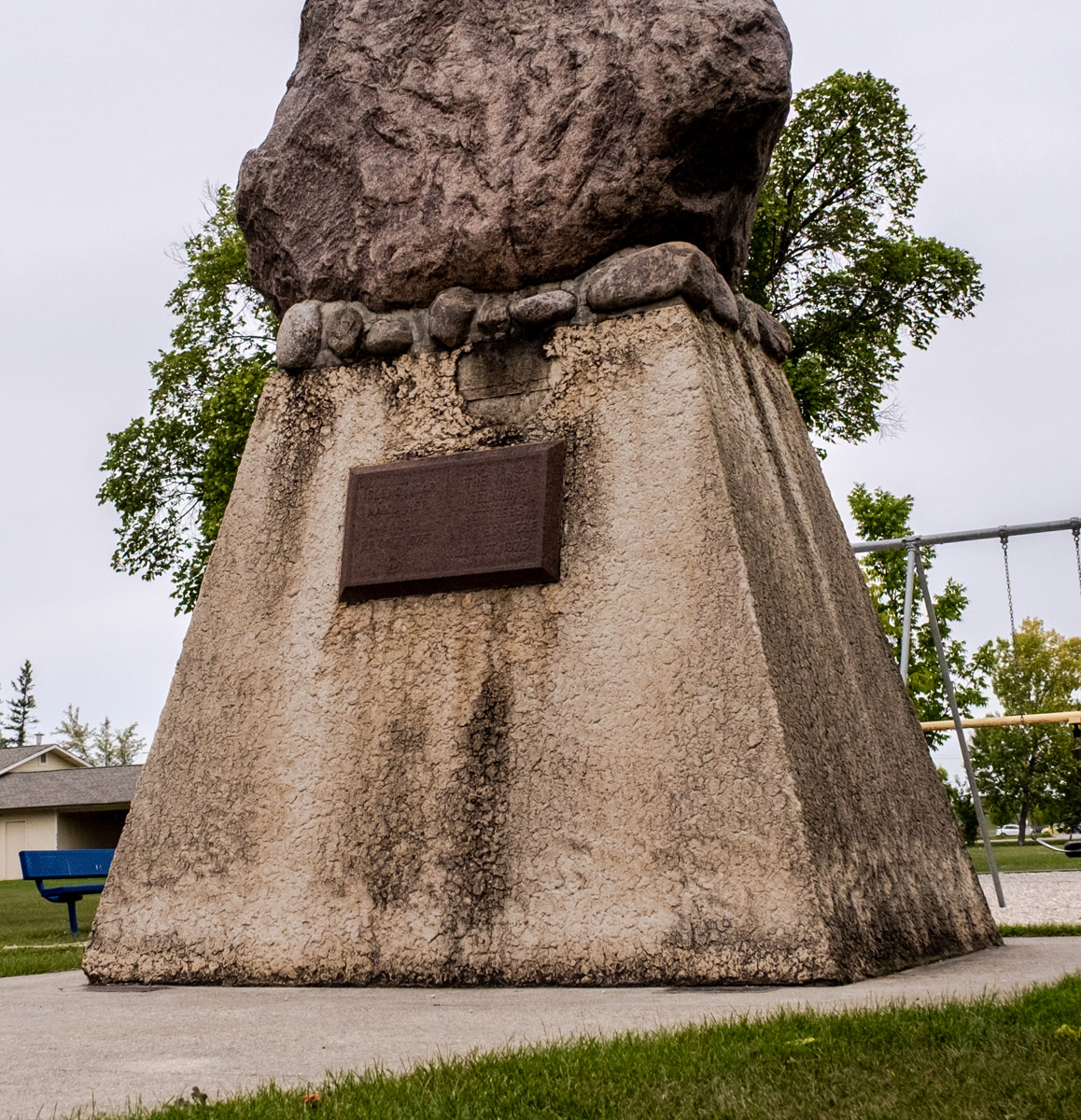
Every August long weekend the descendants of the Icelandic pioneers (as well as many others) gather at Gimli's Pavilion Park to celebrate Islendingadagurinn, the Icelandic Festival of Manitoba. Each year a woman is selected to be Fjallkona, or Maid of the Mountain. The festival's organizers explain:
"The Fjallkona is Iceland, and the Icelanders are her children... The selected woman sits on her elevated throne, clad in the beautiful and dignified formal Icelandic costume of a white gown, green robe with ermine, golden belt, high-crowned headdress and white veil."1
Here we see a Fjallkona of years past laying a wreath at the cairn to honour the first Icelandic settlers. The stone atop the cairn was taken from the beach where they landed.
The pioneers had endured immense privation and hardship just to get to New Iceland, but in reality their ordeal had only just begun. They had arrived almost exactly at the start of an unusually early and harsh winter. Ahead they had to look forward to cold, poverty, hunger, and disease. Yet, as we will see, these were challenges that the hardy and industrious Icelanders were prepared to meet.
* * *
The land was heavily wooded, and they'd have to clear it before they could build homes. For weeks the only shelter many had was in tattered old buffalo hide tents that they pitched amongst the trees. The first Icelandic child born in Canada was born in one of those tents on a bitterly cold November day, while snow was blowing in through the shredded canvas. The lantern from that night is preserved in the New Iceland Heritage Museum.
John Taylor was responsible for disbursing the government's loan and used this power to direct the labour of the settlers. He set them to work building a supply warehouse, a general store, and then some ramshackle log huts. The Gimli Saga describes them:
These log cabins were generally 12x16 feet, many almost without a floor, and as low and with as few windows as possible. Generally two or three families lived in each hut, all using the same cookstove, which also served to keep them warm. Since these dwellings were constructed on top of snow and ice, roughly built of unshaped logs, they were exceedingly cold.2
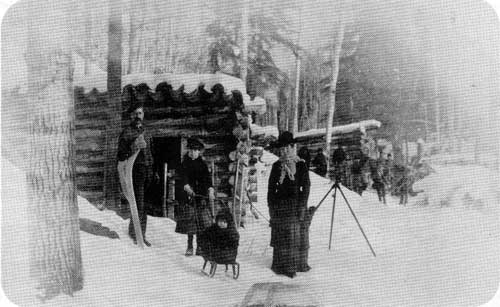
An undated photo showing New Iceland pioneers posing in front of their log cabin near Gimli. The cabin matches the description in the Saga. Source: Archives of ManitobaFor himself, John Taylor had the Icelanders next build:
A relatively large home... a storey and a half in height, made of double walls of popular logs with the space between filled with clay, and the roof of small logs thatched with hay and clay. Settlers were paid $1.25 a day for work on this structure, all paid in goods.3Within weeks the food situation became critical.
The deteriorating weather prevented any fresh supplies from coming in by boat. They had brought no livestock with them, the basis of the Icelandic diet, because they had no fodder to feed them. The lake soon froze over, allowing ox teams to bring in supplies, but temperatures hovered around -60 Celsius, and these trips were rare. A hunting expedition was sent out, but they were ignorant of the habits of local game, and after two weeks they returned empty handed.
The colony began to starve. W.D. Valgardson, recalls growing up in Gimli "with the stories of this terrible year, of the bodies of the dead lain out on the roofs of the shelters they had built. There was no digging graves in frozen ground under feet of snow. That image haunted my childhood."4
The Saga recounts: "The hardships of this first winter caused many deaths from scurvy and other diseases: one man lost seven of his nine children. Many left the colony, but of the hundred or so that remained about a third died."5
These setbacks failed to dampen the optimism of the survivors. As soon as the first structure was built, "the settlers already dreamed of a large town and rushed to take lots in the vicinity of the warehouse." On New Year's Eve they held a great festival on the frozen lake, burning a great pyre as part of the Icelandic tradition of 'burning-out' the old year, followed by speeches, songs, and dancing.6
Early in 1876 a further government loan allowed better supplies of food to be brought in and the crisis abated. When the spring thaw finally arrived, the settlers breathed a sigh of relief that New Iceland had survived its first near death experience.
Unfortunately, it would not be the last.
4. Learning to Fish
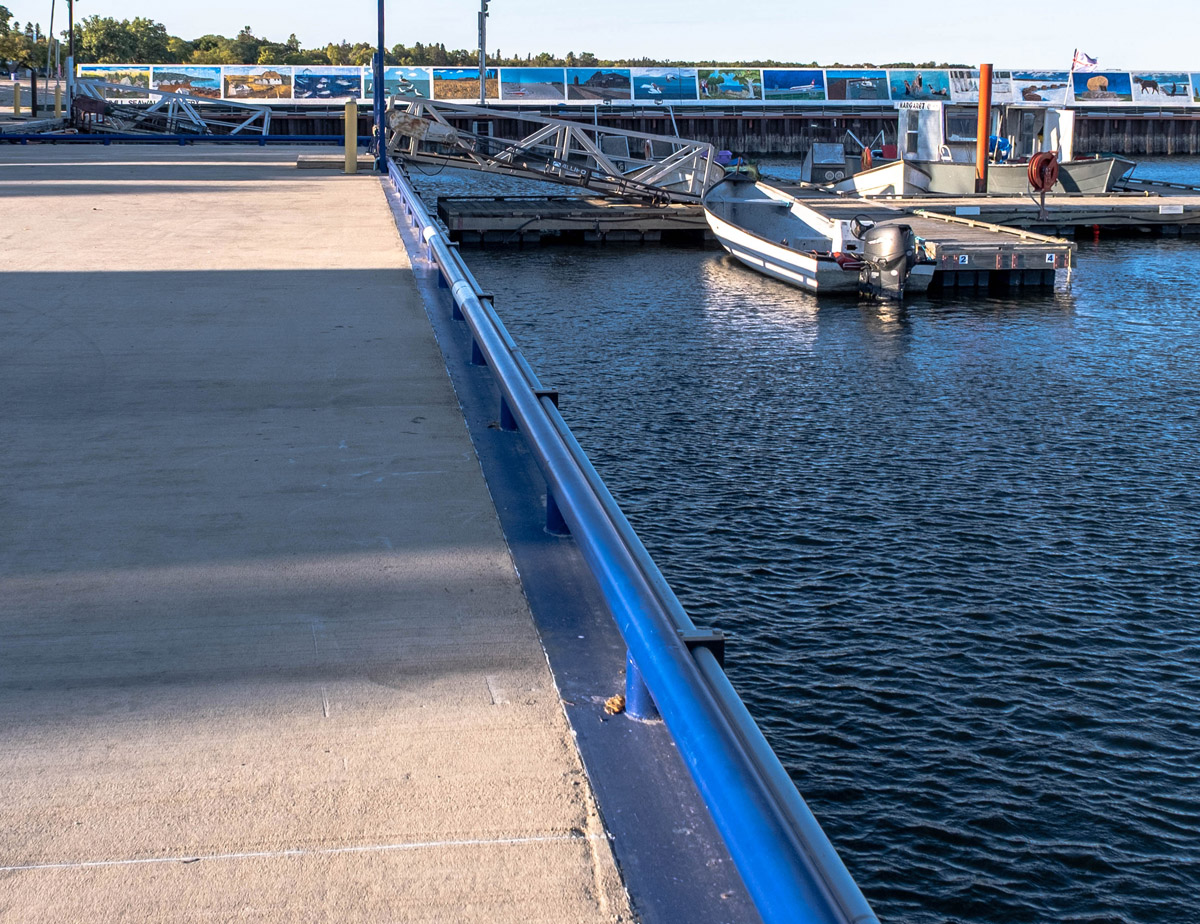
1945
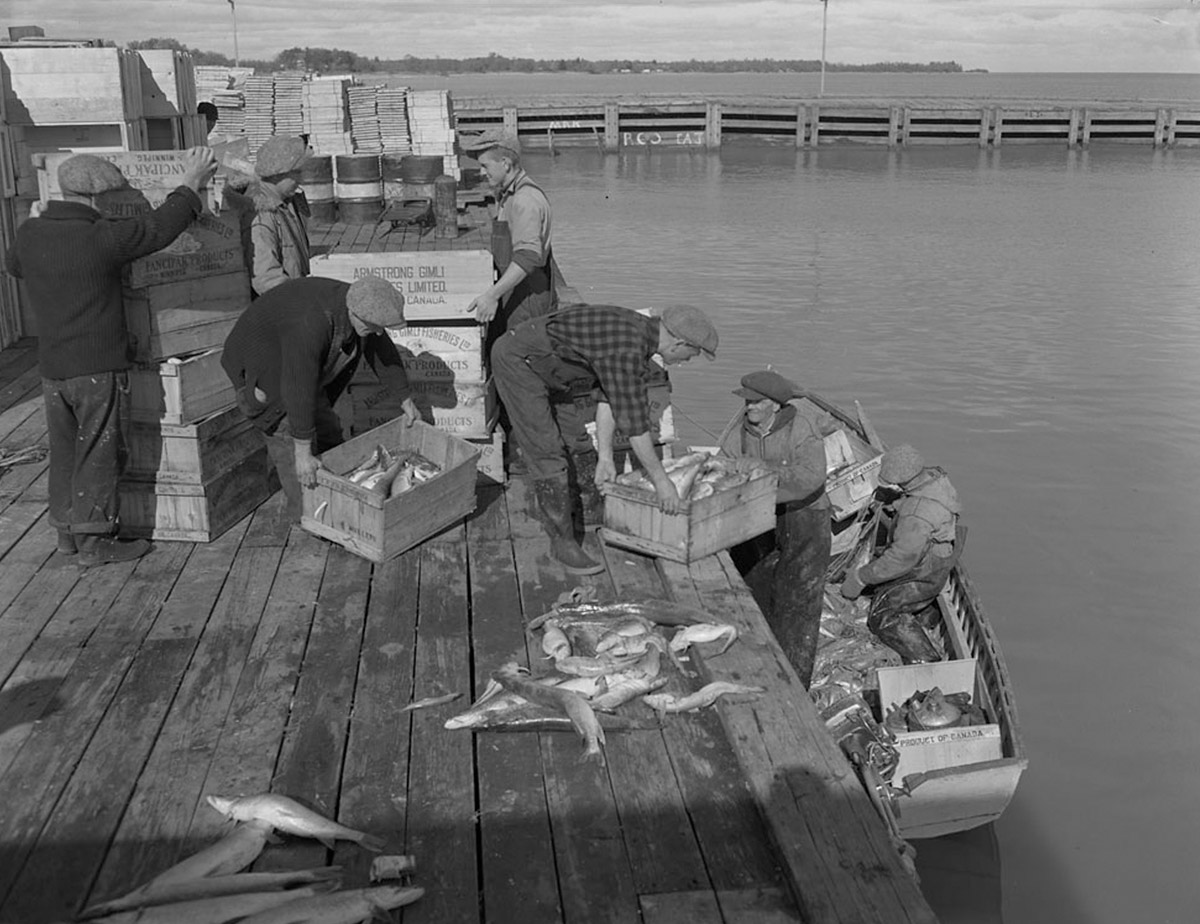
Here we see fishermen unloading a great bounty from a whitefish boat after a successful fishing expedition in the 1930s. They are on the pier in front of what was then the Armstrong-Gimli Fisheries plant, today the Gimli Visitor Centre.
Fishing has always been a crucial part of Iceland's culture and economy. The chance to fish on the massive lake was one of the main reasons the Icelanders chose this spot for their colony in 1875. But they soon discovered that fishing on Lake Winnipeg was very different from the North Atlantic. The long winters where the lake froze over, and new techniques and equipment needed to catch freshwater fish, meant the settlers had to learn many hard lessons to build up their own fishery.
* * *
Seafaring, and fishing became key aspects of Icelandic identity: one of their old coats of arms is a headless grey cod with a crown in place of its head.
Many of the first Icelanders at Gimli were fishermen by trade, and they'd brought their nets with them. On arrival they immediately set about fishing on the lake, but soon discovered the mesh in their nets was too large for freshwater fish. Quickly adapting, they wove new nets out of whatever materials were to hand.
As the hunger crisis of the first winter deepened, John Taylor offered a $5 prize for the first fish caught. When one man finally succeeded in catching a goldeneye, the Gimli Saga recounts how "a crowd rushed to inspect this unfamiliar species of fish that later became prized as a delicacy."1
From that first goldeneye, they slowly improved their catches, but the breakthrough didn't come until the next winter, when food supplies once again reached crisis levels. The First Nations people told them they were having better luck fishing far to the north, and three desperate fishermen were dispatched by dog team to investigate.
Andy Blicq and Ed Ledohowski tell the tale in Gimli Harbour & Fishery: An Illustrated History:
They returned later in the month, exhausted and frostbitten, but with hundreds of whitefish. Inspired by this experience, others headed north. It was the beginning of a long tradition that would see the Icelanders travelling to the far corners of the wilderness lake in search of fish and a livelihood.2From there the fishery took off. Next year, 1878, the Icelanders reported catching over 150,000 fish.3 They soon established fish plants to refrigerate and process fish for export, like the one that once stood right on this spot. They started their own shipbuilding industry, churning out little whitefish boats as well as larger sailing ships, and steamers.
The New Iceland fishery developed a new set of practices adapted for local conditions. The fishery became largely based around the little whitefish boats like the one you see in the above photo--or perhaps a little bigger, with a small hut in the middle for protection from the elements. At the beginning of the fishing season the larger motor-powered vessels would tow long lines of these little boats north to the fishing grounds.
Kristine Benson Kristofferson recalls this annual event:
When the fishing boats left for the summer season every kid in town hurried to the dock to see them leave. It was always exciting. Everybody was yelling at everybody else and all was in organized confusion. The dogs, tied on deck, snarled and barked, adding their unmusical refrain to the general chorus. It was a thrilling sight that we never grew tired of watching. They would return in the first week of August, hopefully in time for the most exciting event of the summer - the Icelandic celebration.4Blicq and Ledhowski write that New Iceland's fishing industry reached its peak in 1904, when "1,900 men, 900 sailboats and 24 tugs landed a record catch of 2.4 million kilograms of whitefish. Much of the catch was exported to the United States."5
Today many descendants of these early pioneers continue to fish on Lake Winnipeg.
5. The Smallpox Plague
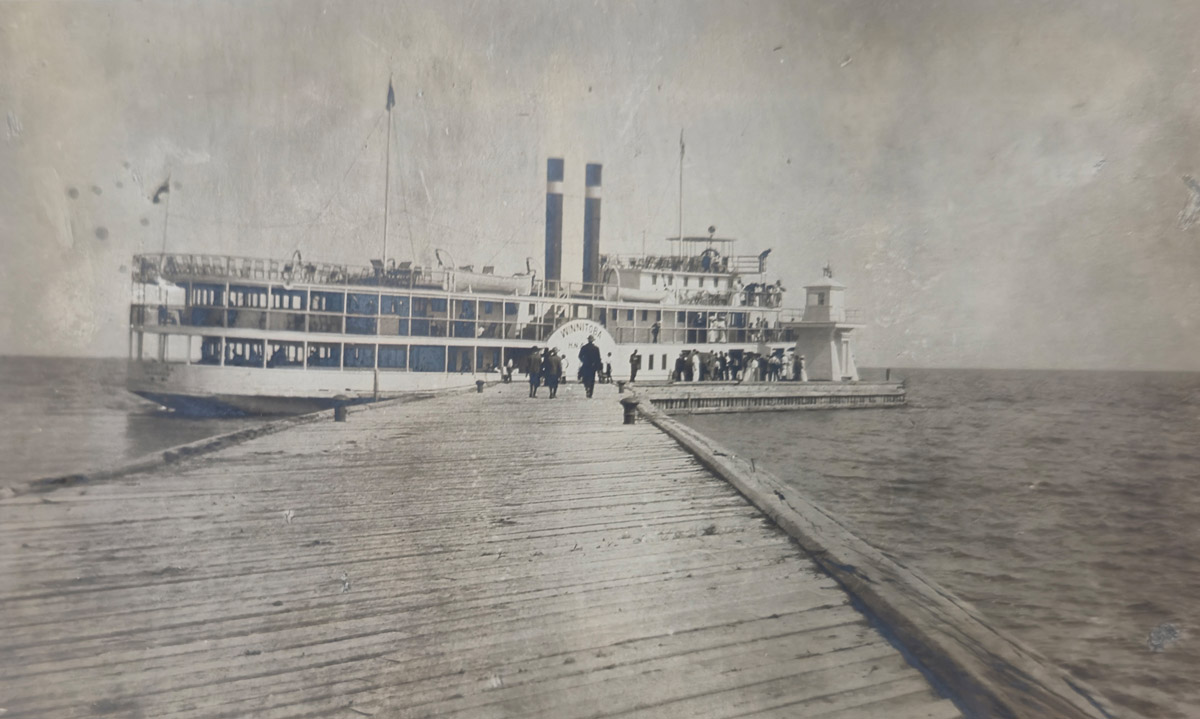
1912
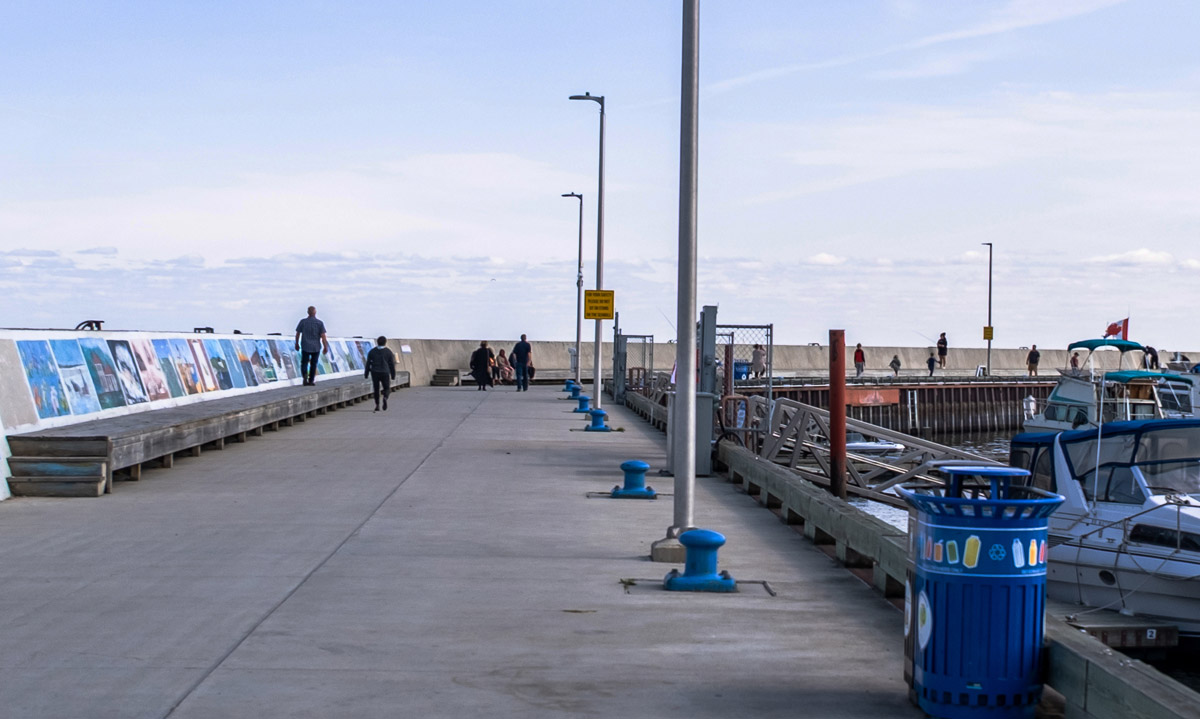
Walking down to the end of the pier, we can see in this photo that the pier was much shorter when this 1912 photo of the Winnitoba was taken. This paddlewheeler had a rather short career: It was built in 1909, and then burned at its moorings in Winnipeg just three years later, shortly after this visit to Gimli.
Surprisingly few photos from the early years of New Iceland have survived, but we can say that the early settlers would have marvelled at a grand ship like the Winnitoba visiting Gimli. They would have also marvelled at Gimli's pier: it wouldn't be until 1900, some 25 years later, that a pier was finally built that could survive a Manitoba winter.
Continuing our narrative, after the first winter of 1875-6, and the arrival of about 1,200 new Icelanders in the summer of 1876, the first pioneers must have thought they had gotten through the worst of it.
They were wrong.
The new settlers had brought with them a smallpox contagion that burned through New Iceland. A third of the settlers got sick, and over 100 died, 3/4 of them children. It then spread to the nearby First Nations communities, where it wiped out whole villages.
The panicked Manitoba government quarantined the colony, limiting supplies so drastically that it contributed to further waves of disease including scarlet fever, scurvy, and summer diarrhea, and strangled New Iceland's fledgling economy. When the quarantine was lifted in July 1877, many miserable Icelanders had had enough and simply left.
* * *
By November the spreading infection had brought the life of the colony to a halt as terrified people shut themselves up in their shoddy, overcrowded homes (most of the new arrivals hadn't even built homes yet). Few had been vaccinated, and the colony didn't have a hospital. It didn't even have a doctor.
Desperate pleas for aid were sent to Manitoba, which dispatched three doctors. The warehouse was turned into an infirmary, which rapidly filled with the dead and dying. The two Icelanders who interpreted for the doctors there "reported having witnessed scenes of indescribable misery."3
The doctors next went to care for and vaccinate the nearby First Nations peoples. The Indigenous had no natural immunity to smallpox, and the results were catastrophic. In one report, Dr. James Lynch wrote:
Upon visiting the Indian houses (at Sandy Bar), we found them all deserted. Following a trail which led from the houses to the Icelandic Settlement about three miles distant, on the White Mud River (today’s Icelandic River), we found the Indians — the few that were left of them, encamped in Birch Bark tents on the south side of the River — a band of fifty or sixty reduced to seventeen.4The Manitoba government set up a total quarantine of Keewatin for 10 months, setting up border posts manned by soldiers that turned back anyone trying to cross. New Iceland was cut off from the outside world. The historian Gu∂jón Arngrimsson writes that the effects of the quarantine were almost as disastrous as the disease:
The colonists were forced to eke out a meagre existence on government loan supplies and any fish they could catch. Physically, its effects would remain etched on the faces of many of the Icelanders in the form of pock marks they took with them to their graves, but the mental scars were probably much deeper."5For the First Nations communities around Lake Winnipeg, the epidemic was nothing short of a catastrophe. 500 are thought to have died, though likely many more. It was a devastating blow to an already struggling population. A number of villages were so depopulated that they had to be abandoned. Soon after the government health authorities moved in and burned the villages down as part of a disinfection campaign. This had the added effect of completely erasing the First Nations presence from much of New Iceland, allowing the settlers to easily move in and take over their ancestral territories.6
6. John Ramsay's Lifeline
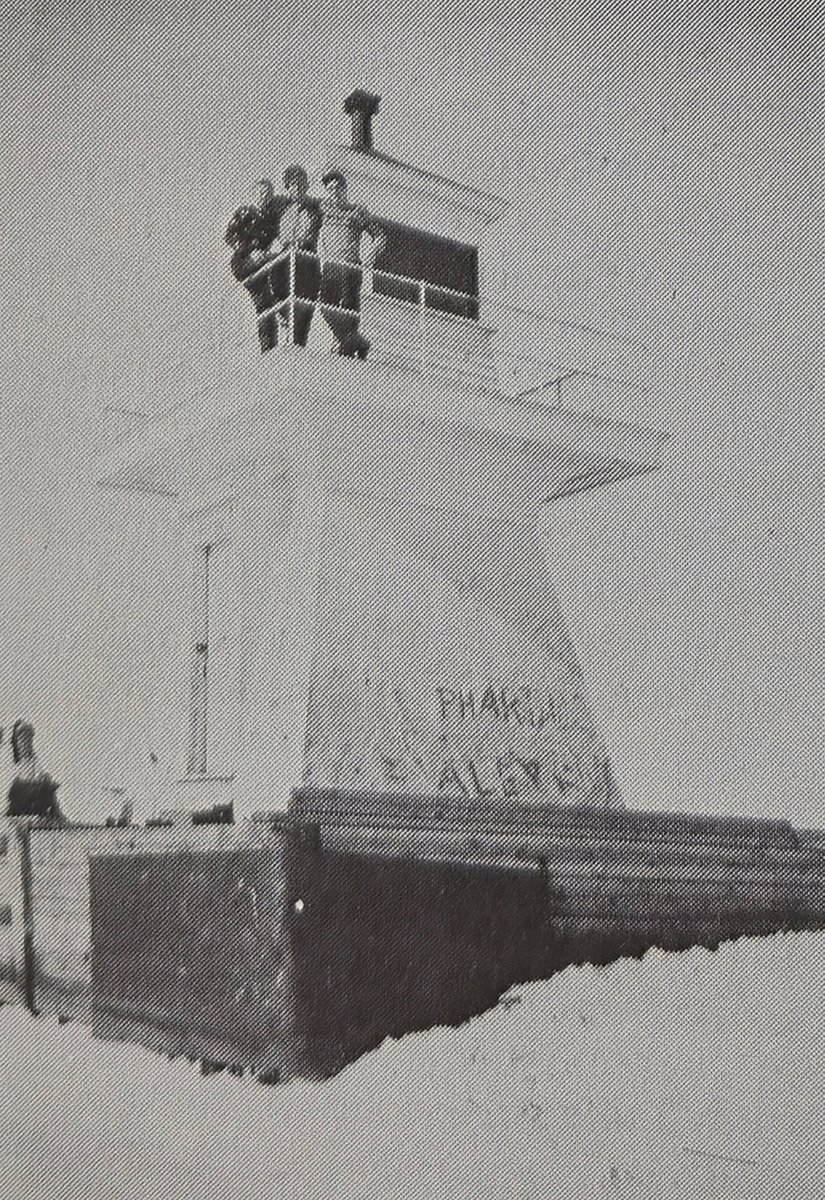
ca. 1930s
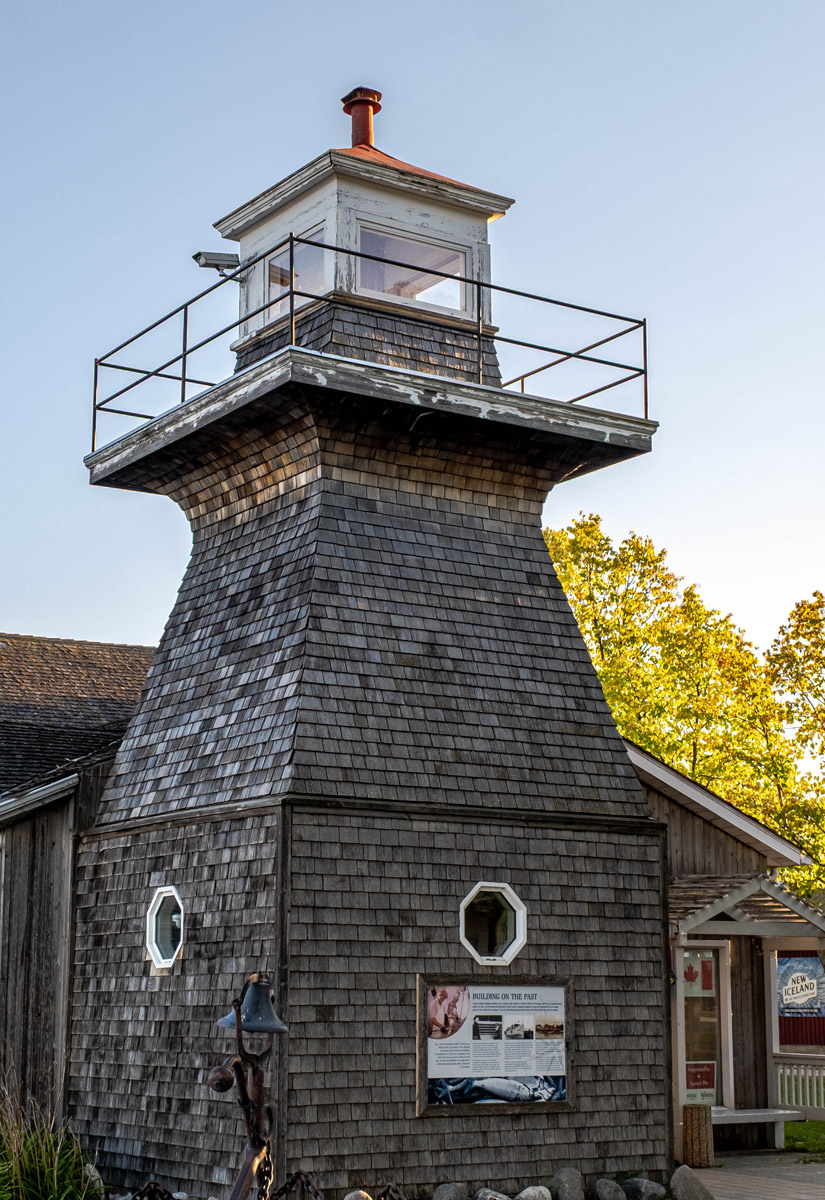
Three men pose for a wintertime photo at the lighthouse that once stood at the end of the Gimli Pier. In 1972 the B.C. Packers fish plant that once stood here was shut down, and the harbour expanded and modernized as part of Gimli's transition to a tourism-focused economy. The visitor centre here was once the plant's ice house. The lighthouse was no longer needed and was dismantled, but the top was remounted here.
Through the disastrous first years of New Iceland, it can probably be said that its survival was in large part thanks to the aid of the First Nations people, who have lived here since time immemorial. This life-saving help was best represented by John Ramsay, a Saulteaux who lived in the village at Sandy Bar, 40 km north of Gimli.
Even though his land was given away under his feet to the Icelanders, he became their true friend and ally. As the Icelanders struggled to survive in this new environment, Ramsay threw them a lifeline. He taught them how to build wind-proof cabins and construct leak-proof boats, as well as local techniques for hunting and fishing. He and his wife invited starving Icelanders into their home to share their food. He is credited with saving dozens, if not hundreds, of lives.1
The Icelanders have never forgotten. W.D. Valgardson writes "We all knew the stories of John Ramsay and the tragic tale of his wife's death... It was part of the mythology of growing up in Gimli"2
* * *
One might ask why Ramsay would help the people who were taking his land. His great grand-daughter, Ruth Christie, explained in an interview:
I believe that certain people are in close harmony with the Creator. I believe that the Creator was able to help John because he realized these people would never survive... I think John was a very forgiving man, because he had the skills [to survive] and he shared that with these newcomers. They said that he saved 35 families from starvation because he was a great hunter.4For their part the Icelanders were deeply impressed by Ramsay and his family. One of the Icelanders, Fridrik Sveinsson, wrote:
He was an excellent marksman and hunter, honest, prompt in returning things, hospitable and helpful, and proved to be the best of neighbours. [I] occasionally enjoyed the hospitality of Ramsay in his tent; with snowy white clothes spread on the ground and dishes, cups and saucers, knives and forks, which they always used, exceptionally clean, and the cooking excellent.5When the large group of immigrants brought smallpox to the region in 1876, Ramsay was there to help. He ferried one of the doctors by dog team to the First Nations communities around the lake, a journey where John would have seen up close the plague that ravaged his people.
When he returned home to Sandy Bar, he found his family had not been spared. It was the same village that the doctor made the horrifying report in the last stop. Ramsay's wife Betsey, and three of his young children had succumbed to the disease. His only surviving child, 8-year-old Mary, was left horribly disfigured.
Ramsay buried Betsey and the children at the Sandy Bar cemetery, and went to Winnipeg to purchase a marble headstone to mark the grave. It was said to be the first stone grave marker in New Iceland.
He remained a friend to the Icelanders, but a few years later he and his surviving daughter left for Matheson Island. Until his death in 1884 he wrote to the federal government, demanding compensation for the loss of his lands. None was ever paid.
In the early 1900s an Icelandic settler named Trausti Vigfusson said Ramsay had begun visiting him in his dreams. In those dreams Ramsay asked him to restore Betsey's headstone, which had faded and fallen over. Though Vigfusson had never met Ramsay in life, he had heard the legends of how he had saved the people of New Iceland. So he began a tradition of restoring Betsey's gravesite. It continues to this day.6
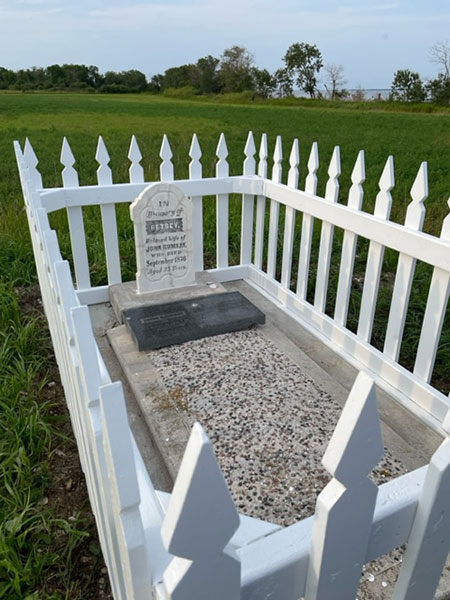
The grave of Betsey Ramsay after restoration in 2023.
7. The Tergesen Store
ca. 1910s
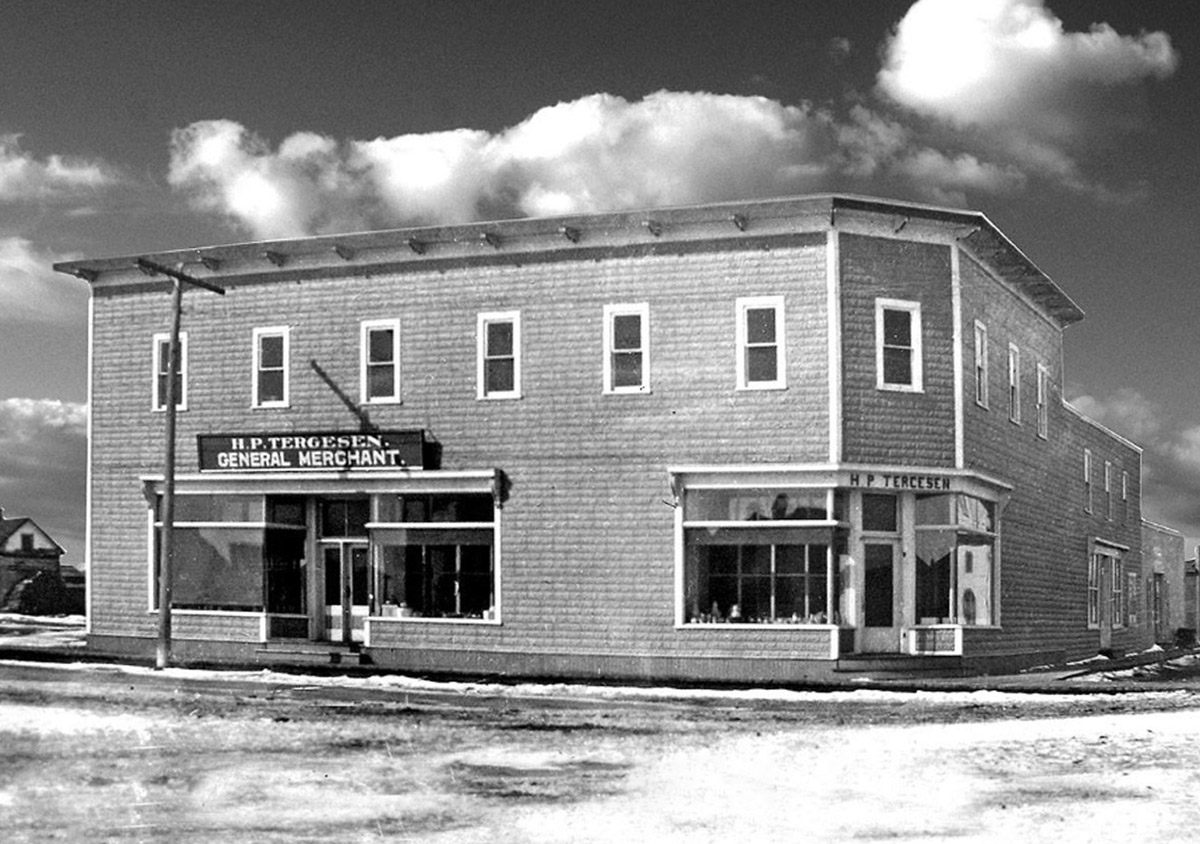
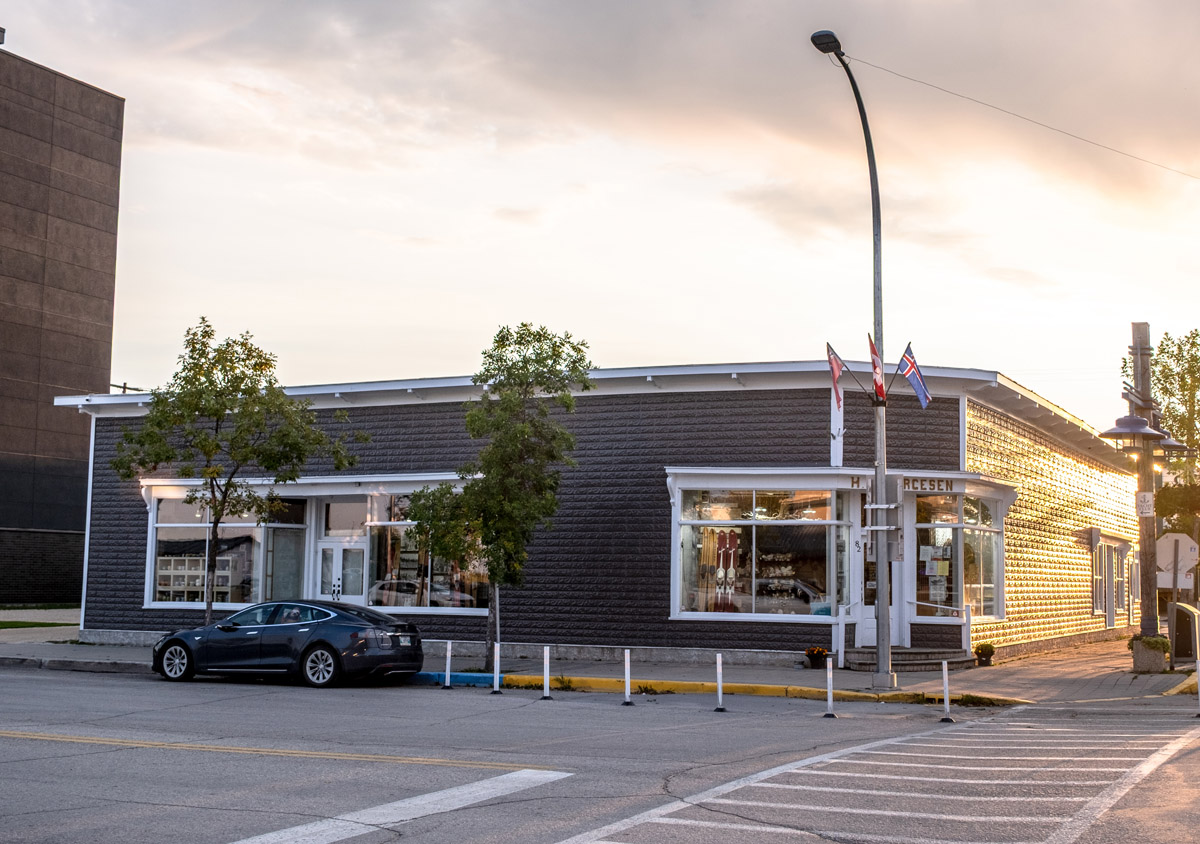
Here we see the general store built by the Icelandic settler Hans Pjetur Tergesen in 1898. Today the fourth generation of Tergesen's are running this store, making it the oldest general store in Manitoba and one of the best surviving examples of a community store. As we can see in this historic photo, the store used to be two storeys tall, the second storey being a home for the Tergesen family until its removal in the 1920s. Asides from the drug store, this building also housed a dentist, an ice cream parlour, and a barber shop, as well as a space that was variously used for community events, a library, a classroom, and the Gimli Women's Institute.
The survival of the Tergesen store to the present shows how the Icelanders were able to adapt to their new environment and build a flourishing economy centered on Gimli.
It was no easy task. The early years threw up every conceivable obstacle to establishing a thriving economy, from flooding and poor farmland, to isolation and a lack of trade markets, there were many factors in Gimli's slow early growth.
* * *
Family breadwinners increasingly had to leave the colony to make money elsewhere. Men left to work on railway gangs in Manitoba and North Dakota, while women took work as domestic servants in Winnipeg.
Sigurlaug Benjaminsson, mother of seventeen children (ten of whom died in childhood), would walk all the way to Winnipeg, work for months, and then walk home, carrying as many groceries as her meagre wages could buy. While she was gone, her husband worked the farm and the children looked after each other. When she returned, he would leave almost immediately in turn to find farm work elsewhere. They never had any time together.1
Around the turn of the century things began to change. In 1897 New Iceland was opened up to anyone to settle in. Ukrainian, Polish, German and Hungarian settlers began moving onto the unoccupied lands around Gimli. Much of the agriculture of the region would be developed by these newcomers, with Ukrainians being the most numerous.
The turning point came with the arrival of the railway in 1906. Gimli was connected to the outside world, and tourists from Winnipeg began to discover the lake. As one early account described it, the railway "almost immediately brought an influx of tourists to Gimli that converted the village into a summer resort, and ushered in a new period of development."2
It was in this new climate of growth and possibility that the Lakeview Hotel was built (today the Betel Home), and Hans Tergesen built his store.
8. Gimli's Air Force Base
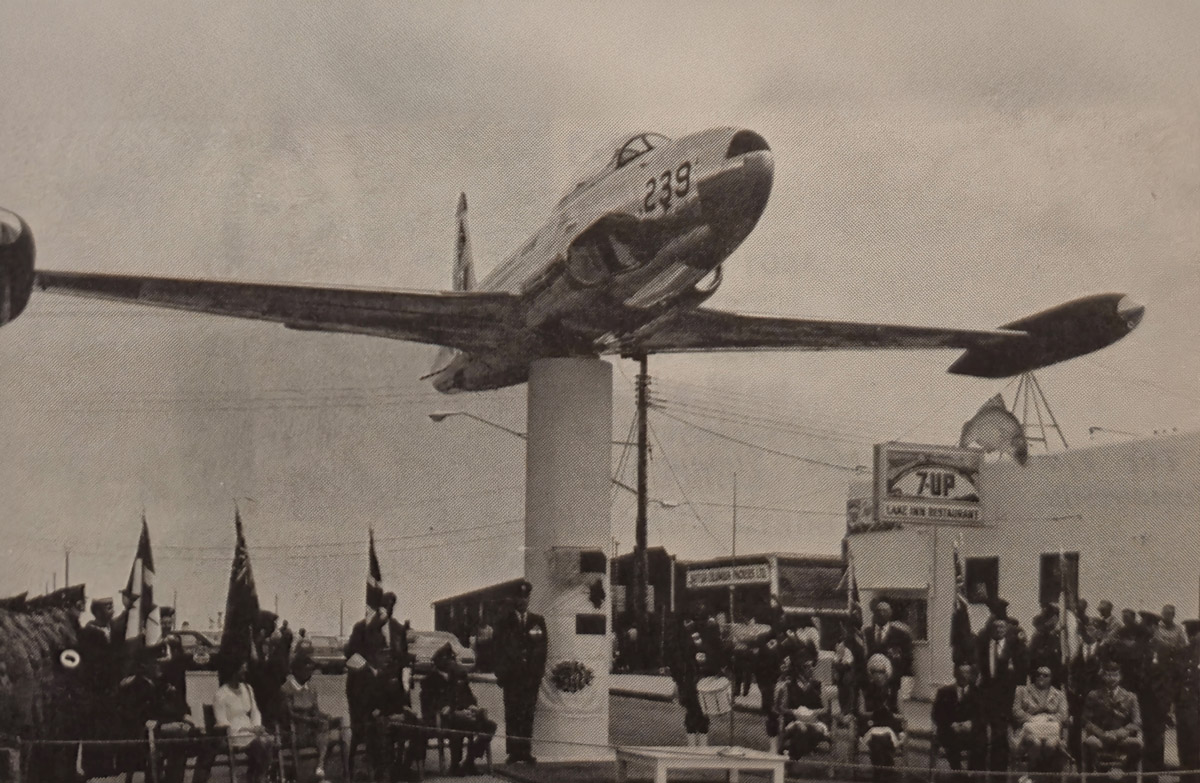
1971
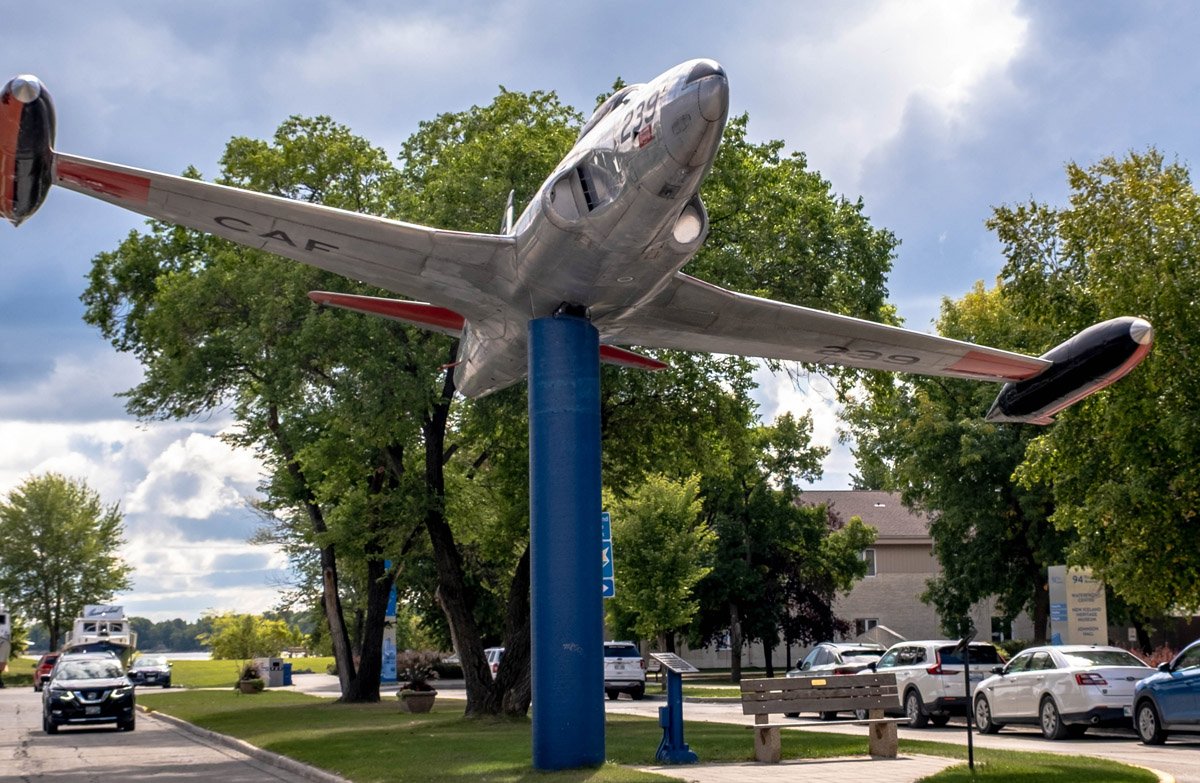
This eye-catching monument is a T-33 Silver Star training aircraft. In this historic photo we see it being unveiled by the officers and men of the Royal Canadian Air Force in 1971, a gift to the people of Gimli for their decades long partnership with Canada's air force.
Let's take a quick detour into another fascinating chapter in this town's history: Canadian Forces Base Gimli. Located just a few kilometres west of town, the airbase was built in World War II as part of the Commonwealth Air Training Plan, a scheme to train Allied aircrew before sending them into combat overseas. The military continued using the base until 1971, when this photo was taken. Part of it was given over to local car enthusiasts, who used the decommissioned runways as a motor speedway. Another part continues to operate to this day as a civilian airport.
The event that would make this airbase internationally famous came long after its closure: in 1983 the Gimli Glider landed there.
To learn the story of the Gimli Glider we encourage you to check out our virtual tours of the Gimli Glider Exhibit and the runway where the 'Glider' landed. Or better yet pay the museum a visit, or take our Gimli Glider walking tour!
* * *
The base at Gimli was called No. 18 Service Flying Training School and the largest such base in western Canada. It was built in 1943 at a cost of $1.25 million (or $24 million today), with 50 buildings, including six runways and double hangars. Aircrew learned to fly on Avro Ansons, a British twin-engine propeller aircraft.

A World War II-era Avro Anson.When the war was won in 1945 the base was closed. However, in 1950 the base was reopened to again train pilots for the jet era. The base was further expanded with amenities for the expanded staff stationed here, including a 300-student elementary school, a 35-bed hospital, and housing for 1,000 military personnel and their families. The crews trained on T-33's like the one you see here.
When the base closed in 1971 part of it continued to be used as a civilian airport, but there was no longer a need for all six runways. One of them was turned into the Gimli Motorsports Park. It is on that runway that the Gimli Glider landed in 1983.1
9. The 12 Year Republic
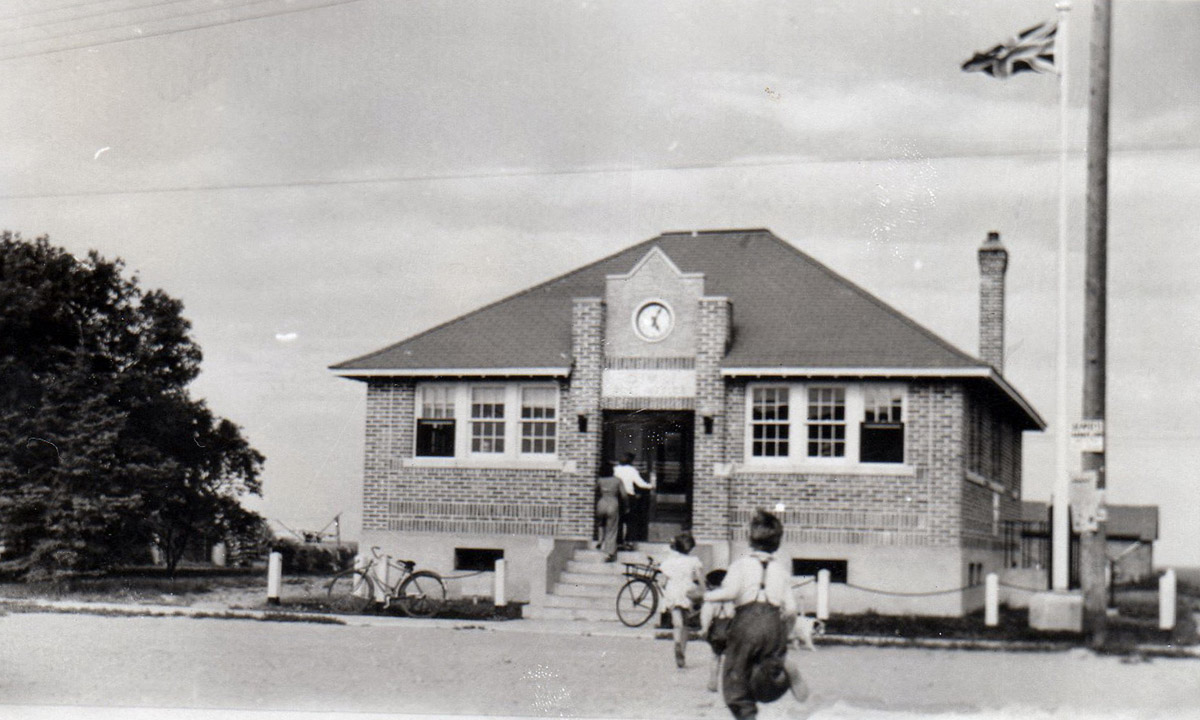
ca. 1940s
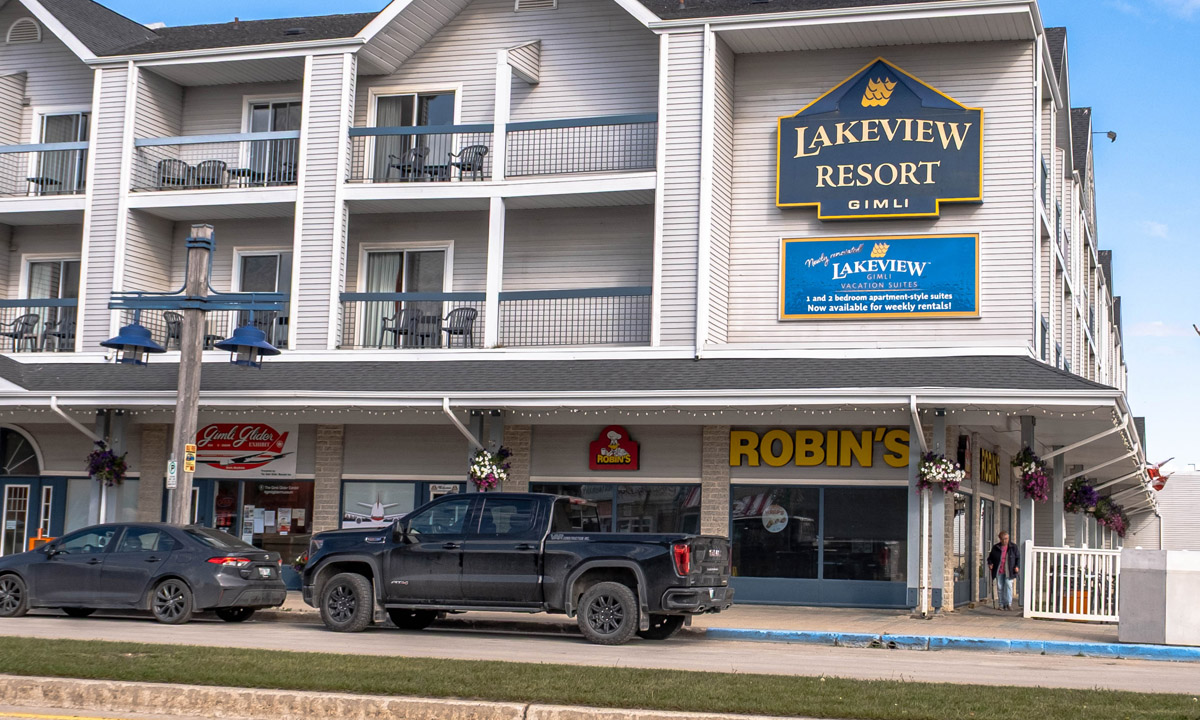
Here we see three children running to follow two women into the post office, which once stood prominently on the corner where the Lakeside Hotel and Gimli Glider Exhibit can be found today. The Union Jack flies overhead, a reminder that Canada was officially represented by the British flag all the way up to the adoption of the Maple Leaf in 1965. This brick post office was built in 1939 and was the most visible sign of the Canadian government's presence in Gimli.
The Icelanders were able to settle here in the 1870s thanks to government loans, but beyond that they were mostly given free reign to govern themselves as they saw fit. Since they came from a nation that boasts the oldest democratic parliament in the world, the Althing, they drew upon their own experience to draft a democratic constitution.
The remarkable system they created has sometimes been called the 12 Year Republic (while catchy, this is a name that is hated by some historians since New Iceland wasn't technically a republic and never had pretensions to independence from Canada).1
* * *
When the Icelanders arrived in 1875, the land of New Iceland wasn't actually part of the province of Manitoba. In those days the province was much smaller, and the land set aside for New Iceland was just to the north of it, in a district of the vast Northwest Territories called Keewatin. There was no local government system available to adopt and very little oversight.
On January 4, 1876, just a couple months after their arrival, the settlers held a meeting to decide how to run their affairs and elected a five man leadership council led by John Taylor.
Two years later, after the great influx of new settlers, they began holding meetings to develop an entire constitution for New Iceland. Its ratification by a vote on January 11, 1878, inaugurated a period that the writer N.J. Sommerville (Steina Stefansson) later dubbed 'The 12 Year Republic.'
The early-20th century Icelandic historian Knut Gjerset said this unique document meant that "New Iceland was a state with its own constitution, laws, and government, even with its own language and distinct nationality... But in all local matters it remained under the authority of the Canadian government."
The Gimli Saga proudly asserts "Some great jurists have judged [the constitution] to be equal, and in some respects superior, to the laws of that period in Canada."
The document clearly pulls heavily from the experience of Icelandic democracy. New Iceland was named Vatnsthing (Lake Region) and following the Icelandic model that had been in place for a millennia, the territory was split into four districts: Vidinesbyggd (Willow Point district), Arnesbyggd (Arnes district), Flotsbyggd (River district), and Mikleyjarbyggd (Big Island district). Each district had a five man council elected to a one year term by popular vote. Every man of 21 with a job or property and good character could vote, though the franchise was not extended to women. Each council selected a reeve to represent them at the central governing council (Thingrad) which was headed by a popularly elected governor.
The first governor was Sigtryggur Jonasson, the first Icelandic settler in Canada that we met in the first stop on this tour. As a result Jonasson is remembered as the Father of New Iceland.
Tax rates were set at $0.25 a year because nobody had any money. Instead most taxes were paid in labour, with people expected to help with building roads and district community halls, as well as supporting widows, orphans, and those unable to work. The constitution also had very Icelandesque provisions for a complex system of arbitration and conciliation to resolve disputes.
In an op-ed, the local newspaper, the Framfari, gave a sense of the community-minded spirit of the day, proud of their Icelandic roots, but also proud of the contributions they could make to the Canadian project:
We must not consider ourselves as minors or paupers, but as competent free men, fully able to conduct our own affairs. We must not consider ourselves as aliens, but as part of the national community in which we are placed. We must consider that in our hands lie the honour and reputation of the Icelandic nation on this continent, and we must therefore strive to be equally able as, and to attain the same degree of proficiency in both book-learning and practical knowledge, as the nation whose compatriots we are. We must consider that we have equal rights with the other subjects of the state, and that not only have we the right to govern ourselves locally, but that soon we will have the opportunity and will be expected to share in the common problems affecting Keewatin, as well as the common problems affecting the state as a whole. We hope that our best and ablest men will not draw back, but will consider it their duty to use their abilities for the common good.2In 1881 Manitoba was expanded to include New Iceland. Some Icelanders resisted abandoning their constitution, but in 1887 they finally reorganized New Iceland into the Rural Municipality of Gimli, bringing to an end this unique Canadian experiment in local self-government.
10. The Crisis of Faith
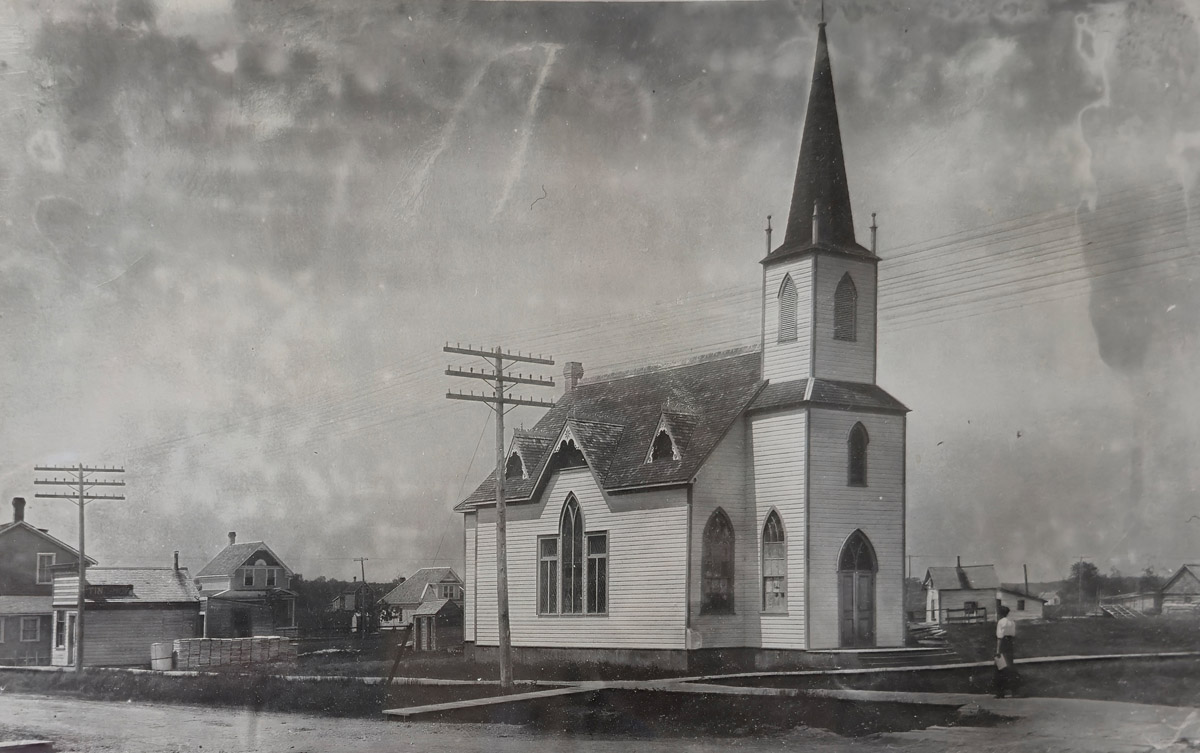
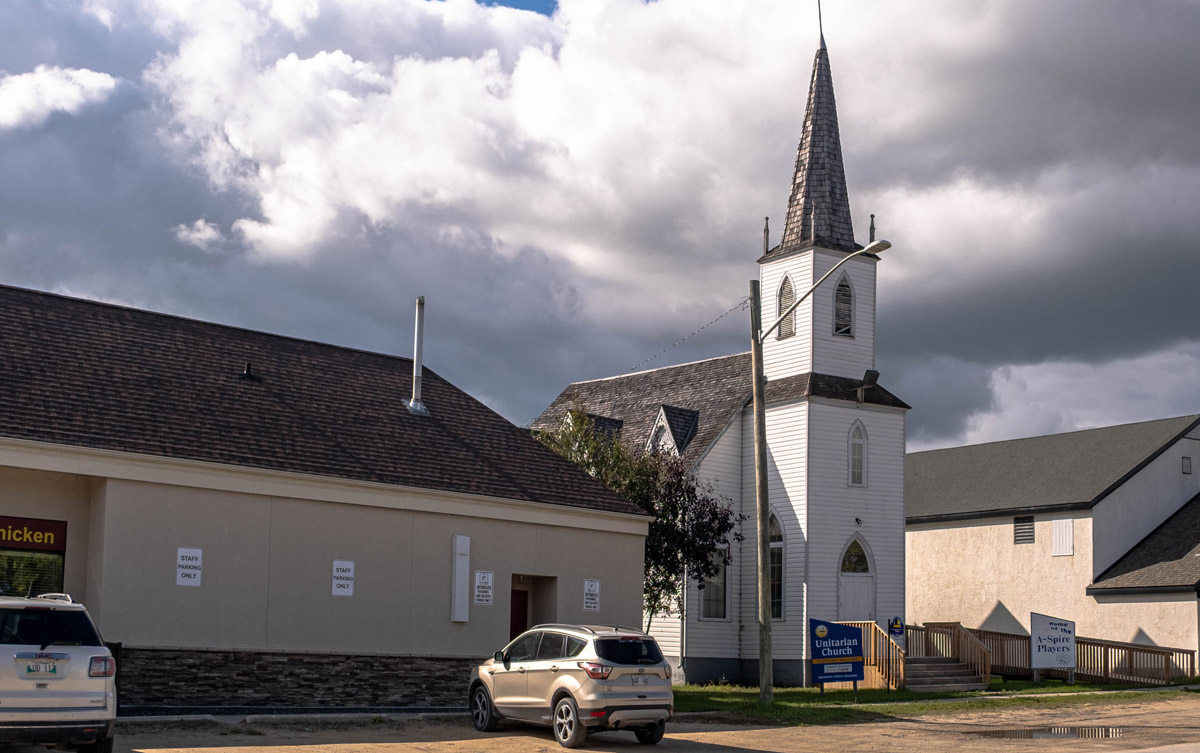
1912
Here we see Gimli's Unitarian Church, a heritage-listed building that was built in 1904. It was built for the Gimli congregation that seceded from the Lutheran Church and joined the Unitarians. This church became the Mother Church of the Unitarian Movement in Western Canada. It's notable for its modest construction and layout, but with lovingly crafted Gothic Revival detailing and an elegant spire.1
The religious schism that led to this church was one of several heated religious controversies that consumed the energies of the early colonists. They formed a kind of background plot through the early years of famine, isolation, and plague. In 1878 this religious discord bubbled over, and the crisis of faith very nearly brought about the total collapse of New Iceland.
* * *
The problem was Taylor was a fervent Baptist (a faith he had discovered while serving a 3 year sentence in a Texas prison for slave trading), and his views were heretical to the Icelanders.
The Icelanders predictably greeted this development with horror, and sent frantic pleas to the Scandinavian settlements in the United States to send them proper Lutheran clergymen. Two young priests answered the call, Reverend Páll Thorláksson and Reverend Jón Bjarnason. They separately walked most of the way from the American Midwest, enduring conditions that amounted to nothing less than a biblical test of faith.
Both had been promised a salary of $600 a year, but they soon found out the plague-ravaged Icelanders had practically no money, and neither received anything close to it. They survived on the fish, potatoes, and milk that their impoverished parishioners shared with them.
However, it soon became evident that the two men had radically different interpretations of Lutheran doctrine. Páll Thorláksson, the conservative, believed the bible was the literal word of God, and forbade any reinterpretation of scripture, and barred women from any speaking roles in his church. John Bjarnason, the liberal, preached a form of 'egalitarian Lutheranism' and advocated opening the colony to non-Icelandic settlers.
In 1877 both criss-crossed New Iceland preaching. By the winter the competition had gotten to a point where the colonists started identifying themselves either as Pállsmenn or Jónsmenn, and the theological contest became increasingly acrimonious. In a major push for reconciliation, the Pállsmenn and Jónsmenn came together for a two-day religious council to iron out their differences. It didn't work.
All this religious strife was happening in the backdrop of the traumatic smallpox plague and the strangling of New Iceland's economy by the Manitoba quarantine. There was also the dawning realization among many homesteaders that their plots were too rocky to farm, or prone to flooding from the lake.
The conservative Thorláksson became convinced that the colony of New Iceland was doomed to fail and said as much in his fiery sermons. By 1879 he decided he had seen enough. He roused his Pállsmenn to follow him, to leave New Iceland and go south to resettle in North Dakota, where he promised much greener pastures.
Many exhausted and discouraged Icelanders decided to follow him. It soon turned into a great exodus: By the end of 1879 there were just 50 families left of the original 200 who had settled in New Iceland. For the third time in four years, the colony seemed on the verge of collapse.2
Thankfully, however, this crisis of faith was New Iceland's last near death experience. Those few who stayed managed to hold on, and the population gradually recovered. By 1900 the population finally regained its 1876 peak of 2,000.3
The Second Schism
As for Bjarnason, he would leave New Iceland in 1881, and Gimli was again without a pastor for six years.
Finally, a new pastor came from Iceland: Reverend Magnus Skaptason. Yet he had highly liberal views, most famously laid out in his "breakaway sermon", where he rejected the belief that those who are not ‘saved’ will be banished to hell, which contradicted the core Lutheran belief of eternal damnation for those who have sinned.4
To many of Gimli's Lutherans, this was nothing short of blasphemy, and they left his congregation. Skaptason still had many adherents however, and he led his flock away from Lutheranism altogether. Instead they joined the rapidly growing Unitarian Church. In 1904 they built the church that stands here today.
11. A Love Affair with Literature
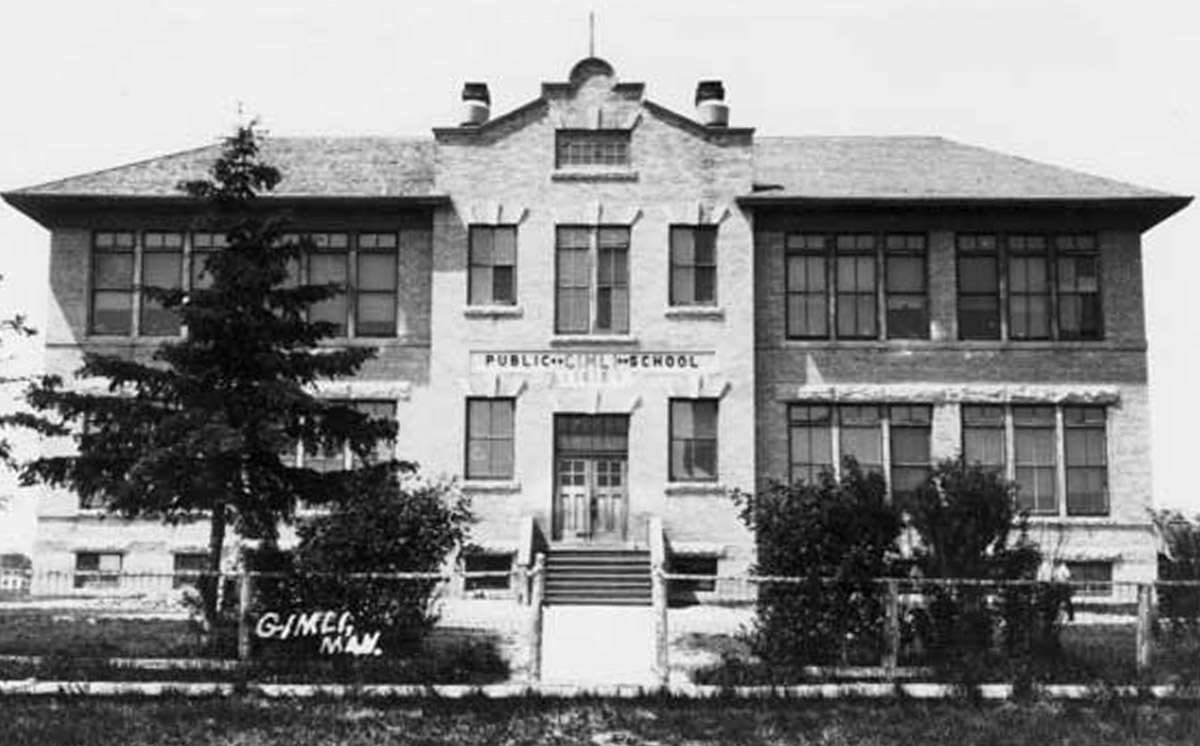
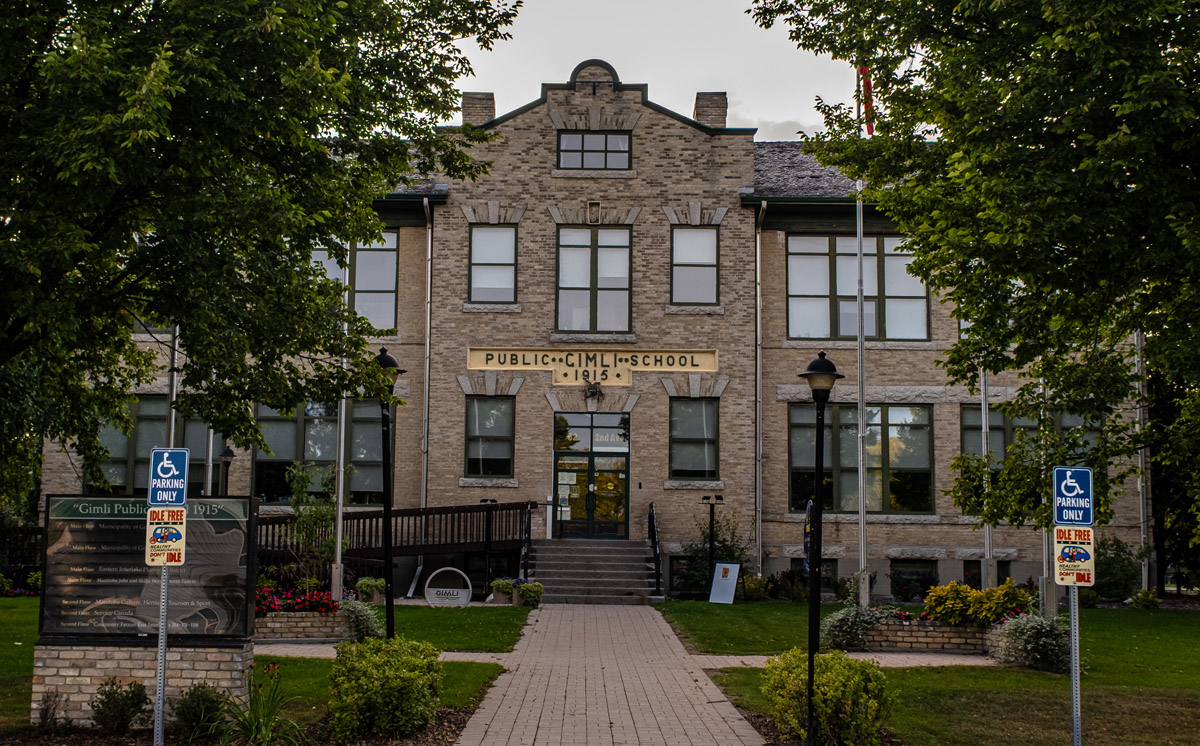
ca. 1930s
This was the site of the school, built in 1915 and since converted into Gimli's Municipal Office. It was designed by a local resident, Halldor Sigurdson, and was meant to give the children of New Iceland the finest education that could be had.
Providing the finest education has always been a central focus of New Iceland's settlers.
When they came to Canada they brought with them Iceland's ancient legacy of poetry and sagas, one of the world's most remarkable traditions of literature. The penniless early settlers still somehow managed to bring huge trunks of their beloved books.
When Canada's governor general toured the colony in 1877, he said with amazement that he had "not come into a single cottage or hut in the colony where there was not a library of twenty to thirty volumes, however bare the walls and scanty the furnishings."3
The love of knowledge helped the Icelanders preserve their language and distinct cultural identity in Canada, despite enormous pressure to assimilate. It also ultimately allowed them to prosper in their new home.
* * *
The Vikings who settled in Iceland brought with them the Norse cultural legacy of the epic sagas. Soon they began writing their own. They were retelling these stories long after everyone else in Scandinavia stopped, so that today almost all of what we know about Norse mythology comes from what the Icelandic sources tell us.
Icelandic skalds (poets) became legendary as the world's finest storytellers. Across Medieval Europe, an Icelandic skald was one of the most prestigious and sought-after additions to any royal court.
This admirable tradition was brought to New Iceland. The impoverished settlers may not have brought adequate winter clothing or supplies, but, records the Gimli Saga, they did bring "heavy trunks of books, worth their weight in gold."
One of those settlers, Simon Simonsson, lamented not bringing his own books, but fortunately there were enough to go around, and the books sustained him through those difficult years: "the first winter I was able to buy only Dr. Petur's three books, and the old Hymnbook, and three lays... This was all our provender for mind and spirit, but we were happier then than later, when we had acquired more."
Reading was the main diversion for the early settlers. "It was customary to read aloud to the household in the evening, while most of the listeners worked at some sedentary task. Books and papers were eagerly read and discussed, ballads sung, sagas and legends read, and family worship conducted."
As well as reading, the New Icelanders also began writing prolifically. During the first weeks of settlement, amidst hunger, sub-zero temperatures, and tattered tents, Nyu Thjodolfur somehow found the time to hand-write three editions of a newspaper, which was passed around from homestead to homestead.
The Icelanders were intent on preserving their culture and language in North America, and they wasted little time in founding the New Iceland Publishing Company and the colony soon started churning out a dizzying range of Icelandic language publications. The Framfari (Progressive) was founded in 1877, with 600 subscribers. There was Dagsburn (The Dawn), a religious monthly; Svafa, a monthly journal for stories and poetry; Bergmálið (The Echo), a journal of news and debate; Baldur, a liberal news weekly. There were many others.
Such a literate society of course put a huge emphasis on childhood education. Early on many settlers taught their own children at home, while John Taylor's niece Caroline ran English classes. Later on educated laypeople took on the responsibility of teaching students out of their own homes. A school district was set up after the colony became part of Manitoba, and the first "Canadian type of school" was built in Gimli in 1889, "in a rather large log structure." In 1900 it was replaced with this two-classroom building.
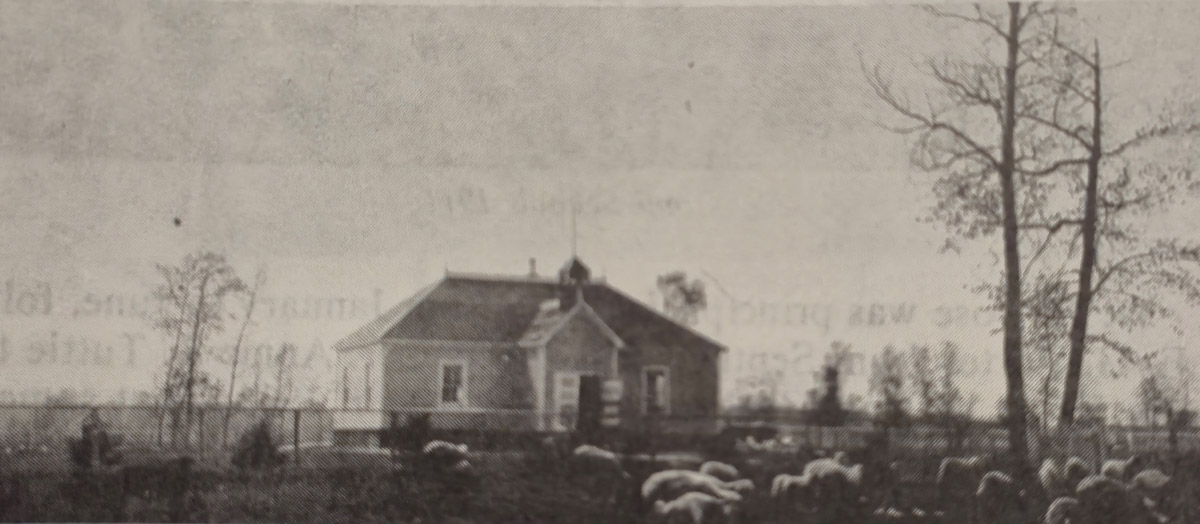
Gimli's second public school.Finally the handsome school building you see here today was constructed. Later on it was converted into the Municipal Offices, while larger and modern educational facilities were built to meet the needs of Gimli's growing population.
12. The Icelandic Legacy
1916-20
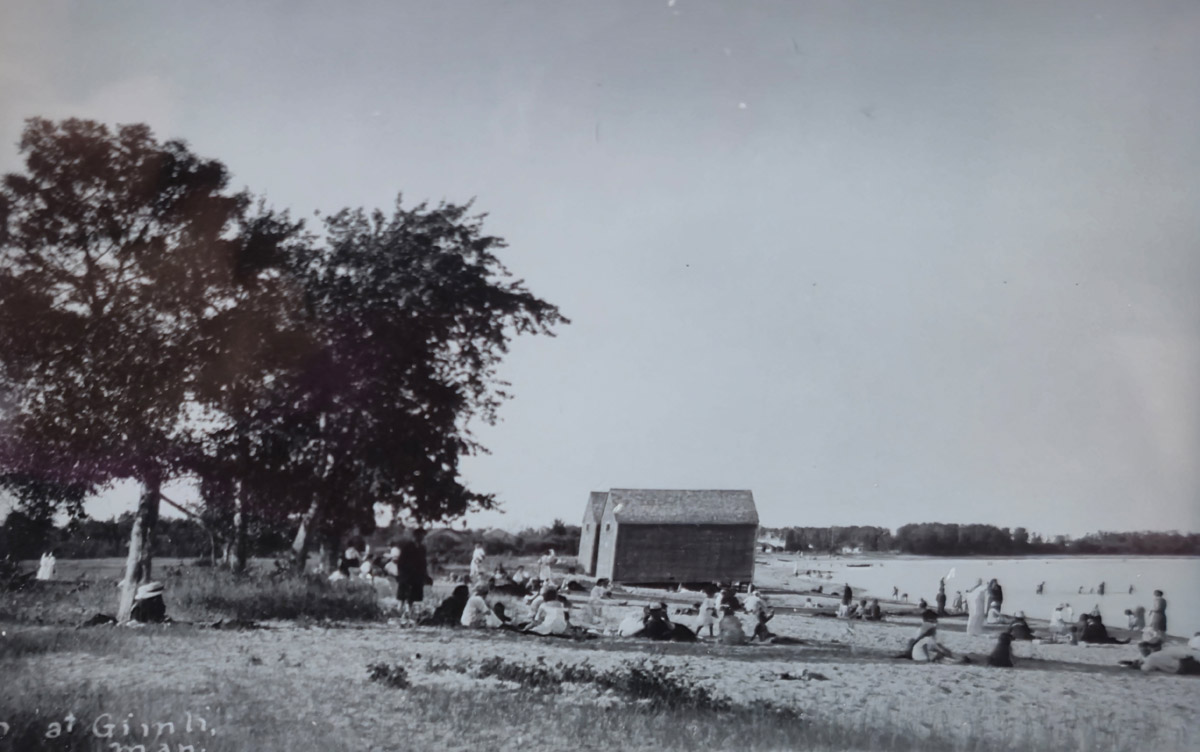
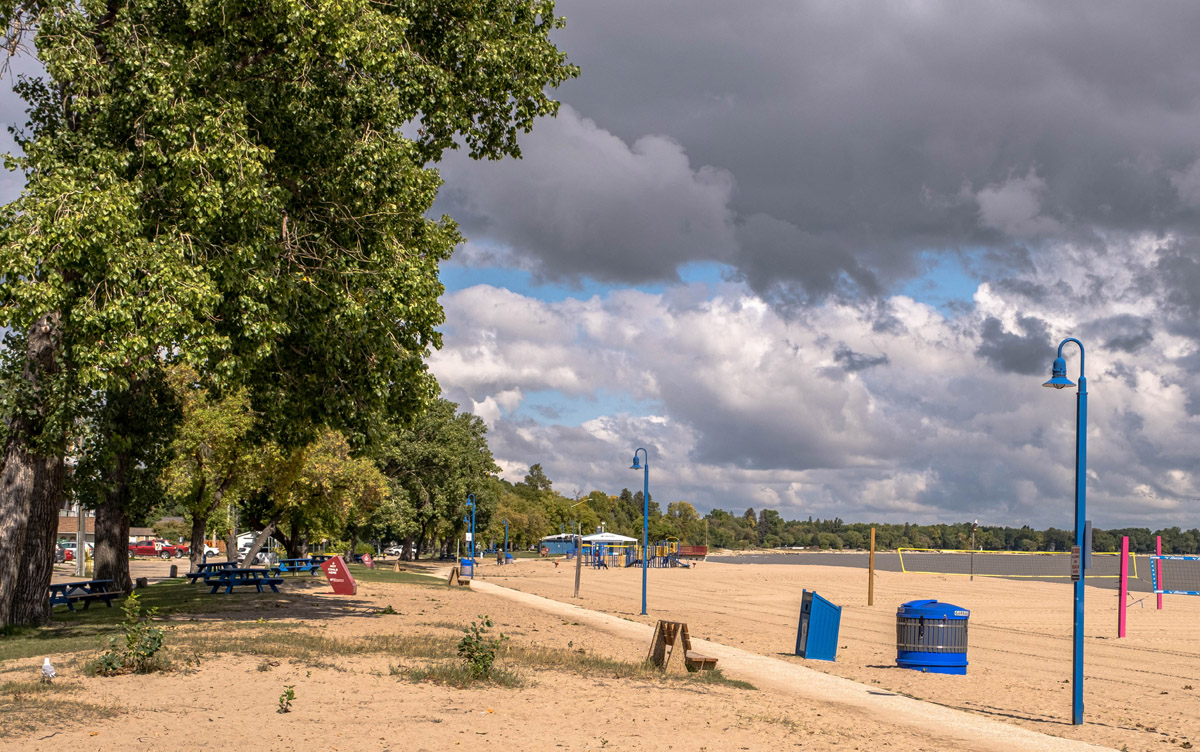
We conclude the saga of New Iceland at Loni Beach. We see in this photo what has drawn so many people to this town ever since its founding: the white sands and fresh waters of Lake Winnipeg. Gimli quickly became a popular beach escape for Winnipeg day-trippers, and the economy gradually transitioned from fishing and farming to tourism, especially after the arrival of the railway in 1906.
* * *
Yet those who remained never forgot where they came from and were nostalgic for the homeland they had left behind. The word Loni, for example, is the Icelandic word for 'an inlet of the sea'. It was rather loosely reapplied to this decidedly un-inletlike lakeside beach. The name has stuck.2
That nostalgia has found its most enduring expression in the Icelandic Festival of Manitoba, Íslendingadagurinn, the Day of the Icelanders. First celebrated in 1890, it has been held in Gimli every summer since 1932, drawing tens of thousands of visitors each year over the long weekend in August. It is the largest celebration of Icelandic culture outside Iceland itself. People share traditional food and music, and celebrate the crowning of the Fjallkona. The giant Viking statue on the waterfront where we started is still the most photographed landmark in town, and stands as a permanent reminder of where this community's story began.
Today the remarkable story of New Iceland remains a source of pride, not just for the descendants of the original settlers, but for all who call Gimli home.
Endnotes
1. The Hall of Gimli
1. Gimli Women's Institute, *Gimli Saga: The History of Gimli, Manitoba,* (Gimli Women's Institute, 1975), 55.
2. Voluspa: Stanzas 61-66. *Voluspa.org* (2008), online.
2. The Odyssey
1. Gimli Women's Institute, *Gimli Saga*, 13-15.
2. Wilhelm Kristjanson, "John Taylor and the Pioneer Icelandic Settlement in Manitoba and his Plea on Behalf of the Persecuted Jewish People", *MHS Transactions*: Srs 3, No. 32, 1975-6, online.
3. Kristjanson, "John Taylor and the Pioneer Icelandic Settlement in Manitoba and his Plea on Behalf of the Persecuted Jewish People."
4. Gimli Women's Institute, *Gimli Saga*, 13-15.
3. The Terrible First Winter
1. "Fjallkona," *Icelandic Festival of Manitoba*, online.
2. Gimli Women's Institute, *Gimli Saga*, 16.
3. Gimli Women's Institute, *Gimli Saga*, 16.
4. W.D. Valgardson, "Growing up in Gimli," *Icelandic Roots*, (March 11, 2024), online.
5. Gimli Women's Institute, *Gimli Saga*, 19.
6. Gimli Women's Institute, *Gimli Saga*, 17.
4. Learning to Fish
1. Gimli Women's Institute, *Gimli Saga*, 16.
2. A. Blicq & E. Ledohowski, *Gimli Harbour & Fishery: An Illustrated History,* R.M. of Gimli Heritage Advisory Committee, (2017), 48.
3. Blicq & Ledohowski, *Gimli Harbour & Fishery*, 48.
4. Blicq & Ledohowski, *Gimli Harbour & Fishery*, 24.
5. Blicq & Ledohowski, *Gimli Harbour & Fishery*, 48.
5. The Smallpox Plague
1. Gimli Women's Institute, *Gimli Saga*, 19.
2. Bruce Cherney, "Smallpox Epidemic 1876-77: Part 2," *Winnipeg Regional Real Estate News,* (July 31, 2015,* online.
3. Gimli Women's Institute, *Gimli Saga*, 19.
4. Bruce Cherney, "Smallpox Epidemic 1876-77: Part 4," *Winnipeg Regional Real Estate News,* (August 14, 2015,* online.
5. Cherney, "Smallpox Epidemic 1876-77: Part 4".
6. Cherney, "Smallpox Epidemic 1876-77: Part 4".
6. John Ramsay's Lifeline
1. Elisha Dacey, "'It tears at the heart': Manitoba Icelandic museum honours Indigenous hero John Ramsay," *CBC News* (Oct. 21, 2017), online.
2. Valgardson, "Growing up in Gimli."
3. Gimli Women's Institute, *Gimli Saga*, 18.
4. Dacey, "'It tears at the heart': Manitoba Icelandic museum honours Indigenous hero John Ramsay."
5. Gimli Women's Institute, *Gimli Saga*, 54.
6. Ed Ledohowski, "The legend of John Ramsay: Kindness in the face of tragedy,." *Manitoba Co-operator,* (July 4, 2013), online.
7. The Tergesen Store
1. Gimli Women's Institute, *Gimli Saga*,
2. Gimli Women's Institute, *Gimli Saga*,
8. Gimli's Air Force Base
1. "RCAF Station GImli," *RCAF.info*, online.
9. The 12 Year Republic
1. Bruce Cherney, "Not a “12-year republic” — claim called an “insult to their intelligence and pride,” *Winnipeg Real Estate News*, August 10, 2007, online.
2. Gimli Women's Institute, *Gimli Saga*, 24-25.
10. The Crisis of Faith
1. "Gimli Unitarian Church." *Canada's Historic Places.* 1996.
2. "Some History on Gimli Manitoba." *Gimli Community Web,* online.
3. Gimli Women's Institute, *Gimli Saga*, 25.
4. "Some History on Gimli Manitoba." *Gimli Community Web,* online.
11. A Love Affair with Literature
1. Gimli Women's Institute, *Gimli Saga*, 26-29.
12. The Icelandic Legacy
1. "Transitioning to English," *Preserving the most precious heirloom - Icelandic Language publishing in Manitoba,* University of Manitoba, online.
2. Lillian Olson Lane, "I Remember Loni," *The Icelandic Canadian*, Winter 1979, pps. 35-37.
Bibliography
**Books**
Arnason, David and Michael Olito. *The Icelanders.* Winnipeg: Turnstone Press, 1981.
Blicq, A. & Ledohowski, E. *Gimli Harbour & Fishery: An Illustrated History.* R.M. of Gimli Heritage Advisory Committee, 2017.
Gimli Women's Institute. *Gimli Saga: The History of Gimli, Manitoba.* Gimli Women's Institute, 1975.
Narfason, Dilla, and Mary Shebeski, eds. *Gimli Memories.* Gimli Saga, 1982
**Articles and Websites**
Cherney, Bruce. "Not a “12-year republic” — claim called an “insult to their intelligence and pride,” *Winnipeg Real Estate News.* August 10, 2007. https://www.winnipegregionalrealestatenews.com/publications/real-estate-news/678
Cherney, Bruce. "Smallpox Epidemic 1876-77: Part 2." *Winnipeg Regional Real Estate News.* July 31, 2015. https://www.winnipegregionalrealestatenews.com/publications/real-estate-news/2511
Cherney, Bruce. "Smallpox Epidemic 1876-77: Part 4." *Winnipeg Regional Real Estate News.* August 14, 2015. https://www.winnipegregionalrealestatenews.com/publications/real-estate-news/2521
Dacey, Elisha. "'It tears at the heart': Manitoba Icelandic museum honours Indigenous hero John Ramsay." *CBC News*. Oct. 21, 2017. https://www.cbc.ca/news/indigenous/ramsay-iceland-museum-exhibit-1.4364137
Gimli Community Web. "Some History on Gimli Manitoba." *Gimli Community Web.* https://www.gimlicommunityweb.com/history/history.php
Icelandic Festival of Manitoba. "Fjallkona." https://www.icelandicfestival.com/about/fjallkona
Kristjanson, Wilhelm. "John Taylor and the Pioneer Icelandic Settlement in Manitoba and his Plea on Behalf of the Persecuted Jewish People", *MHS Transactions*: Srs 3, No. 32, 1975-6. https://www.mhs.mb.ca/docs/transactions/3/tayloricelandic.shtml
Lane, Lillian Olson. "I Remember Loni." *The Icelandic Canadian,* Winter 1979, pp 35-37. https://lonibeach.org/wp-content/uploads/2018/07/IRememberLoniLillianLane1979.pdf
Ledohowski, Ed. "The legend of John Ramsay: Kindness in the face of tragedy." *Manitoba Co-operator.* July 4, 2013. https://www.manitobacooperator.ca/country-crossroads/our-history/the-legend-of-john-ramsay-kindness-in-the-face-of-tragedy/
Parks Canada. "Gimli Unitarian Church." *Canada's Historic Places.* 1996. https://www.historicplaces.ca/en/rep-reg/place-lieu.aspx?id=3557
RCAF Info. "RCAF Station Gimli," *RCAF.info*.
University of Manitoba. "Transitioning to English," *Preserving the most precious heirloom - Icelandic Language publishing in Manitoba.* https://www.communitystories.ca/v2/icelandic-language-manitoba_langue-islandaise/story/the-first-icelandic-newspapers/
Voluspa.Org. Voluspa: Stanzas 61-66. *Voluspa.org*. 2008. https://www.voluspa.org/voluspa61-66.htm